
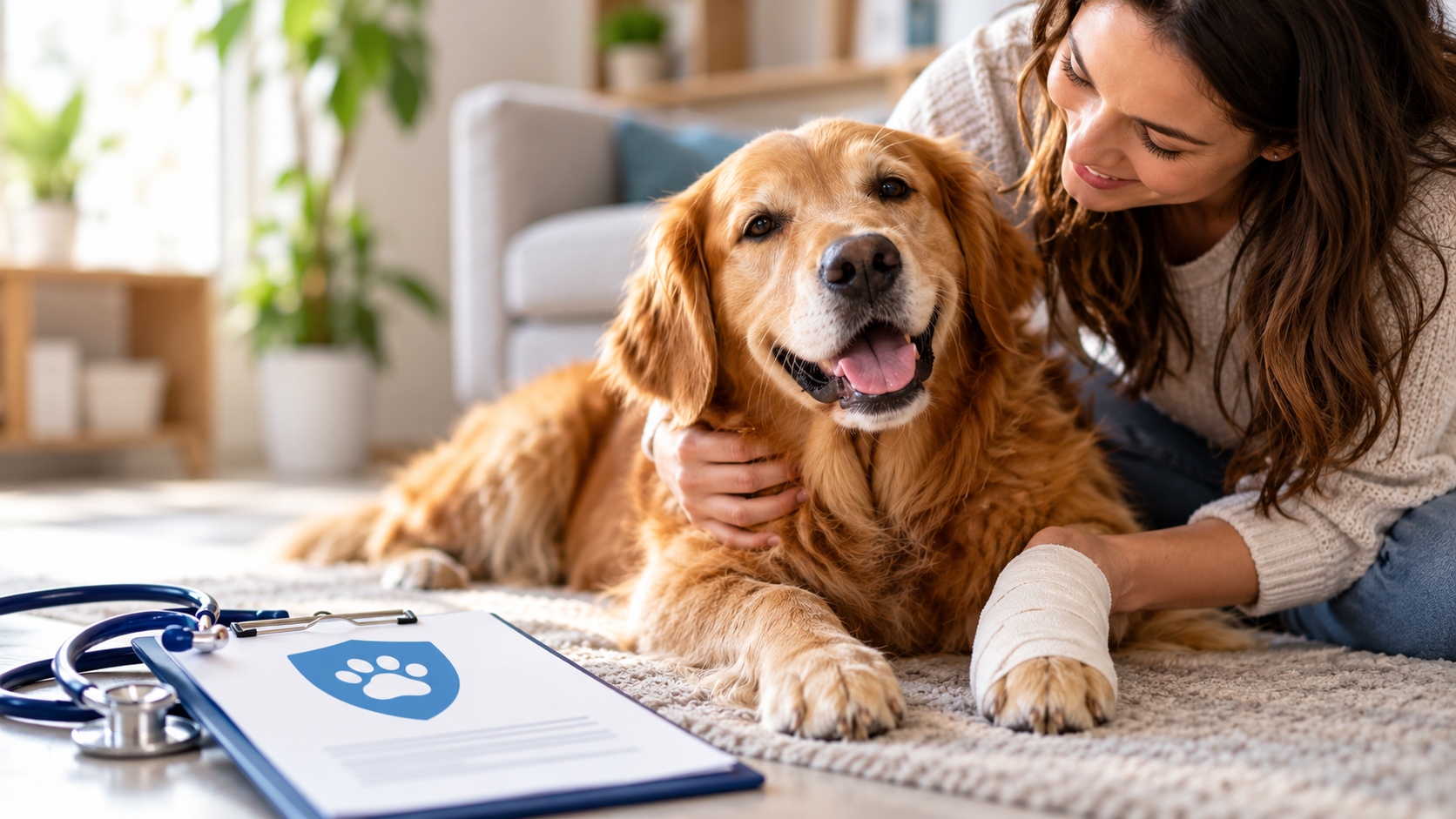
Explore dog insurance coverage for accidents, illnesses, and vet bills. Compare policy benefits, exclusions, and costs to find the right protection for your dog.
Your dog can develop an unexpected illness, swallow something dangerous, or suffer an injury that requires veterinary treatment. When these situations happen, medical expenses can quickly affect your household budget.
Understanding dog insurance coverage helps you determine which veterinary expenses may qualify for reimbursement, which treatments are excluded, and how different policies handle claims.
Before purchasing a policy, you should compare accident protection, illness benefits, deductibles, reimbursement percentages, and annual limits. These details can influence how much you ultimately pay when your dog needs medical attention.
What Does Dog Insurance Coverage Typically Include?
Dog insurance coverage varies depending on the insurance provider, policy type, and selected benefits. Most policies fall into three general categories: accident-only, accident-and-illness, and optional wellness coverage.
Understanding the differences can help you choose a plan that matches your dog’s needs and your financial situation.
Accident-Only Insurance
Accident-only policies generally cover eligible veterinary expenses resulting from unexpected injuries.
Depending on the policy, covered situations may include:
- Broken bones caused by accidents
- Accidental ingestion of foreign objects
- Cuts and wounds requiring treatment
- Certain accidental poisonings
- Emergency surgery following a covered injury
- Diagnostic examinations associated with covered accidents
These policies generally exclude illnesses, meaning treatment for infections, chronic diseases, and other medical conditions may not qualify.
Accident-and-Illness Insurance
Dog accident and illness insurance provides protection for eligible injuries and medical conditions, subject to policy terms.
Covered expenses may include:
- Diagnostic blood tests and imaging
- Emergency veterinary consultations
- Hospitalization and surgery
- Prescription medications for covered conditions
- Treatment for certain hereditary conditions
- Cancer treatment
- Management of eligible chronic illnesses
Coverage for hereditary and chronic conditions depends on the insurer, the dog’s medical history, and applicable exclusions.
Optional Wellness Coverage
Some insurers provide wellness packages that help pay for routine veterinary care.
Depending on the package, eligible services may include vaccinations, annual examinations, preventive screenings, and certain parasite-prevention treatments.
Wellness benefits often involve additional fees or scheduled allowances. They should be evaluated separately from insurance intended for unexpected accidents and illnesses.
How Do Different Dog Insurance Plans Compare?
Choosing pet insurance for dogs becomes easier when you understand how the major policy categories differ.
| Coverage Feature | Accident-Only | Accident and Illness | Wellness Add-On |
|---|---|---|---|
| Accidental injuries | Usually included | Usually included | Generally excluded |
| Eligible illnesses | Excluded | Included | Generally excluded |
| Emergency surgery | Covered accidents | Covered conditions | Generally excluded |
| Routine vaccinations | Excluded | Usually excluded | May be included |
| Preventive examinations | Usually excluded | Usually excluded | May be included |
| Chronic conditions | Excluded | May be included | Generally excluded |
Coverage varies by insurer and policy. The table illustrates common plan structures rather than guaranteed benefits.
Accident-only coverage may suit someone primarily concerned about unexpected injuries. Accident-and-illness policies may be appropriate when protection against eligible medical conditions is a priority.
Wellness packages are worth evaluating based on their added cost, annual allowances, and the routine services your dog actually needs.
What Factors Affect the Cost of Dog Insurance?
Insurance premiums depend on several factors, including your dog’s characteristics, your location, and the benefits you select.
Your Dog’s Age
Older dogs may have higher premiums because age can affect the likelihood of veterinary treatment.
Some insurers also apply enrollment restrictions or different policy conditions for older pets.
Breed and Health Risks
Certain breeds have greater susceptibility to specific inherited or orthopedic conditions.
Insurers may account for breed-related risks when calculating premiums. However, coverage for hereditary conditions depends on the actual policy wording.
Geographic Location
Veterinary treatment costs differ by region. Insurance premiums may reflect local veterinary prices and other regional factors.
Coverage Limits and Deductibles
Policies with higher reimbursement percentages, lower deductibles, or larger annual limits may carry higher premiums, depending on the insurer.
A lower monthly premium does not automatically mean lower overall costs.
For example, a policy with a high deductible may require substantial out-of-pocket spending before reimbursement becomes available.
Understanding Deductibles, Reimbursement Rates, and Annual Limits
Three financial features can significantly influence the value of a dog insurance policy.
How Pet Insurance Deductibles Work
Pet insurance deductibles represent the amount you must pay toward eligible expenses before the insurer begins reimbursing covered costs.
Some policies use an annual deductible, while others apply a deductible for each condition or incident.
For example, suppose your dog receives $2,000 in eligible veterinary treatment and your policy has:
- A $250 annual deductible
- An 80% reimbursement percentage
- Sufficient remaining annual coverage
Under a policy that subtracts the deductible before calculating reimbursement:
Eligible expenses: $2,000
Deductible: $250
Remaining eligible expenses: $1,750
Insurance reimbursement: $1,400
Your out-of-pocket responsibility: $600
This simplified illustration excludes premiums, noncovered charges, and other possible policy adjustments. Actual calculations depend on the insurer.
How Dog Insurance Reimbursement Rates Affect Claims
Dog insurance reimbursement rates determine the percentage of eligible expenses that the insurer pays after applicable deductions.
Common policy choices may include 70%, 80%, or 90%, although available percentages differ by provider.
Higher reimbursement percentages generally reduce your share of eligible veterinary expenses, assuming other policy terms remain unchanged.
However, selecting a higher percentage may increase the premium.
Why Annual Coverage Limits Matter
An annual limit establishes the maximum amount an insurer will reimburse during a policy year.
Some policies have fixed annual limits, while others advertise unlimited annual coverage for eligible claims.
Even unlimited plans remain subject to exclusions, deductibles, reimbursement percentages, and other contractual conditions.
If your dog requires repeated treatment, a low annual limit could leave you responsible for substantial additional expenses.
Which Dog Insurance Exclusions Should You Check?
Understanding dog insurance exclusions is essential before purchasing a policy.
An insurance policy may exclude expenses that you initially expected to be covered.
Pre-Existing Conditions
Most conventional pet insurance policies exclude pre-existing conditions.
These generally refer to illnesses or injuries that showed symptoms or received treatment before coverage began or during an applicable waiting period.
Some insurers distinguish between curable and incurable pre-existing conditions, so eligibility rules should be reviewed carefully.
Waiting Periods
A waiting period is the time between the start of a policy and the date certain benefits become available.
Accidents, illnesses, and orthopedic conditions may have different waiting periods.
Treatment needed during an applicable waiting period may not qualify for reimbursement.
Routine and Elective Procedures
Standard accident-and-illness policies commonly exclude routine services unless separate preventive-care benefits apply.
Examples may include routine vaccinations, elective grooming, and certain preventive procedures.
Other Policy Restrictions
Depending on the insurer, additional limitations may apply to dental conditions, behavioral treatment, breeding-related expenses, prescription diets, or alternative therapies.
Read the policy’s exclusions and definitions rather than relying solely on a marketing summary.
How to Conduct a Dog Insurance Policy Comparison
A thorough dog insurance policy comparison should focus on actual coverage conditions rather than monthly premiums alone.
Use these factors to assess potential policies:
1. Covered medical conditions
Check which accidents, illnesses, diagnostic procedures, and treatments qualify for reimbursement.
2. Annual reimbursement limits
Review the maximum amount payable during each policy year and any condition-specific restrictions.
3. Deductible structure
Determine if the deductible applies annually, per incident, or per condition.
4. Reimbursement calculation
Confirm how the insurer calculates eligible expenses and which charges are excluded.
5. Waiting periods
Identify when accident, illness, and orthopedic benefits become active.
6. Claims procedures
Find out if you must pay the veterinarian first and submit a claim afterward. Check required documentation and the insurer’s published claims procedures.
7. Renewal conditions
Review how premiums, benefits, and policy restrictions may change as your dog ages.
You can compare available dog insurance policies and coverage details to examine plan terms before deciding which protection fits your budget.
Is Dog Insurance Worth Paying For?
Dog insurance may be financially useful if you want help managing the cost of unexpected veterinary treatment.
However, its value depends on your dog’s health, the policy’s coverage restrictions, the premiums paid over time, and the claims that qualify for reimbursement.
When Insurance May Be Helpful
A policy may be worth evaluating if:
- You would find a large emergency veterinary bill difficult to pay.
- Your dog is young and has relatively few documented medical conditions.
- You want financial protection against certain unexpected illnesses.
- You prefer predictable premium payments over relying entirely on emergency savings.
- Your chosen policy covers medical risks relevant to your dog.
When You May Prefer Other Options
You may decide to rely on dedicated veterinary savings if you have sufficient funds to manage unexpected treatment costs.
Insurance may also provide limited value for a dog with existing medical conditions that fall under policy exclusions.
In either case, comparing expected premiums, coverage restrictions, and potential veterinary expenses can help you make an informed decision.
Frequently Asked Questions About Dog Insurance
Does dog insurance cover emergency veterinary visits?
Many accident-and-illness policies cover eligible emergency veterinary treatment. However, reimbursement depends on the reason for the visit, exclusions, deductible, and policy limits.
Does dog insurance cover surgery?
Surgery may qualify when it treats a covered accident or illness. Elective procedures and treatment for excluded conditions may not qualify.
Can you insure an older dog?
Some insurers accept senior dogs, although age restrictions, premiums, and available benefits vary. Check enrollment rules before applying.
Does dog insurance cover dental treatment?
Some policies cover certain dental injuries or illnesses, subject to specific conditions. Routine cleanings may require separate preventive-care benefits or may be excluded entirely.
Can you use any veterinarian?
Many reimbursement-based pet insurance policies allow visits to licensed veterinarians without requiring a specific provider network. However, you should confirm geographic restrictions and provider eligibility in your policy.
Will dog insurance cover an existing medical condition?
Most standard policies exclude pre-existing conditions. Some may reconsider certain curable conditions after a defined symptom-free period, subject to their rules.
Choosing Dog Insurance Coverage That Fits Your Budget and Your Dog
The right insurance policy depends on the medical risks you want covered and the amount you can comfortably pay through premiums and out-of-pocket expenses.
Before making your decision, review the complete policy wording, including waiting periods, exclusions, reimbursement rules, and annual limits.
Most importantly, choose protection based on your dog’s current needs and your ability to handle unexpected veterinary bills. A carefully selected policy can help reduce certain financial risks while leaving you prepared for expenses that insurance does not cover.