
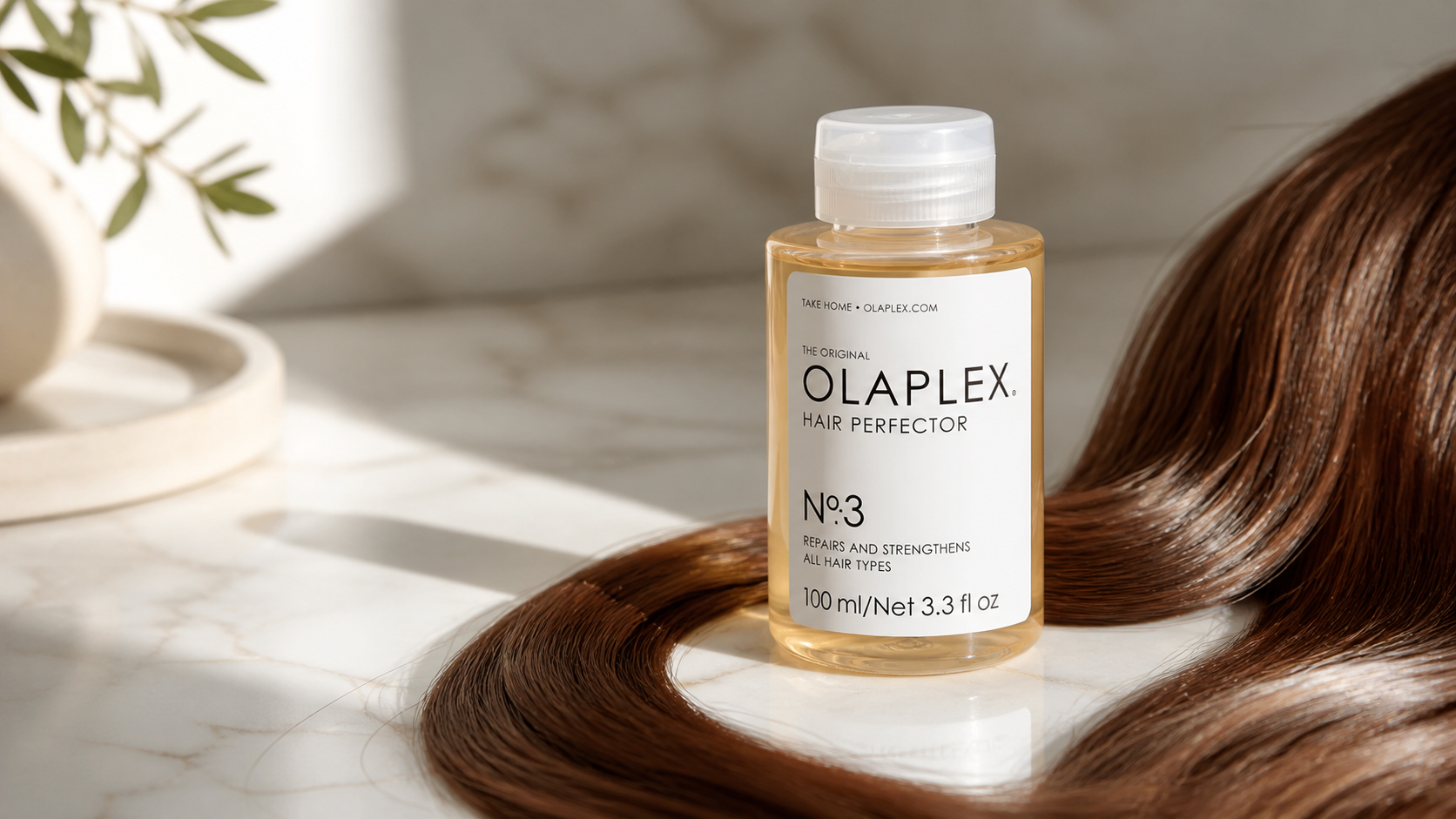
Discover how Olaplex No. 3 Hair Perfector restores bleached and color-treated hair with bond-building technology. Learn the science, application tips, and real results for damaged hair repair.
Over 60% of Australians with color-treated hair report visible damage within three months of their first salon visit. Bleaching, permanent color, and heat styling create microscopic fractures in your hair's protein structure—and most drugstore conditioners simply can't repair what's actually broken at the molecular level. The frustration is real: you invest in salon treatments, follow every advice you read online, and still watch your hair become increasingly fragile and prone to breakage.
Olaplex No. 3 Hair Perfector has quietly become the go-to weekly treatment for Australians dealing with compromised hair integrity. Unlike traditional conditioners that coat the surface, this pre-shampoo treatment uses patented bond-building technology to reconnect broken disulfide bonds—the molecular "glue" that holds your hair's structure together. This approach targets the root cause of damage rather than simply masking symptoms with silicones and proteins.
Discover how Olaplex No. 3 can transform your damaged hair with science-backed bond-building technology. This guide breaks down exactly what makes Olaplex No. 3 different, how to use it for maximum results, and whether it's genuinely worth the premium price point. You'll discover the science behind bond-building technology, learn which hair types benefit most, and get practical strategies for incorporating it into your weekly routine—plus honest insights about its limitations and how to optimize your results.
How Olaplex No. 3 Repairs Hair Damage at the Molecular Level
The science of broken disulfide bonds and how damage occurs
Hair damage at the molecular level begins with broken disulfide bonds—the cross-links that give hair its strength, elasticity, and structure. Chemical treatments like bleaching and permanent coloring break these bonds directly. Heat styling, friction, and environmental stressors compound the damage over time. When these bonds fracture, hair loses its ability to retain moisture and maintain its shape, resulting in breakage, frizz, and that telltale dull appearance you see in the mirror.
How bond-building technology differs from protein treatments
Protein treatments and keratin-based products coat the hair shaft, temporarily filling gaps and smoothing the cuticle. They provide immediate cosmetic improvement but don't address the underlying structural damage. Bond-building technology, by contrast, actually reconnects the broken molecular bonds themselves. This is fundamentally different—it's repair rather than cosmetic enhancement. Silicone-based conditioners work similarly to protein treatments, sealing moisture in but not restoring the hair's original integrity.
Olaplex's proprietary bis-MAPD formula and its mechanism
Olaplex No. 3 uses a patented bis(monoacylglycero)phosphodiester (bis-MAPD) formula that actively targets and reconnects broken disulfide bonds. This molecule works by bridging the gaps where bonds have fractured, essentially reconstructing the hair's molecular architecture. The formula is small enough to penetrate the hair shaft but effective enough to create lasting structural changes. This is why results are cumulative—each weekly application continues the repair process, gradually restoring your hair closer to its original state.
Why weekly application maintains bond integrity
One deep conditioning session might temporarily improve hair texture, but single applications of Olaplex No. 3 don't create permanent molecular repair. Weekly use establishes a consistent repair rhythm, continuously reconnecting new damage while maintaining previous improvements. Hair naturally accumulates new micro-damage from daily styling, weather exposure, and friction. Regular weekly treatments prevent this damage from accumulating, keeping your hair's bond structure intact over the long term.
The pre-shampoo format and why timing matters
The pre-shampoo format is crucial to Olaplex No. 3's effectiveness. Applied before shampooing, the treatment penetrates the hair shaft before sulfate-based cleansers strip away the formula. This timing allows the bis-MAPD molecules to work uninterrupted for 10–30 minutes, creating stronger molecular bonds than if applied to already-stripped, porous hair. The pre-shampoo approach also prevents the formula from being immediately washed away before it can take effect.
Clinical evidence and real-world results
Salon professionals and consumers have documented measurable improvements in hair strength, elasticity, and breakage rates with consistent Olaplex No. 3 use. Hair strand tension tests show increased resistance to breakage after four weeks of weekly applications. Users report noticeable reductions in split ends, improved shine, and restoration of natural texture—particularly pronounced in bleached and color-treated hair. These results aren't anecdotal; they're consistent across diverse hair types and damage levels.
Which Hair Types Benefit Most from Olaplex No. 3
Bleached and platinum blonde hair
Bleached hair has experienced the most severe disulfide bond disruption of any hair type. Platinum blonde hair, especially, requires aggressive chemical processing that strips away pigment and fractures the protein structure. Olaplex No. 3 directly addresses this damage, restoring elasticity and strength to hair that would otherwise become increasingly brittle. Users with bleached hair report the most dramatic improvements in texture and manageability.
Permanent color-treated hair prone to frizz
Permanent color opens the hair cuticle to deposit pigment, inevitably causing structural damage. This damage manifests as frizz, dullness, and reduced shine—all symptoms of compromised protein bonds. Weekly Olaplex No. 3 treatments help permanent color-treated hair retain its vibrancy while restoring the smoothness and definition that color processing strips away.
Heat-damaged hair from frequent styling
Blow-drying, straightening, and curling create cumulative heat damage that weakens disulfide bonds over time. While heat protectant sprays help, they can't prevent all damage. Olaplex No. 3 repairs the molecular damage that heat styling inflicts, making it particularly valuable for people who style daily or work in professions requiring polished hair.
Chemically processed hair
Perms, relaxers, and keratin treatments all rely on chemical processes that deliberately break and reform disulfide bonds. Even after the initial treatment, hair remains vulnerable to further damage. Olaplex No. 3 stabilizes and strengthens these reformed bonds, reducing breakage and extending the life of chemical treatments.
Fine or fragile hair that breaks easily
Fine hair lacks the structural density of thicker hair types, making it more susceptible to breakage from styling and handling. Strengthening disulfide bonds through Olaplex No. 3 provides that extra resilience, reducing snap-off and allowing fine hair to grow longer without constant breakage.
Curly and textured hair struggling with moisture retention
Curly and textured hair naturally has more surface area, making it prone to moisture loss and brittleness. Strong disulfide bonds help hair retain water, resulting in better curl definition and elasticity. Olaplex No. 3 works particularly well for textured hair because bond repair directly translates to improved moisture retention.
Hair with multiple damage factors
Hair that's been bleached, colored, and heat-styled regularly experiences compounded damage. Olaplex No. 3 addresses all these forms of disulfide bond breakage simultaneously, making it especially valuable for people who've subjected their hair to multiple chemical and thermal stressors.
Why virgin, undamaged hair doesn't need this treatment
If your hair has never been chemically processed or heat-styled, your disulfide bonds are intact. Olaplex No. 3 won't provide noticeable benefits because there's no significant damage to repair. Standard conditioners are sufficient for maintaining healthy, undamaged hair.
Step-by-Step Application Guide for Maximum Results
Preparation and hair sectioning
Begin with clean or slightly damp hair. Section your hair into four quadrants (two front sections, two back sections) using clips. This ensures you don't miss areas and can assess saturation thoroughly. If your hair is particularly thick or long, use more sections. Run your fingers through each section to identify areas of worst damage—these need priority attention.
Dosage recommendations based on hair characteristics
Start with a quarter-sized amount for shoulder-length hair with medium density. Longer hair requires more product—use a half-sized amount or slightly more. Thick or curly hair needs extra product to achieve full saturation; fine or thin hair needs less. The goal is thorough coverage where the product sits wet against each strand, not dripping excess running down your neck.
Application technique for maximum penetration
Apply the treatment starting at the roots and working toward the ends, focusing on areas of visible damage or dryness. Use your fingers or a wide-tooth comb to distribute the product evenly. Unlike conditioners, Olaplex No. 3 works best when applied systematically and methodically. Don't rush this step; take 3–5 minutes to ensure every strand is coated. Pay extra attention to the mid-lengths and ends, where damage typically concentrates.
Timing optimization
Leave Olaplex No. 3 on for 10–30 minutes depending on damage severity. Mildly damaged hair benefits from 10–15 minutes, while severely compromised hair responds well to 20–30 minute applications. Leaving it on longer than 30 minutes doesn't significantly increase effectiveness and may increase the risk of product buildup. Set a timer to avoid leaving it on indefinitely.
Layering with other products
Olaplex No. 3 works best as a standalone pre-shampoo treatment. Avoid combining it with oils, serums, or other treatments, as these can create a barrier that prevents proper penetration. If you want to use oils, apply them after rinsing the Olaplex treatment and post-shampoo, not before.
Rinsing protocol and water temperature
Use lukewarm water to rinse—not hot, which opens the cuticle and can strip the treatment away prematurely. Work through your hair gently as you rinse, ensuring all product is removed. Residual buildup can make hair feel waxy or weighed down. Cold water rinses afterward help seal the cuticle and lock in benefits, improving shine and smoothness.
Post-treatment shampoo and conditioning
Follow Olaplex No. 3 with a gentle, sulfate-free shampoo. Sulfate-based cleansers can interfere with the bond repair process. After shampooing, use a lightweight conditioner on the ends only—this prevents weighing down newly repaired hair. Some people skip conditioner entirely after Olaplex treatments and find their hair feels stronger and bouncier.
Frequency optimization for different damage levels
For severely damaged hair (bleached, heavily color-treated, frequent heat styling), weekly applications deliver the best results. For moderately damaged hair, bi-weekly applications work well. Light damage or maintenance mode allows for every-two-weeks or even monthly applications. Consistency matters more than frequency—pick a schedule you can maintain long-term.
The Real Cost-Benefit Analysis: Is It Worth the Investment?
Price breakdown and cost per application
A 100mL bottle of Olaplex No. 3 typically costs AUD $40–$60 at Australian retailers like Oz Hair and Beauty. Each application uses approximately 10–15mL depending on hair length and density. This translates to roughly AUD $4–$9 per weekly treatment—or about AUD $16–$36 per month. Over a year, expect to spend AUD $192–$432 on this single product.
Longevity comparison with salon treatments
Professional hair repair treatments at salons cost AUD $60–$150 per session. Monthly professional treatments would cost AUD $720–$1,800 annually. Olaplex No. 3 delivers similar bond-repair benefits at a fraction of the cost. Even accounting for annual spending, at-home Olaplex use saves significant money compared to professional treatments, especially for people who'd otherwise need monthly salon visits.
Hidden savings from reduced damage-control treatments
When hair is properly maintained with Olaplex No. 3, you need fewer corrective color treatments, damage-control appointments, and hair cuts to address breakage. People using Olaplex No. 3 consistently report extending the time between salon visits by 2–4 weeks. This savings compounds over months and years.
Alternative products at different price points
Budget alternatives like protein-based deep conditioning masks (AUD $10–$25) provide temporary smoothness but don't address molecular damage. Mid-range bond-builders like K18 cost AUD $60–$80 for similar-sized bottles. Salon-exclusive treatments cost significantly more but offer professional application benefits. Olaplex No. 3 sits in the premium category but delivers measurable, science-backed results that justify the price for damaged hair.
When cheaper alternatives might suffice
Light damage from occasional heat styling responds well to basic deep conditioning masks. Hair with minimal processing might improve adequately with sulfate-free shampoos and regular protein treatments. Protein treatments are sufficient for maintaining already-healthy hair. Reserve premium bond-builders for hair with significant chemical or heat damage.
Promotional opportunities and bulk purchasing
Oz Hair and Beauty and other Australian retailers occasionally discount Olaplex No. 3 during sales events. Purchasing two or three bottles at once sometimes unlocks price breaks. Loyalty programs at major beauty retailers can reduce effective cost through points accumulation. Monitor pricing through the year and buy during promotions if budget-conscious.
ROI for significant damage versus minimal investment needs
For someone with bleached and color-treated hair, Olaplex No. 3 is an essential investment—the ROI is clear through reduced breakage and restored manageability. For someone with minimally damaged hair who's considering it as preventative care, cheaper alternatives likely suffice. Assess your damage level honestly; that determines whether Olaplex No. 3 is an investment or an indulgence.
What to Expect: Timeline and Realistic Results
Immediate effects after first application
Immediately after your first Olaplex No. 3 treatment, hair feels smoother and looks shinier. This immediate improvement comes from the product's conditioning properties and smoothing effect on the cuticle. Manageability improves noticeably—brushing feels easier and hair lies flatter. These immediate effects are real but mostly cosmetic; the true bond repair happens at the molecular level over subsequent weeks.
Cumulative benefits after 4 weeks
After four weeks of consistent weekly applications, you'll notice reduced breakage during brushing and styling. Hair feels stronger when you pull gently on strands. Frizz decreases noticeably, particularly in humid conditions. Color-treated hair regains some of its original vibrancy. Texture becomes smoother and more consistent throughout the hair length.
Long-term transformation over 8–12 weeks
Eight to twelve weeks of consistent weekly applications produce transformative results. Hair that was previously brittle and prone to snapping becomes noticeably more resilient. Growth appears more even because breakage has decreased significantly. Texture improvements are pronounced—curly hair has better definition, straight hair has more body and shine. People often comment that your hair looks healthier, stronger, and better maintained.
Visible improvements in breakage reduction
Quantifiable reduction in breakage becomes apparent around week six. When you brush or style your hair, far fewer broken strands appear. The back of your brush or comb collects noticeably less broken hair. This alone justifies continued use for many people—less hair loss is both psychologically and practically reassuring.
Changes in texture, frizz control, and elasticity
Hair becomes visibly smoother as disulfide bonds repair. The rough, raised cuticle of damaged hair relaxes back into alignment. Frizz, which is fundamentally about raised cuticles and broken bonds, decreases significantly. Elasticity—the ability of hair to stretch slightly without snapping—improves noticeably. You can gently pull a strand between your fingers and watch it bounce back rather than snap.
Why results plateau without consistent use
Results are cumulative but not permanent. If you stop using Olaplex No. 3, new damage from daily styling and environmental stress continues accumulating. Your hair won't immediately revert to its damaged state, but improvements gradually diminish over 3–4 weeks without treatment. Maintenance requires ongoing weekly applications.
Realistic expectations about what Olaplex No. 3 can achieve
Olaplex No. 3 repairs molecular damage, not physical damage like split ends. If your hair has split ends requiring cutting, this product won't reverse that—only scissors can address split ends. It won't turn naturally fine hair thick or make straight hair curly. It won't dramatically lighten color or add pigment. What it does exceptionally well is restore strength, elasticity, and health to damaged but not physically deteriorated hair.
Individual variation based on hair characteristics
Hair porosity significantly affects results. High-porosity hair (porous, frizzy, absorbs product quickly) shows rapid improvements with Olaplex No. 3. Low-porosity hair (dense, resistant to product absorption) shows slower but still measurable benefits. Your existing haircare routine matters too; if you're also using harsh sulfate shampoos or heat styling without protection, results take longer. People with severe damage spanning months or years will see changes over 8–12 weeks, while those with light damage might see benefits within 3–4 weeks.
Common Application Mistakes That Reduce Effectiveness
Using insufficient product
Skimping on product is the most common mistake. Using less than the recommended amount means incomplete coverage—some strands miss the treatment entirely. Hair that doesn't receive the full dose of bis-MAPD formula can't benefit fully from that week's application. Use enough that your hair feels wet and saturated, not just damp.
Neglecting roots while overloading ends
Roots experience damage too, particularly from heat styling and environmental stress. Applying Olaplex No. 3 only to mid-lengths and ends means missing approximately one-third of your hair. Systematically apply from roots to tips, giving each section equal attention.
Rinsing with water that's too hot
Hot water opens the hair cuticle prematurely, potentially washing away the treatment before it's fully effective and disrupting newly formed bonds. Lukewarm water is warm enough to rinse thoroughly without compromising the treatment's benefits. Cold water rinses afterward seal the cuticle and maximize benefits.
Inconsistent application schedule
Weekly consistency matters far more than occasional intensive treatments. Applying Olaplex No. 3 twice in one week, then skipping two weeks, breaks the cumulative repair cycle. Pick a schedule—say every Sunday—and stick to it. Consistency builds results; inconsistency undermines them.
Combining with incompatible products
Mixing Olaplex No. 3 with oils, silicone serums, or other heavy products creates barriers that prevent proper penetration. Use it as a standalone treatment, not layered with other actives. If you want to use oils, apply them after the Olaplex treatment and post-shampoo.
Leaving it on for excessive periods
Thinking "if 30 minutes is good, 60 minutes is better" doesn't apply to Olaplex No. 3. Excessive duration increases buildup risk without improving results. Respect the 10–30 minute window; that's the optimal timeframe for this product.
Not adjusting for seasonal humidity changes
In Australian summer, humidity increases frizz, potentially masking some Olaplex benefits. Winter dryness may make benefits more apparent. Your perception of results can shift seasonally, but the underlying repair continues year-round. Adjust styling practices to account for seasonal humidity rather than changing Olaplex frequency.
Expecting overnight results comparable to salon treatments
Salon professionals apply concentrated treatments under ideal conditions—sometimes heat-activated, sometimes combined with other products. At-home Olaplex No. 3 is powerful but works at a slightly slower pace. Expecting overnight transformation like a professional salon treatment sets unrealistic expectations. Benefits compound over weeks, not days.
Building Your Complete Hair Repair Routine Around Olaplex No. 3
Weekly haircare schedule integration
Designate one day weekly—perhaps Sunday—as your Olaplex treatment day. Apply before showering, leave for 20–30 minutes, then shampoo and condition. This single weekly ritual becomes your anchor for hair health. The rest of your week involves maintaining those benefits through careful styling and product choices.
Complementary products that enhance bond-building
Sulfate-free shampoos are essential partners with Olaplex No. 3. Sulfates strip hair and interfere with bond repair. Invest in a gentle, sulfate-free cleanser. Leave-in treatments designed for damaged hair complement Olaplex nicely—these provide ongoing conditioning between weekly treatments without interfering with bond repair. Avoid heavy silicone-based leave-ins; choose lightweight, water-based formulas.
Whether to use other Olaplex products
Olaplex offers a range: No. 0 (intensive pre-treatment), No. 5 (conditioner), No. 6 (leave-in), and others. You can achieve excellent results with No. 3 alone, particularly when paired with a quality sulfate-free shampoo and lightweight conditioner. If budget allows, adding Olaplex No. 5 conditioner creates a synergistic routine. The complete system isn't necessary for results, but it optimizes them.
Styling practices that protect repaired bonds
Once you've repaired bonds through Olaplex No. 3, protect them through thoughtful styling. Use heat protectant sprays before blow-drying, straightening, or curling. Limit heat styling frequency when possible. Sleep on silk pillowcases instead of cotton—silk creates less friction, reducing bond stress during sleep. Minimize brushing on wet hair when strands are most vulnerable.
Heat protection and UV defense strategies
UV exposure oxidizes hair and damages disulfide bonds. Use products with UV filters, particularly if you spend time outdoors. Heat protectants should be used before any heat styling—they create a barrier that slows heat penetration into the hair shaft. These practices don't eliminate heat damage, but they significantly reduce it, allowing Olaplex No. 3 to work more effectively.
Hydration and moisture balance
Bond repair through Olaplex No. 3 is distinct from moisture, but the two work together. Repaired bonds help hair retain moisture more effectively. Use a hydrating leave-in conditioner on ends between weekly treatments. In dry climates or seasons, increase hydrating treatments. Avoid over-moisturizing, which can weigh hair down and create buildup issues.
Professional treatments that work synergistically
Salon professionals can apply concentrated bond-repair treatments that work beautifully with your at-home Olaplex No. 3 routine. Professional applications penetrate more thoroughly due to salon equipment and expertise. Quarterly professional treatments combined with weekly at-home applications create optimal results. Discuss bond-building with your stylist and ensure they're not using products that interfere with your at-home routine.
Seasonal adjustments for Australian climate
Australian summer brings humidity and UV intensity; adjust by using more frequent UV protection and potentially increasing Olaplex No. 3 frequency if heat styling increases. Winter dryness may require more hydrating leave-in treatments alongside your weekly Olaplex ritual. Coastal environments add salt spray damage; consider protective styles or increased product protection. Your routine should adapt to environmental stressors throughout the year.
Olaplex No. 3 vs. Other Bond-Building and Repair Treatments
Comparison with K18 and Redken Acidic Bonding Concentrate
K18 is a comparable bond-building product with similar technology and price point (AUD $60–$80). The key difference is that K18 is typically used as a rinse-out treatment post-shampoo, while Olaplex No. 3 is a pre-shampoo treatment. Both deliver solid results; choice often comes down to convenience and existing routine integration. Redken Acidic Bonding Concentrate is more budget-friendly (AUD $30–$40) but works on a slightly different mechanism, focusing on cuticle sealing rather than direct bond repair.
Differences between Olaplex No. 3 and traditional deep conditioning masks
Deep conditioning masks provide temporary moisture and surface conditioning. They smooth the cuticle and improve immediate appearance but don't address molecular bond damage. The effects wash out in 1–2 shampoos. Olaplex No. 3 works at the molecular level, creating lasting structural changes. Results compound over weeks and persist longer even between applications. This is the fundamental difference: masks condition, Olaplex repairs.
Why protein treatments aren't substitutes for bond-building
Protein treatments fill microscopic gaps in damaged hair, creating a smooth appearance and reducing frizz temporarily. They don't reconnect broken disulfide bonds. Overuse of protein treatments can cause buildup and stiffness. For structurally damaged hair requiring actual repair, Olaplex No. 3 addresses the real problem. Protein treatments are supplements, not replacements.
Keratin treatments and their relationship to bond-building
Keratin treatments smooth and strengthen hair temporarily but don't repair disulfide bonds in the way Olaplex No. 3 does. Keratin treatments are particularly useful for curly hair seeking smoothness and definition. They work synergistically with Olaplex—use bond-building treatments alongside keratin for maximum benefit. The two address different aspects of hair health: keratin provides structural alignment, Olaplex repairs molecular bonds.
Price and efficacy comparison with salon-exclusive treatments
Professional salon bond-repair treatments cost AUD $60–$150 per session with results lasting 4–6 weeks. Olaplex No. 3 provides comparable efficacy at a fraction of the price, distributed across multiple weekly applications. Salon treatments offer professional expertise and concentrated formulas but aren't dramatically superior to consistent at-home Olaplex use for most people.
Ingredient transparency and Olaplex's unique formula
Olaplex's bis-MAPD (bis(monoacylglycero)phosphodiester) is a patented molecule specifically designed to reconnect broken disulfide bonds. Most competing products use similar but slightly different chemistry. Olaplex's formula is well-documented and scientifically validated. Transparency about ingredients and mechanism is a genuine strength—you're not buying mystery claims but rather science-backed technology.
Customer satisfaction ratings and professional endorsements
Olaplex No. 3 maintains high customer satisfaction ratings across Australian beauty communities and international platforms. Professional hairstylists consistently recommend it, particularly for color-treated and damaged hair. This widespread endorsement reflects genuine effectiveness rather than marketing hype. Professional recommendations matter because stylists see daily results and wouldn't recommend underperforming products.
Niche advantages of competing products
Some bond-builders are formulated specifically for curly hair and incorporate additional ingredients supporting curl definition. Others are designed for fine hair and include lightweight conditioning agents. K18 has excellent professional salon partnerships and availability. Redken benefits from professional beauty distribution networks. Choose based on your specific hair needs and convenience factors, not just bond-building claims.
The Honest Limitations and Who Might Want to Skip It
The small bottle size and cost-per-use reality
The 100mL bottle is compact but limits treatment longevity. High-density or very long hair might get only 6–7 applications per bottle. This is the practical trade-off for concentrated formula effectiveness. Budget-conscious people or those with very long thick hair might find the cost-per-use frustrating compared to larger bottles of standard conditioners.
Why it's not a conditioner and requires consistency
Olaplex No. 3 doesn't replace conditioner and isn't designed to condition hair in the traditional sense. You still need separate cleansing and conditioning steps. Missing a weekly application slightly delays benefits—sporadic use won't cut it. People wanting a one-step solution or those who can't commit to weekly routines won't experience optimal results.
Potential for product buildup
Incomplete rinsing or overuse can lead to waxy, heavy-feeling hair. Buildup interferes with new product absorption and can make hair look dull. Prevention requires thorough rinsing and avoiding excessive amounts. People with fine hair or low-porosity hair are more prone to buildup and should monitor carefully.
Limited effectiveness on severely compromised hair
Hair that's already broken into pieces or has extensive split ends can't be molecularly repaired by any product. Olaplex No. 3 works best on hair with intact structure but compromised bonds. If your hair is physically deteriorating (splitting, breaking off during normal brushing), haircuts and dramatic repair measures matter more than product treatments.
Scalp sensitivity concerns
Some people experience scalp irritation from Olaplex No. 3, particularly those with sensitive or reactive scalps. The formula is generally well-tolerated, but individual sensitivities exist. Patch testing on a small section before full application is wise. If irritation occurs, discontinue use and consult a dermatologist.
Why it works best as part of a comprehensive routine
Olaplex No. 3 is most effective when combined with sulfate-free shampoos, appropriate heat protection, and careful styling practices. Using Olaplex No. 3 while continuing harsh styling and damaging habits undermines its benefits. It's an anchor point in a comprehensive routine, not a standalone solution.
Who might find cheaper alternatives sufficient
People with light damage from occasional heat styling might see adequate results from protein-based deep conditioning masks at AUD $10–$25. Those with virgin, undamaged hair don't need bond-building treatments at all. People on extremely tight budgets who can't sustain regular Olaplex purchases might prioritize a good sulfate-free shampoo and basic deep conditioner instead.
Realistic timeline expectations for impatient users
Expecting transformation within one or two applications sets up disappointment. Olaplex No. 3 requires 3–4 weeks of consistent weekly use before noticeable improvements appear. People accustomed to instant gratification from cosmetic products might find the timeline frustratingly slow.
Your Path Forward: Making the Olaplex No. 3 Decision
Key questions to ask before investing
Honestly answer: Has my hair been bleached, permanently colored, or heat-styled regularly? Do I experience noticeable breakage when brushing or styling? Have I noticed increasing frizz, dullness, or loss of elasticity over the past few months? Am I committed to a weekly treatment routine? Can I sustain the AUD $192–$432 annual investment? Affirmative answers suggest Olaplex No. 3 is a worthwhile investment.
Determining if your hair damage warrants premium pricing
Significant visible damage (breakage, brittleness, dramatic texture changes) warrants premium pricing. Light damage or preventative use might not justify the cost; cheaper alternatives suffice. Ask yourself: Would I pay for a monthly salon treatment if I couldn't use Olaplex No. 3? If yes, the premium price makes sense. If no, cheaper alternatives might satisfy your needs.
Starting strategies before full commitment
Purchase a single bottle and commit to eight weeks of consistent weekly use before deciding. Eight weeks is enough to experience meaningful results and determine if this product deserves a permanent place in your routine. Test on a small section first if you're concerned about reactions. Borrow from a friend if possible to trial before purchasing.
Reliable purchasing in Australia and authenticity verification
Purchase from reputable Australian retailers like Oz Hair and Beauty, Priceline, or official online stores. Verify authenticity by checking bottle labeling and product seals—counterfeits exist. Price should be in the AUD $40–$60 range; suspiciously cheap bottles suggest counterfeits. Purchase directly from retailers rather than marketplace sellers when possible to ensure genuineness.
Money-back guarantees and return policies
Major Australian retailers offer 30–60 day returns with original receipts. If Olaplex No. 3 doesn't work for you within this window, you can return it for refund or exchange. Take advantage of these policies to minimize risk. Opened bottles are typically non-returnable, so confirm policies before purchasing.
Building a long-term relationship with the product
If you decide to use Olaplex No. 3 long-term, establish a sustainable routine. Set a weekly reminder for application. Mark it on your calendar. Make it as routine as brushing your teeth. Order new bottles before running out so you never miss a week. Treat it as a non-negotiable part of your self-care, like skincare or dental health.
Tracking progress and adjusting your routine
Take photos of your hair before starting and every four weeks. Track breakage reduction, texture changes, and overall appearance. Note which applications felt most effective and adjust timing or technique accordingly. Pay attention to how your hair responds seasonally and adjust Olaplex frequency or complementary products as needed.
Final encouragement for hesitant investors
Damaged hair doesn't repair itself; it only deteriorates further without intervention. Olaplex No. 3 represents genuine molecular repair backed by science and supported by professional recommendations. The initial cost stings, but viewing it as preventative investment—money spent avoiding more expensive salon damage-control treatments—shifts perspective. Your healthiest hair is worth the investment.
The Verdict: When Bond-Building Becomes Non-Negotiable
Olaplex No. 3 Hair Perfector occupies a unique space in the haircare landscape—it's not a miracle worker, but it's genuinely science-backed and delivers measurable results for people whose hair has been compromised by chemical or heat damage. The weekly ritual becomes almost meditative once you experience what healthy, strong hair actually feels like after months of breakage and brittleness. For anyone with bleached, color-treated, or severely heat-damaged hair, this treatment addresses the actual problem rather than temporarily masking symptoms.
The premium price stings initially, but when you calculate the cost against salon damage-control appointments and corrective color treatments, the math shifts dramatically in Olaplex's favor. You'll watch your hair transition from defensive fragility to confident resilience—and that transformation is worth far more than the AUD