
Compare red light therapy devices by features, wavelengths, safety, and intended use. Learn what matters before choosing a device for your home care routine. Copy
Red light therapy devices have become a popular option for people interested in skin care, wellness routines, and noninvasive light-based treatments. With handheld tools, facial masks, and full-body panels available, finding a suitable device requires some research.
Before spending money, you should understand how these products work, what scientific evidence supports their use, and which specifications matter.
What Are Red Light Therapy Devices and How Do They Work?
Red light therapy devices use light-emitting diodes (LEDs) or other light sources to deliver specific wavelengths of light to the skin. This approach is commonly called photobiomodulation.
Red light typically falls within approximately 620–700 nanometers, while near-infrared light uses longer wavelengths. Some devices use one type of light, while others include both.
Researchers are studying how these wavelengths interact with cells and influence biological processes. However, results depend on factors such as wavelength, exposure time, treatment intensity, and the condition being addressed.
Consumer devices differ considerably in their technical specifications. Therefore, similar-looking products may not produce equivalent results.
What Are the Potential Red Light Therapy Benefits?
Understanding the possible red light therapy benefits can help you establish realistic expectations before buying.
Skin Appearance and Texture
Some clinical research suggests that certain light-based treatments may improve aspects of skin appearance, including fine lines and texture.
However, the strength of the evidence varies across treatment protocols and devices. Improvements reported in clinical studies cannot automatically be attributed to every consumer product.
Acne Management
Certain light-based treatments have been investigated for acne, including devices using red light, blue light, or both.
Red light may help address inflammation, while blue light targets acne-associated bacteria. The effectiveness of a particular product depends on its light configuration and intended use.
For persistent or severe acne, professional medical guidance remains important.
Hair Growth Support
Some low-level light therapy devices have been studied for androgenetic alopecia, a common form of pattern hair loss.
Certain devices have received FDA clearance for specific hair-growth indications. However, clearance applies to the individual product and its stated intended use.
Results vary, and consistent use according to the manufacturer’s instructions may be necessary.
Muscle Recovery and Discomfort
Photobiomodulation has also been investigated for muscle recovery and certain types of discomfort.
Although some studies report promising findings, research methods and treatment settings vary. Consumer devices should not be assumed to reproduce the results of professionally administered treatments.
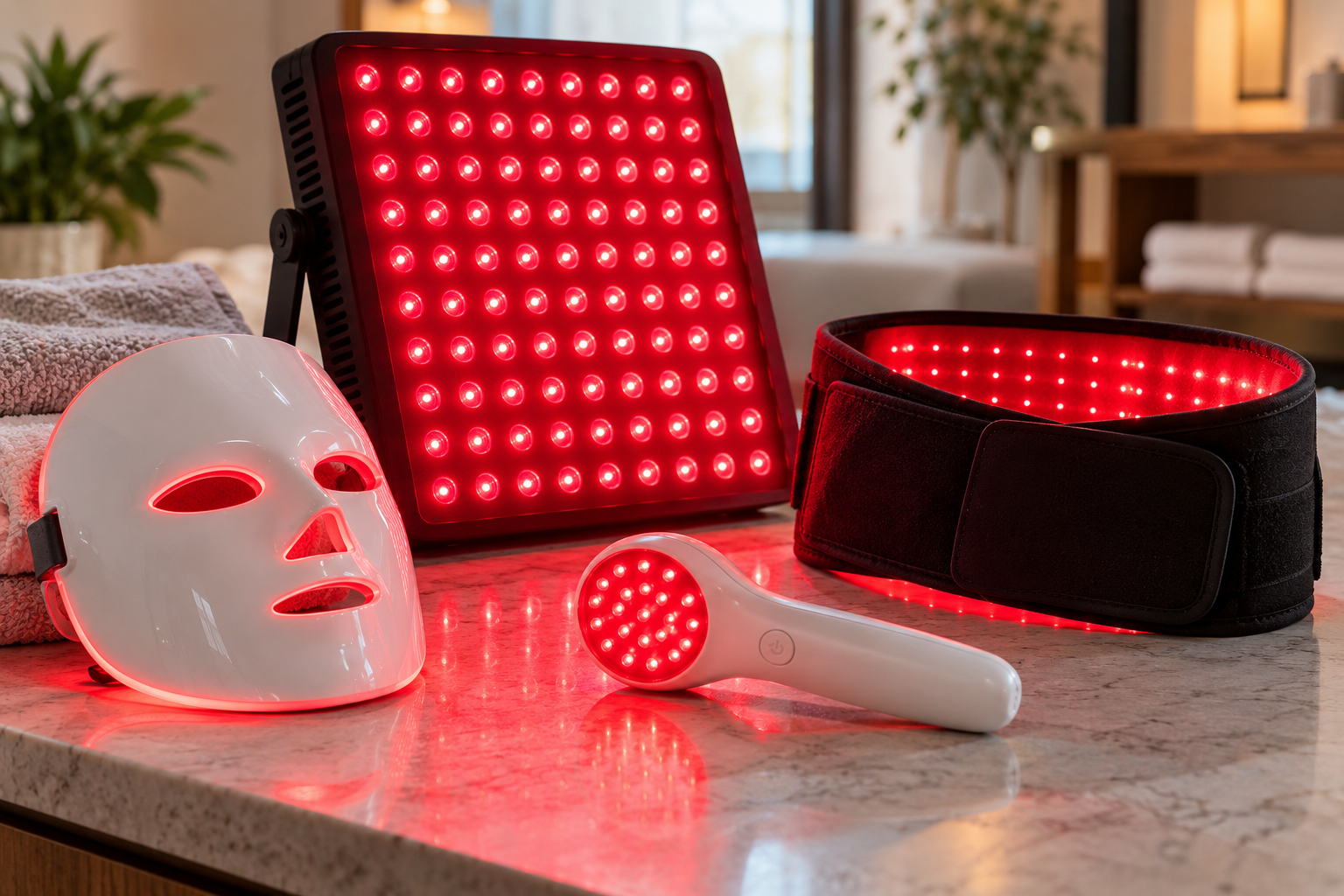
Types of Red Light Therapy Devices You Can Buy
Different designs serve different treatment needs. Understanding the main categories makes it easier to compare products.
1. Handheld Devices
Handheld products are designed for smaller treatment areas, such as the face, neck, or specific body regions.
Potential advantages:
- Compact design for convenient storage
- Targeted application
- Suitable for people with limited space
- Often easier to transport than large panels
Potential limitations:
- Small treatment coverage
- Manual positioning may be necessary
- Treating several areas can take additional time
These products may suit you if you want targeted treatment rather than extensive body coverage.
2. Facial LED Masks
Facial masks are designed to position light sources around the face. Some include adjustable settings or several light modes.
When comparing LED light therapy devices in mask form, pay attention to fit, eye protection, treatment duration, and cleaning requirements.
A comfortable design can make it easier to follow the recommended treatment schedule.
3. Light Therapy Panels
Red light therapy panels generally contain multiple LEDs arranged across a flat surface.
Depending on their dimensions, they may be used for larger treatment areas.
Some models include adjustable stands, timers, and separate red and near-infrared light controls.
Panels may be practical for users who prefer a stationary setup, although larger models require adequate storage space.
4. Wearable Light Therapy Products
Wearable products include flexible wraps, belts, and pads designed to position light sources against particular body areas.
Their convenience depends on flexibility, fit, power requirements, and the manufacturer’s intended use.
Before purchasing, check whether the product is designed for your preferred treatment area.
How to Compare the Best Red Light Therapy Devices
The best red light therapy devices for your needs depend on the intended application, technical specifications, and available safety information.
A high price or large LED count does not automatically indicate better treatment performance.
Check the Light Wavelengths
Wavelength is one of the first specifications worth reviewing.
Many consumer products use red light around 630–660 nanometers and near-infrared light around 810–850 nanometers.
These are common design choices, not universal standards for effective treatment.
Look for clearly stated wavelengths and information about how the manufacturer verified them.
Review Irradiance Information
Irradiance describes the amount of optical power delivered per unit area, commonly expressed in milliwatts per square centimeter (mW/cm²).
Manufacturers may publish irradiance measurements at specific distances.
When comparing these figures, check the measurement distance and testing method. A figure measured directly against a device cannot be compared fairly with one measured several inches away.
Higher irradiance does not necessarily produce better outcomes. Treatment dose and application also matter.
Examine Treatment Coverage
Device dimensions and LED placement affect how much skin can be exposed during a session.
For facial applications, a properly fitting mask or smaller device may be sufficient.
For larger treatment areas, panel dimensions and positioning options become especially relevant.
Evaluate Safety Features
Look for products with clear operating instructions, treatment limits, eye-safety guidance, and appropriate warnings.
Some products include automatic shutoff timers or protective eyewear.
These features can help you follow the intended treatment procedure.
Check Regulatory Information
In the United States, certain light therapy products are regulated as medical devices.
FDA clearance, when applicable, relates to a particular device and its specified intended use. It does not establish that every advertised benefit has been independently proven.
Be cautious of products described as “FDA approved” without supporting documentation.
You can verify applicable device information through official FDA resources.
Is At-Home Red Light Therapy Worth Buying?
At-home red light therapy may be worth researching if you prefer the convenience of using a device in your own space.
However, suitability depends on your treatment goal, budget, and willingness to follow the manufacturer’s instructions.
Potential Advantages
- Convenient access without repeated appointments
- A range of device sizes and configurations
- Control over treatment scheduling
- Options for targeted or larger treatment areas
Potential Disadvantages
- Initial equipment expense
- Differences in device quality and specifications
- Limited independent evidence for some consumer models
- Ongoing treatment routines that require consistency
Professional treatment may be preferable when you need a medical assessment, supervised therapy, or treatment for a diagnosed condition.
Red Light Therapy for Skin: What Should You Look For?
If your primary interest is red light therapy for skin, focus on products designed specifically for dermatological or cosmetic applications.
Review the intended treatment area, recommended session length, and any published clinical evidence related to the device.
You should also determine if the product is intended for general cosmetic use or has a specific medical indication.
Facial Treatment Devices
Facial devices may be appropriate for users primarily interested in cosmetic skin concerns.
Pay attention to:
- Facial coverage and fit
- Light wavelength specifications
- Eye protection requirements
- Cleaning and maintenance
- Recommended treatment schedules
Devices for Larger Skin Areas
Larger panels may be practical when you want to treat areas such as the back or legs.
However, you should verify that the device is intended for the treatment you have in mind.
A product’s physical coverage does not establish its effectiveness for every skin condition.
What Should You Know About Safety Before Using a Device?
Red light therapy is generally considered noninvasive, and appropriately administered treatments are often well tolerated.
Nevertheless, improper use can create unnecessary risks.
Potential concerns include eye exposure, temporary skin irritation, discomfort, or excessive light exposure.
Follow the manufacturer’s directions for distance, session length, frequency, and eye protection.
If you have a photosensitivity condition, take medications that increase sensitivity to light, or have an active medical concern, consult a qualified healthcare professional before use.
You should also avoid using consumer light therapy equipment as a substitute for necessary medical treatment.
Common Questions About Red Light Therapy Devices
How Often Should You Use a Red Light Therapy Device?
Treatment frequency depends on the product and intended application.
Some manufacturers recommend several sessions per week, while others specify different schedules.
Follow the instructions for your particular device rather than assuming one schedule applies to every product.
How Long Does It Take to See Results?
The timeline varies depending on the condition, device, treatment settings, and individual response.
Some clinical studies evaluate outcomes after several weeks of treatment, but these findings do not guarantee similar results from home equipment.
Are Expensive Devices Better?
Not necessarily.
A higher price may reflect larger dimensions, additional controls, accessories, or other product characteristics.
Instead of relying on price alone, examine technical documentation, intended use, safety information, and relevant clinical evidence.
Can You Use Red Light Therapy Every Day?
Daily use may be permitted for certain devices, but it is not automatically appropriate for all products.
Follow the specified treatment schedule. Increasing exposure beyond the recommended amount may not improve results.
Does Red Light Therapy Work Through Clothing?
Clothing can absorb, reflect, or scatter light, reducing the amount reaching the skin.
Many devices are intended for use directly over exposed skin. Check the manufacturer’s instructions before treatment.
Is Red Light Therapy the Same as UV Therapy?
No. Red and near-infrared light are different from ultraviolet radiation.
However, the absence of UV light does not mean that every device or treatment protocol is risk-free.
How to Choose a Red Light Therapy Device That Fits Your Needs
Before purchasing, identify the specific concern you want to address and find products intended for that application.
A practical buying checklist includes:
- Treatment purpose: Confirm that the device is intended for your desired application.
- Light specifications: Review the stated wavelengths and irradiance measurements.
- Coverage: Select a design suitable for the area you want to treat.
- Safety documentation: Read warnings, usage limits, and eye protection instructions.
- Clinical evidence: Look for research relevant to the device or its intended use.
- Product support: Check warranty terms, return policies, and replacement options.
- Total cost: Account for accessories, maintenance, and any replacement components.
If you are comparing available models, review current red light therapy device options and examine their published specifications before making a purchase.
The right purchase should be based on credible product information and realistic expectations rather than promotional claims.
Making an Informed Decision Before Purchasing
Red light therapy devices vary in design, intended applications, and supporting evidence. Taking time to compare these factors can help you avoid paying for features that do not match your needs.
For medical concerns, consult a qualified professional before relying on a home device. A thoughtful comparison can help you choose equipment that suits your intended use, available space, and budget.