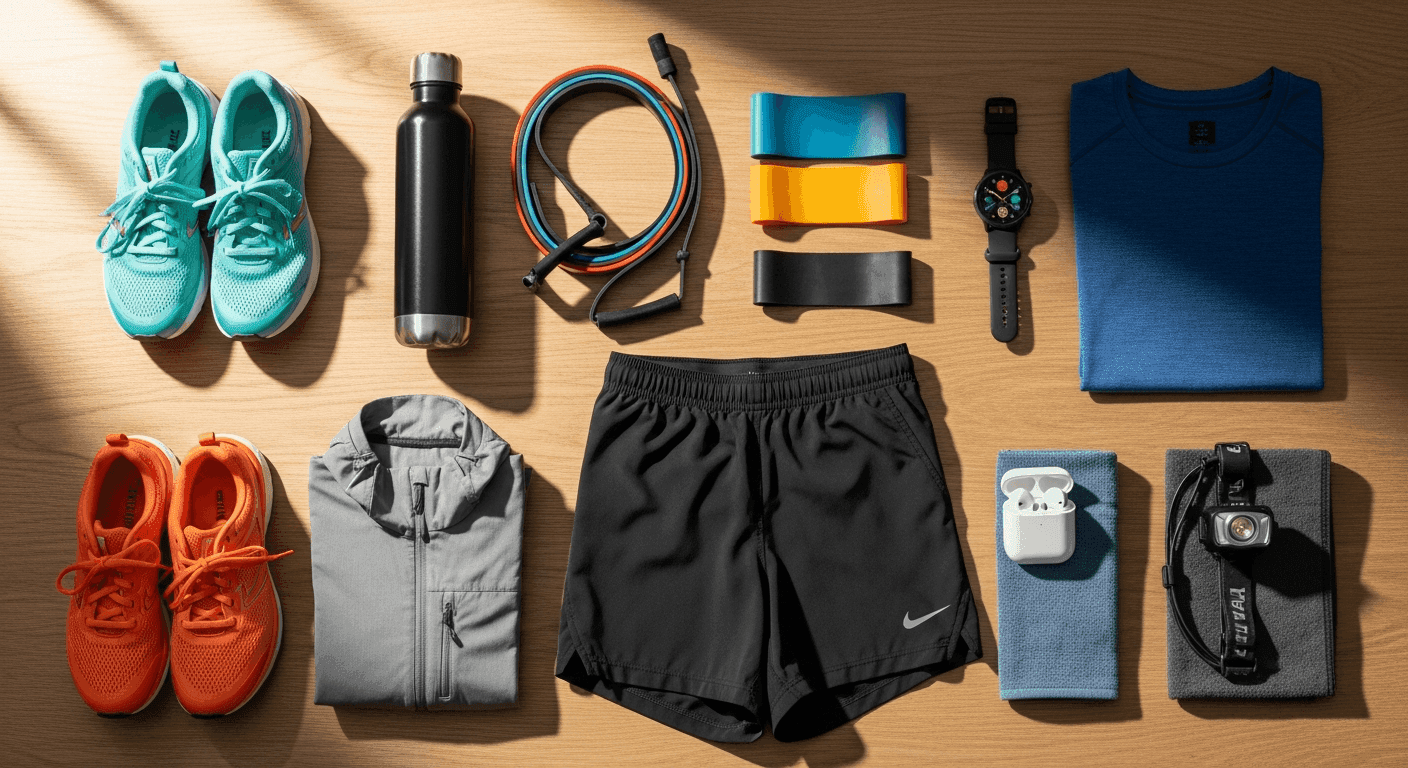
You know that moment when you're standing in a gear store or scrolling through endless product pages, completely overwhelmed because you genuinely don't know if you need premium equipment or if you're just getting scammed by marketing? Yeah, that's exactly what outdoor fitness and adventure gear does to people. There's so much choice, so many brands claiming to be "the best," and so much noise around what actually matters versus what's just nice to have.
The real difference between great gear and mediocre gear comes down to three things: does it actually do what it promises, will it hold up to real-world punishment, and does it fit your life rather than some fantasy version of yourself? A $2,000 exercise bike is pointless if you'll use it twice. An expensive backpack that doesn't distribute weight properly will ruin a trip. The best gear is the stuff you'll actually use, that performs consistently, and that lasts.
We're covering nine essential pieces across different activities—from indoor cycling and strength training to camping, hydration, recovery, and smartwatches—so you can make decisions based on actual trade-offs rather than hype.
1. Peloton Bike+
The Peloton Bike+ is for people who want the full experience: the motivation, the community, the instruction, and honestly, the ego boost of having a $2,500 piece of equipment in your living room. That 23.8-inch rotating touchscreen is genuinely the star here—it's big, clear, and rotating it 180 degrees means you can actually do off-bike workouts (strength, yoga, stretching) without craning your neck at your phone. The Auto-Follow resistance adjustment is a thoughtful feature that removes the guesswork, automatically matching the instructor's calls, which sounds small until you're 30 minutes into a ride and just want to push without thinking.
The real question is whether you'll use the ecosystem enough to justify the price. The bike itself is solid—the ride is smooth, the build quality is obvious—but you're paying largely for the Peloton experience: instructors, classes, community leaderboards, and Apple Watch integration. That subscription isn't optional either. If you're someone who gets genuinely motivated by live classes and competitive metrics, this could change your fitness habits. If you're the type who needs an excuse to use your equipment, this won't save you.
The downsides are real. It requires special cycling cleats, which adds cost and feels unnecessarily proprietary. The seat and handlebar adjustments can be finicky. And if you're buying this because you feel like you "should" work out at home, save your money—you won't use it, and that's a lesson no $2,500 piece of equipment can teach you.
Best for: People who thrive on community, structured coaching, and quantified metrics, and who have committed to being someone who actually cycles regularly.
2. Hydro Flask Wide Mouth Bottle (32 oz)
The Hydro Flask Wide Mouth is genuinely good at one thing—keeping drinks cold or hot for hours. The double-wall vacuum insulation is legitimate. Ice actually stays intact, and your cold brew won't be room temperature after three hours in the sun. The wide mouth design is practical; you can actually fit ice cubes, and cleaning is straightforward (no weird bottle brush gymnastics). The grip coating doesn't feel slippery when wet, which matters more than it sounds when you're hiking or climbing.
What separates this from a basic water bottle is reliability and durability. It's not fancy—it's just consistent. You buy it, it works, you don't think about it. The weight is a consideration for ultralight backpacking (it's heavier than most), but for car camping, day hikes, or honestly just carrying to the gym, it's fine. The design is sleek enough that you don't feel like you're carrying a thermos from 1997.
The catch: it's expensive relative to non-insulated bottles, and the lid can be finicky. If you don't screw it on properly, you get a leak. Some people have reported durability issues with the lid or cap, and the company's customer service for warranty claims has been inconsistent. You're also choosing between various cap options, and not all of them work well with the bottle.
Best for: People doing frequent outdoor activities who genuinely value keeping drinks at the right temperature, and who can afford to pay for reliability.
3. Osprey Atmos AG 65 Backpack
The Osprey Atmos AG 65 is what happens when a company designs a backpack for actual hiking and doesn't compromise. The Anti-Gravity suspension system is the key—it's a mesh panel suspended from the frame that distributes heavy loads (30-50 pounds) to your hips instead of your shoulders, which is the entire game in backpack design. Your shoulders shouldn't carry the weight. That system combined with the durable nylon construction means this backpack will handle serious backpacking trips and actually feel reasonable on your back.
The ventilation is exceptional. There's enough space between the pack and your back that you won't feel like you're hiking with a sweaty garbage bag clinging to you, which matters on long days. The organization is thoughtful: water bottle pockets you can access while wearing it, hipbelt pockets for snacks and your phone, a dedicated sleeping bag compartment. The Fit-on-the-Fly hip belt lets you adjust the fit without taking off the pack, which saves frustration when you're layering or adjusting throughout a day.
The trade-off is weight. This isn't an ultralight backpack, and ultralight enthusiasts will tell you they can get equivalent capacity in something half as heavy. Fair point. But the Atmos AG prioritizes comfort and durability, which means less chance of injury on a three-week trip. It's also heavier than essential for an afternoon hike where you're carrying a light load. The hip belt takes getting used to, and getting the pack on and off involves understanding the suspension system.
Best for: Multi-day backpacking trips where you're carrying a real load (30+ pounds) and you want comfort and durability over minimal weight.
4. Garmin Fenix 7 Sapphire Solar
The Garmin Fenix 7 Sapphire Solar is the smartwatch for people who want to track everything, know everything about their performance, and need the watch to survive actual expeditions. The solar charging lens is genuinely useful—it extends battery life to weeks on a single charge, which is ridiculous compared to most smartwatches. If you're doing a long wilderness trip, this watch will outlast you.
The GPS is multi-band, meaning it locks on quickly even in dense forest or canyon environments. It comes with downloadable maps, so you're not dependent on phone connectivity. The feature set is expansive: heart rate, pulse oximetry, respiration rate, sleep tracking, and activity profiles for basically every sport imaginable. The integration with the Garmin Connect IQ ecosystem means you can customize it further. The build quality (titanium bezel, tough construction) suggests this watch will outlive your interest in it.
The reality check: this is overkill unless you're genuinely using advanced training metrics. The complexity can be overwhelming—there are menus within menus, and the learning curve is steep. At $700-$1,200+, you're paying for capability you might not leverage. The screen is small compared to a dedicated bike computer, which matters if navigation is your primary use. The heart rate monitor is respectable but not as accurate as a chest strap during intense efforts.
Best for: Serious endurance athletes, ultra-trail runners, and expedition adventurers who will actually use the advanced training and navigation features.
5. Bowflex SelectTech 552 Adjustable Dumbbells
The Bowflex SelectTech 552 solves the problem that kills home gyms: space. A full dumbbell rack takes up serious real estate. These replace 15 sets of dumbbells and fit in a corner. The dial mechanism is quick and intuitive—you rotate it to your target weight and grab. That speed matters during supersets or circuit training when you don't want to spend 30 seconds searching for the right weight.
The weight increments are smart, especially those 2.5-pound jumps up to 25 pounds, which is crucial for progressive overload with smaller muscle groups or recovery work. You can actually squeeze meaningful gains by adding one 2.5-pound jump at a time rather than jumping from 20 to 25 pounds. The handles are comfortable and grippy. For beginners through intermediate lifters, the 52.5-pound max is legitimate.
The limitations are real. These aren't made to be dropped. The internal mechanisms are nylon, and slamming them is a quick way to void your warranty or actually break them. They feel somewhat bulky at lighter weights because the physical footprint stays consistent regardless of the selected load. If you're an advanced lifter pushing heavy weight, 52.5 pounds becomes limiting. At $350-$550, they're good value if you'll actually use them, but they're a commitment to smart training rather than just loading weight.
Best for: Home gym builders who prioritize space and convenience, and lifters comfortable with disciplined, controlled movements.
6. Coleman Sundome Tent (4-Person)
The Coleman Sundome is a tent for people who aren't pretending to be ultralight backpackers and just want reliable shelter without overthinking it. The dome shape is easy to set up—seriously, 10-15 minutes even if you've never done it before. The floor is a thick polyethylene "bathtub" design that keeps water from seeping in through the bottom, which is usually where tents fail. The ventilation is genuinely good for a budget tent thanks to the mesh panels and partial rainfly design that promotes airflow.
It's durable for a tent at this price. Proper care (drying it before storage, not leaving it exposed to UV constantly) and it'll give you years of car camping trips. The wind stability is solid for a dome shape. This is actual shelter, not a fancy tarp.
The catch: that partial rainfly is a weakness. Heavy, prolonged rain can find its way in along the lower tent body. The included stakes are cheap and should be replaced immediately if you're using the tent on anything harder than sand. The capacity rating is optimistic—a "4-person" tent comfortably fits two adults with their gear, not four humans. There's no standing room due to the low peak height. For serious backpackers or people planning multi-week expeditions, the materials feel basic compared to premium tents.
Best for: First-time campers and casual weekend car campers who want affordable, reliable shelter for fair-weather trips.
7. YETI Tundra 45 Cooler
The YETI Tundra 45 is a cooler for people who respect cold retention enough to pay for it. The rotomolded construction—the same method used for kayaks—creates a virtually indestructible one-piece body. It won't crack if you drop it. The insulation is genuinely commercial-grade: two inches of polyurethane foam pressure-injected into the walls. The gasket is freezer-quality. The result: ice stays frozen for days, even in direct sun, which is the entire point of a premium cooler.
It's certified bear-resistant when locked properly, which is a real feature for wilderness camping. The tie-down slots, non-slip feet, and overall design signal this was built by people who understand rough use. The drain plug works well. It comes with a dry goods basket so food doesn't sit in meltwater. This cooler will outlast multiple vehicles if treated properly.
The obvious downside is cost—$300+ is genuinely expensive for a cooler. It's heavy, especially when full, which limits portability. The actual capacity (38 quarts) is noticeably less than the "45" name suggests, so know what you're getting. If you're a casual camper using a cooler twice a year, this is wasteful. The premium cooler market is honestly a bit ridiculous in terms of price-to-function ratio, but YETI does back up the claims with performance.
Best for: Serious campers, fishermen, and outdoor enthusiasts who prioritize superior ice retention and durability over price.
8. Theragun PRO (5th Gen)
The Theragun PRO 5th Gen is a percussive massage device for people who either recover seriously or have enough money that $500+ on recovery equipment doesn't require much justification. The 16mm amplitude goes deep—it actually penetrates muscle tissue enough to break up knots and soreness that regular foam rolling misses. The triangular multi-grip handle is genuinely thoughtful; you can hold it multiple ways to reach the mid-back, legs, calves, wherever, without straining your own hands.
The interchangeable batteries are a quality-of-life feature—5 hours total runtime spread across two batteries, and wireless charging keeps it convenient. The speed range lets you customize intensity, and the 60-pound stall force means it won't bog down under pressure. The 5th Gen is 20% quieter than previous models, so you're not creating a helicopter sound in your apartment. Bluetooth connectivity to the app provides guided routines, which is helpful if you're unsure how to use it effectively.
This is expensive because it's commercial-grade. Massage therapists use these devices. That power is genuinely helpful for serious athletes or people with chronic tightness, but it's overkill if you're looking for a light massage tool. The weight and bulk matter—it's not pocket-sized. Some people find the power overwhelming initially. If you're price-sensitive, cheaper massage guns do acceptable work for half the cost.
Best for: Serious athletes, people with chronic muscle tension, and anyone who commits to actual recovery protocols and will use this multiple times weekly.
9. Lululemon Align Leggings
The Lululemon Align Leggings are expensive activewear that people either swear by or find absurd. The Nulu fabric is legitimately soft—like, "buttery" is the actual descriptor people use, and it's not marketing speak. It's lightweight, breathable, and stretches responsively without feeling restrictive. The high-rise waistband stays in place, doesn't roll, and often includes a hidden pocket. Minimal seams mean the fit is flattering and smooth under any top.
They transition brilliantly from yoga class to casual outings to lounging. People buy them for workouts and end up wearing them constantly because they're comfortable. Lululemon's quality control is solid—these hold up for extended wear (users report 100+ washes before visible decline). The company sizes inclusively in certain colors.
The real limitation: these are designed for low-impact activities. High-intensity workouts, running, or anything with friction and you risk pilling, particularly between the thighs. It's a documented issue. They're also expensive—$98-$128 for leggings is a commitment. If you need compression or support for intense training, these won't provide it. The delicate fabric requires some care in washing and storage.
Best for: Yoga practitioners, Pilates enthusiasts, and people who value comfort for low-impact movement and casual wear over durability in high-intensity settings.
How to Choose the Right Outdoor Fitness Adventure Gear
Match the Gear to Your Actual Activity (Not Your Fantasy Self)
This is the critical piece everyone gets wrong. You don't need a $1,200 watch if you hike occasionally. You don't need a Peloton if you're unsure about committing to indoor cycling. Assess what you actually do—not what you think you should do or what you want to do someday. Are you car camping or backpacking for weeks? Are you doing high-intensity workouts or low-impact yoga? Are you running ultra-marathons or jogging casually? The gear should match your real activity level, not an aspirational version that will sit unused in a closet. Honest self-assessment saves money and ensures the gear works for your life.
Durability Versus Ultralight Trade-offs
There's genuine tension between making gear lightweight and making it durable. A backpack optimized for weight will use thinner materials and might not handle years of rugged use. A pack optimized for durability will weigh more but last longer. Decide which matters more for your use case. If you're carrying a heavy load for a week, durability and comfort are worth extra weight. If you're day-hiking with minimal gear, weight is paramount. Same logic applies to coolers, tents, and water bottles—more insulation means more weight, but better performance.
The True Cost of Ownership
Upfront price is only part of the cost. The Peloton requires a monthly subscription. Specialty cleats for cycling aren't cheap. Quality gear that lasts 10 years is sometimes cheaper per year than cheap gear you replace every two years. A premium cooler costs more initially but retains value and performs better long-term. Factor in maintenance, required accessories, and replacement cycles when comparing options. The cheapest option upfront isn't always the cheapest option overall.
Test Before Committing to Premium Equipment
This is practical wisdom. If you're spending $300+ on something, try a basic version first. Borrow a friend's tent before buying the $2,000 ultralight model. Use basic dumbbells at a gym before investing in an adjustable set. Rent a backpack on a day hike before committing to a $300 pack. Return policies exist too—Lululemon takes returns, YETI has a warranty. Use these. You'll learn whether the premium option actually matters for your specific situation or whether a solid mid-range choice covers everything you need.
Why Your Gear Choices Actually Matter
Your gear choices directly affect whether you'll actually use something consistently and whether you'll be safe and comfortable doing it. Bad gear stops people from getting outside. Uncomfortable equipment doesn't get used. Unreliable gear creates frustration. The Osprey Atmos AG is expensive, but distributing a 40-pound load to your hips instead of shoulders means your back isn't destroyed after a week-long trip—that's not about luxury, that's about whether you keep backpacking or quit. The YETI cooler is expensive, but keeping food actually cold matters for safety on multi-day trips. The Peloton is expensive, but if structured coaching genuinely motivates you, that's worth the price because you'll use it.
Your best bets depend on commitment level. If you're genuinely serious about backpacking and carrying heavy loads, the Osprey Atmos AG 65 is worth every dollar—the comfort system directly enables better experiences. If you're cycling indoors and thrive on community and metrics, the Peloton+ delivers that. For casual camping and straightforward cold retention, the Coleman Sundome and a standard cooler handle everything fine. Avoid the trap of buying premium gear before confirming you'll use it, and avoid the opposite trap of choosing cheap gear for activities where quality actually affects safety or enjoyment.
Pick one piece of gear that genuinely aligns with what you actually do—not what you think you should do—and invest properly in that instead of spreading a budget across tools you'll never use consistently.