Introduction
You're standing in your garage at 6 AM on a Saturday, staring at a half-finished deck project, and you realize your old corded drill just isn't cutting it anymore. Sound familiar? The truth is, choosing the right power tools can mean the difference between a project that drains you and one that actually feels manageable. Good tools make work faster, cleaner, and honestly, way more enjoyable. Bad ones? They'll sit in your toolbox collecting dust, a constant reminder of money wasted.
What separates the tools that become extensions of your hand from the ones you regret buying comes down to a few things: genuine power delivered consistently, ergonomics that don't leave your wrists screaming after an hour, and reliability when you actually need it. A cordless drill that dies halfway through a job is worse than no drill at all. A saw that chatters and produces rough cuts teaches you nothing except frustration. The best tools in each category have earned their reputation through real performance, not marketing hype.
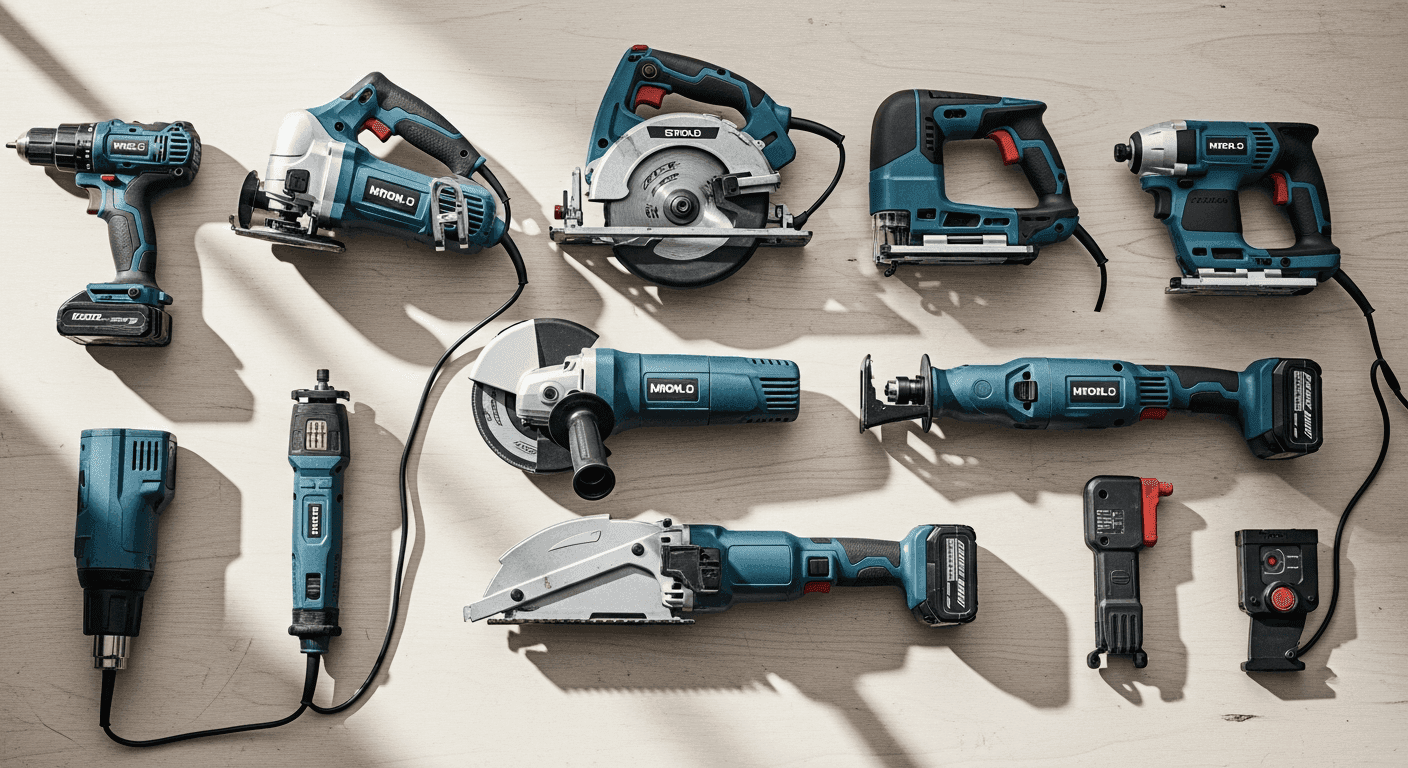
We're covering ten essential power tools that professionals actually reach for and serious DIYers genuinely depend on—everything from impact drivers to laser levels to that quirky rotary tool that somehow solves problems you didn't know you had.
1. DeWalt 20V MAX XR Hammer Drill (DCD996/DCD806B)
This is the workhorse that shows up to job sites and actually gets things done. The brushless motor means you're getting consistent power without the wear that brushed motors suffer from, and the three-speed transmission (on the DCD996) lets you match the tool to the task—ripping through wood at high speed or grinding through concrete at lower, more controlled speeds. That's not a gimmick; it's practical engineering that saves your wrists and extends bit life.
The hammer drill function is where this tool earns its place in any collection. When you need to punch through masonry or anchor bolts into concrete, this thing delivers. The metal ratcheting chuck won't slip, even when you're really leaning on it. The LED light with adjustable brightness is genuinely useful—not just a checkbox feature—especially when you're working in crawlspaces or cabinet interiors where natural light doesn't reach.
The real trade-off here is weight and bulk. This isn't a nimble tool for overhead work or confined spaces. If you're primarily doing light assembly or hanging shelves, you might find this overkill. But if you're tackling serious projects with frequent drilling into hard materials, the extra heft buys you capability. The price tag is higher than entry-level drills, but the brushless tech and three-speed system justify it.
Best for: Homeowners taking on serious renovation work or anyone doing frequent masonry drilling.
2. Milwaukee M18 FUEL 1/4-inch Hex Impact Driver (2953-20)
Impact drivers live in a different universe from regular drills, and this Milwaukee proves why. The 2,000 inch-pounds of torque with the ability to spin at 3,900 RPM means driving large fasteners is almost casual—they just sink in without the resistance you'd fight with a traditional drill. The POWERSTATE brushless motor is engineered to deliver that power without bogging down, even when you load it hard.
The 4-Mode DRIVE CONTROL is the feature that separates this from cheaper impact drivers. You can actually calibrate power to match your task, which sounds like a minor thing until you're installing cabinet hardware and realizing you can finally stop stripping screw heads. The compact design—under 4.5 inches—makes this tool surprisingly nimble. You can get into corners and tight spaces where a larger drill simply won't fit. The tri-LED lighting is genuinely bright and shadow-free, which matters when you're working in real job conditions, not a showroom.
The downside is noise. This thing is loud. If you live in an apartment or work early mornings, your neighbors will know about it. The premium price also means you're not going to impulse-buy this for basic tasks. It's built for professionals and serious enthusiasts who will use it hard and often.
Best for: Anyone doing frequent fastening work—decking, framing, cabinet assembly—who wants speed and precision without fighting the tool.
3. DeWalt DWS780 12-Inch Double-Bevel Sliding Compound Miter Saw
This is the saw that gets accurate cuts without requiring a PhD in laser calibration. The XPS cross-cut positioning system projects the shadow of the blade directly onto your workpiece, so you see exactly where the cut will be without relying on some LED dot that drifts or needs constant tweaking. It just works, and it works consistently.
The 15-amp motor is genuinely powerful, pulling through hardwood and dimensional lumber without hesitation. The double-bevel design means you can tilt the head left or right (0-49 degrees each way), eliminating the tedious task of flipping workpieces for opposing bevels. For trim work specifically, this saves massive amounts of time and frustration. The tall sliding fences accommodate crown molding nested vertically, which is exactly how professionals approach it. The sliding mechanism gives you surprising crosscut capacity for a 12-inch saw, and the whole construction is robust enough that you trust it won't wobble when you're making precision cuts.
The catch is the weight—this isn't a tool you casually move between job sites. It's also pricier than smaller miter saws, and if you're only cutting 2x4s occasionally, you're paying for capability you won't use. But if trim work, framing, or any task requiring clean, accurate angled cuts is in your future, this delivers professional results.
Best for: Carpenters and serious DIYers doing trim, molding, or any project where cut accuracy directly affects fit and finish.
4. Dremel 4300 Rotary Tool Kit
This tool solves problems in a way that nothing else in your toolbox can. Yes, it's limited—it's not designed for heavy drilling or aggressive cutting. But at 5,000 to 35,000 RPM, it can engrave, sand, polish, and grind with precision that regular tools simply can't match. The variable speed means you can dial in exactly the right aggressiveness for delicate work without ripping material apart.
The tool-less accessory system is genuinely convenient. No hunting for wrenches or struggling with a collet—you just twist and swap bits. The integrated pivot light directly illuminates your work, which matters when you're doing detailed carving or intricate restoration. Coming with 40+ accessories and attachments out of the box means you'll actually experiment with the tool instead of immediately deciding you need to buy more bits.
The corded design is the real limitation here. You're always tethered to an outlet, which kills mobility and can be annoying when you're moving between projects or rooms. It's also not a tool for heavy-duty work—it won't drill large holes or handle sustained aggressive cutting. Some users report the chuck mechanism loosening over time or the motor overheating during extended use, which means you need to respect this tool's limitations and take breaks.
Best for: Crafters, hobbyists, and anyone doing detailed work requiring precision control—restoration, carving, fine sanding, polishing.
5. DeWalt 12V MAX Green Cross Line Laser Level (DCLE34021N-XJ / DW088CG-XJ)
Green lasers are genuinely brighter and more visible than red, and this matters more than marketing suggests. In well-lit spaces or outdoors, a red laser becomes almost invisible, while this green beam stays crisp and clear. The self-leveling feature means you don't spend ten minutes tweaking—place it, wait two seconds, and you have a perfectly level line.
The cross-line projection (horizontal and vertical) covers most layout tasks without repositioning. That sounds simple until you're setting tile or framing and realize you can see your reference line without constantly checking. The compact size makes it genuinely portable, and battery compatibility with DeWalt's existing 12V or 18V systems means no proprietary chargers or orphaned batteries. The durable housing and IP rating mean it survives job site conditions without coddling.
The price is higher than red laser levels, though you get what you pay for in visibility and reliability. Some tool-only versions sell without the battery and charger, so check what's included. The pulse mode for detector use extends range, which is useful for exterior work but adds complexity most users won't need.
Best for: Anyone doing layout work where visibility and speed matter—cabinet installation, flooring, electrical rough-in, general framing alignment.
6. Kreg K4 Pocket-Hole Jig System
This tool democratized woodworking by making strong, hidden joints accessible to anyone without requiring years of joinery training. The pocket-hole method is simple: drill angled holes, drive screws, and you have a joint that's stronger than you'd expect from a screw. The K4's three-hole guide with hardened steel sleeves ensures drilling at the correct angle, preventing bit deflection that ruins accuracy.
Setting it up for different material thicknesses is straightforward—the jig clearly marks settings for everything from 0.5-inch veneer to 1.5-inch solid wood. The clamping system holds your workpiece firmly enough that you can drill confidently without worrying about the piece shifting. The starter kit includes everything you need: drill bit, drive bit, depth collar, and actual screws to try it with. You're not buying a jig and then realizing you need to buy everything else separately.
The plastic construction, while heavy-duty glass-filled nylon, bothers some woodworkers who prefer all-metal tools. The clamping screw can loosen over time with aggressive use. Newer models from Kreg have more features, but they also cost significantly more, and the K4 remains genuinely capable for most users. This isn't a limitation; it's a feature of the value proposition.
Best for: DIYers and beginning woodworkers building furniture, cabinets, or doing repair work where hidden joints improve aesthetics.
7. Makita 18V LXT Brushless 6-1/2" Circular Saw (XSH03)
The 6.5-inch blade is smaller than traditional 7.25-inch saws, but the trade-off is a lighter, more manageable tool that still handles 2x lumber and plywood effectively. The Automatic Speed Change™ technology adjusts both speed and torque in real-time, which means you get clean cuts without the tool bogging down and stalling when you hit knots or dense grain. That's practical engineering that shows up in the quality of your cuts.
The brushless motor delivers corded-level power from a battery, which remains genuinely impressive given how small the tool is. The electric brake stops the blade almost immediately, and the magnesium construction keeps weight down without sacrificing durability. The ergonomic rubberized grip is comfortable for extended use, and the compact size makes overhead cuts and rip cuts along edges actually manageable rather than exhausting.
The smaller blade limits you on cutting depth compared to 7.25-inch saws—you won't crosscut 4x lumber in a single pass, though you'll handle dimensional lumber fine. Battery life matters here; continuous heavy cutting drains batteries faster than some larger tools. The bare tool typically means buying batteries and charger separately, which adds to the initial cost.
Best for: Anyone doing framing, demolition, or sheet goods cutting who wants a cordless saw that doesn't exhaust you after a few hours of use.
8. Milwaukee M18 FUEL 4-1/2" / 5" Angle Grinder (2880-20)
Calling this cordless grinder "corded performance" isn't hyperbole—it's understating it. The POWERSTATE brushless motor maintains power under load with 8,500 RPM and doesn't lose torque when you really press it into material. This matters when you're grinding welds or cutting rebar; you need the grinder to keep working, not slow down and heat up.
The RAPIDSTOP™ brake is genuinely impressive—the wheel stops in under two seconds, which is meaningful safety engineering. The paddle switch gives you precise control and comfort during extended use. The tool-free guard adjustment means changing tasks or swapping wheels doesn't turn into a wrestling match. The slim body and anti-vibration side handle reduce fatigue, which actually matters when you're standing there grinding for hours.
The reality is that cordless performance requires battery investment, and continuous heavy use drains batteries faster than intermittent work. You'll likely want multiple batteries rotating while one charges. The upfront cost is higher than a corded grinder, and if you only grind occasionally, you're paying for capability you're not using. But if metalwork or serious grinding is part of your routine, the freedom from a cord and the consistent power justify the investment.
Best for: Metalworkers, fabricators, and construction professionals doing frequent grinding, cutting, or rust removal who value mobility and consistent power.
9. Ryobi 18V ONE+ HP Brushless Impact Driver (P238 / PSBID04)
This impact driver punches well above its price point, delivering up to 2,200 inch-pounds of torque and high impacts per minute without the premium brand markup. The brushless motor runs efficiently, and the three-speed settings let you dial in power instead of running everything at maximum and hoping for the best. That control is what separates a tool that drives fasteners from a tool that strips heads and frustrates you.
The compact, lightweight design makes this genuinely manageable for overhead work and tight spaces. The Tri-LED lights are bright and useful, the auto-load chuck works reliably, and the MagTray magnetic holder keeps fasteners handy. If you already own Ryobi tools on the ONE+ platform, this adds significant value through battery compatibility with over 280 other tools—that ecosystem is legitimately useful.
The trade-off for the price is that battery life is shorter than professional-grade tools under sustained heavy use, and you're not getting the advanced control features or warranty that come with premium brands. But for homeowners and DIYers tackling typical fastening work—deck building, cabinet assembly, framing—this tool delivers reliability without guilt about the cost. You get pro-level features at a price that doesn't make you wince.
Best for: Budget-conscious DIYers and homeowners doing regular fastening work who appreciate value and integration with an existing tool system.
10. Makita XDT16Z 18V LXT Brushless 4-Speed Impact Driver
This is the impact driver that suggests Makita spent time understanding what actually frustrates users and engineered solutions. The Quick-Shift Mode™ and 4-speed selection mean the tool electronically adjusts speed and torque to match what the fastener needs—driving slower and smoother until resistance occurs, then accelerating. That sounds technical, but what it means in practice is significantly fewer stripped screw heads and less cross-threading.
The minimal chuck wobble is worth mentioning because it directly improves accuracy with longer bits. When you're driving fasteners that matter—hanging cabinetry, securing critical connections—this precision shows up. The dual LED lights illuminate the work area effectively, and the compact, lightweight design (2.32 lbs) fits comfortably in hand for extended use. The brushless motor delivers strong performance consistently without the maintenance issues of brushed tools.
This is a premium tool at a premium price, especially for the bare tool without batteries and charger. You're paying for advanced control features and Makita's reputation for durability. If you're only driving the occasional fastener, this feels like overengineering. But if precision and control in fastening matter—finishing carpentry, cabinetry, work where the fastening quality directly affects the final result—this tool provides capability that justified its cost.
Best for: Professionals and serious woodworkers doing finishing work, cabinetry, or any fastening application where precision and control are non-negotiable.
How to Choose the Right Power Tools
Match the Tool to Your Actual Work
This is where most people go wrong. They buy a hammer drill because they might need masonry someday, or an expensive laser level for the possibility of cabinet work. Honest assessment matters here. What projects are you actually doing in the next year? What tasks do you repeatedly struggle with using current tools? Buy for your reality, not your fantasy renovation list. If you're hanging shelves and building raised beds, a basic cordless drill is plenty. If you're framing a room addition or doing frequent masonry, the hammer drill investment makes sense.
Battery Platform Compatibility
If you already own tools from a specific manufacturer, this decision largely makes itself. Buying a DeWalt tool when your entire collection is Makita means a separate charger, incompatible batteries, and duplicated costs. The major platforms—DeWalt 20V MAX, Milwaukee M18, Makita 18V LXT, Ryobi ONE+—are essentially interchangeable in terms of system thinking. Pick one ecosystem and stay with it. The cost savings on batteries alone make this worth doing intentionally rather than randomly acquiring tools.
Brushless Technology and Power Delivery
Brushless motors cost more upfront but deliver tangible benefits: longer runtime on a single charge, more consistent power under load, and reduced maintenance. The price premium is typically 20-30%, but you recoup it in battery life and reliability. If you're buying something you'll use regularly—an impact driver, drill, circular saw—brushless is worth the extra cost. For occasional-use tools or specialty items, brushed motors are acceptable.
Weight and Ergonomics Matter More Than Specs
A tool with impressive numbers on paper that gives you hand cramps after thirty minutes is worse than a less powerful tool you can actually use comfortably. Hold the tool before buying if possible. Does it balance well? Does the grip feel natural in your hand? Are controls easy to access and adjust? These practical considerations affect how often you'll actually reach for the tool. A lighter impact driver you use regularly beats a powerful heavy one that sits on the shelf because using it is exhausting.
Conclusion: Building Your Power Tool Arsenal
The DeWalt 20V MAX XR Hammer Drill stands as the foundation for anyone doing serious DIY or occasional professional work—it handles drilling, driving, and masonry with confidence and durability. If fastening is your frequent task, either the Milwaukee M18 FUEL Impact Driver (for pure power and speed) or the Ryobi ONE+ Brushless Impact Driver (for value and integration) covers your needs depending on budget and usage intensity. For cutting work, the DeWalt DWS780 Miter Saw delivers precision that directly improves project quality, while the Makita Circular Saw provides cordless mobility for framing and demolition work.
Start with these three categories—drilling/driving, cutting, and fastening—and build from there. The complete arsenal emerges from actual needs, not aspirational projects. When you're ready to add specialized tools like the Dremel for detailed work or the Milwaukee Angle Grinder for metalwork, you'll know exactly why you need them because you'll have encountered the limitation five times already.
Pick one battery platform—whether DeWalt, Milwaukee, Makita, or Ryobi—and commit to it. This single decision eliminates future chaos and makes your tool collection actually function as a system instead of a random assortment of incompatible devices.