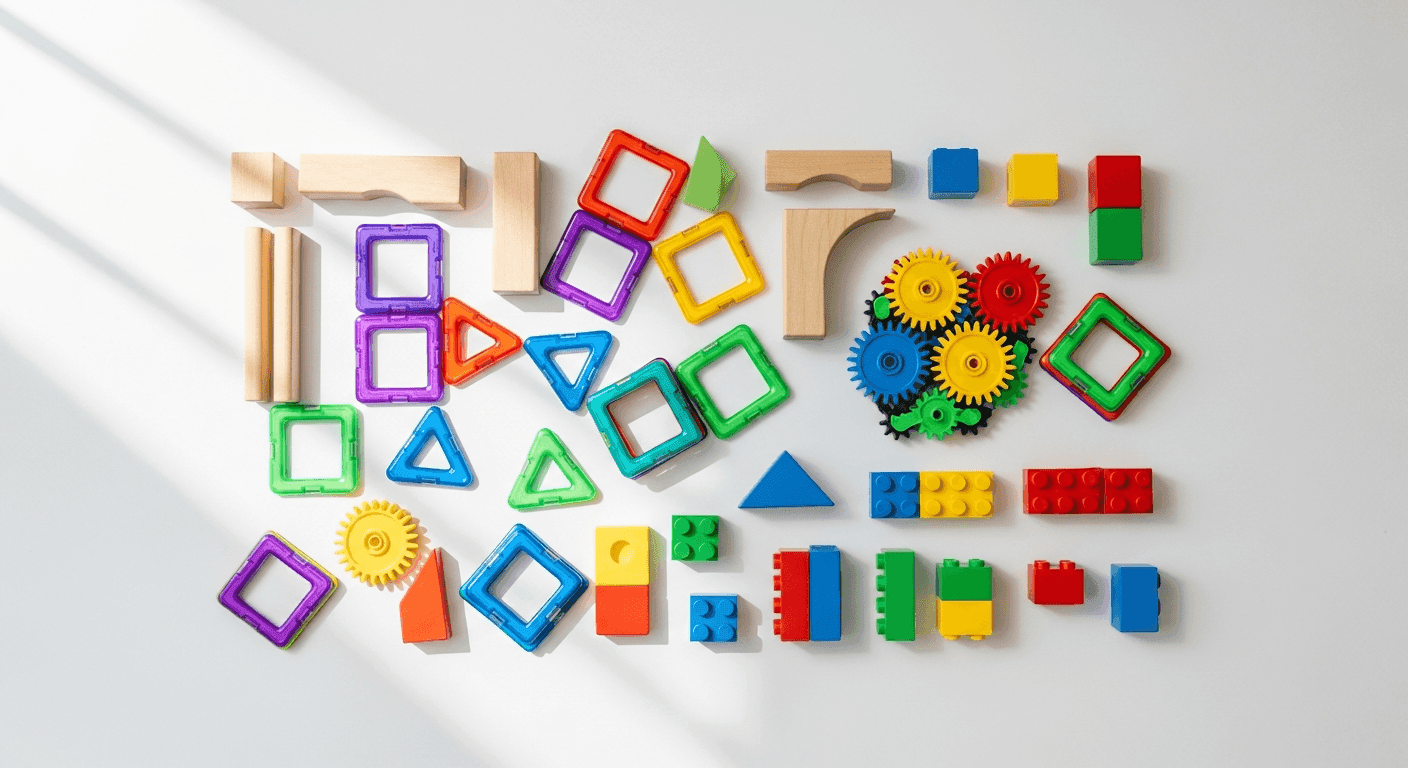
Kids Building Toys Product List
Introduction
You're standing in a toy store—or scrolling through an online catalog—and suddenly you're paralyzed. There are literally dozens of building toys staring back at you, each one promising to unlock your child's creativity. You want something that'll keep them engaged for more than five minutes, develop their brain, look decent sitting on the shelf, and not cost more than your monthly coffee budget. Sound familiar? You're not alone. Parents and educators everywhere struggle with this exact decision.
What separates a toy that gathers dust from one that becomes a beloved staple comes down to a few key factors: does it encourage open-ended play or require strict instruction-following? Will it grow with your child's skill level? Does it offer actual educational value without feeling like work? The best building toys do all three simultaneously, which is genuinely rare.
Here's what we're covering: 13 of the most reliable, genuinely good kids building toys on the market right now—from classic LEGO to magnetic tiles, wooden blocks, marble runs, and everything in between.
1. LEGO Classic Large Creative Brick Box (10698)
This is the building toy that doesn't try to be anything fancy—and that's exactly why it works. With 790 pieces in 33 colors plus all the accessories (windows, doors, wheels, baseplates), you're getting a genuine blank canvas. No specific theme means zero instructions telling your kid what to build. They get to figure that out themselves, which is when the actual creative work happens.
The storage box is genuinely useful—not an afterthought—and the pieces connect seamlessly with literally any other LEGO set your child might accumulate later. If you're starting fresh or adding to a collection, this set is the sensible foundation every building enthusiast needs. The per-piece value is solid, though not the cheapest on the market. Some kids actually struggle without a specific goal, so this isn't universal. But for most children 4 and up, this teaches more about problem-solving and spatial thinking than any instruction booklet ever could.
Best for: Kids who need a canvas rather than a recipe, and parents who want one set that won't feel outdated in three years.
2. Magna-Tiles 32-Piece Clear Colors Set
Magnetic tiles are a different beast entirely from bricks. The "click" when two pieces snap together is genuinely satisfying—kids feel immediate, physical feedback that tells them the structure is secure. The 32-piece set is translucent, which matters more than it sounds. When light hits these creations, they're actually beautiful. That beauty matters for motivation.
What makes Magna-Tiles stand out is the physics. Kids intuitively learn about gravity, balance, and structural integrity because the magnets make failure obvious and immediate. A poorly balanced tower just falls. No forcing pieces together like with some competitors. The downside is the cost per piece, which is higher than bricks, and 32 pieces might feel restrictive for ambitious builders. But this set is genuinely expandable—not in a predatory way, but logically. Most families buy this, use it for months, then add a second set when the kid naturally outgrows the limitations.
Best for: Kids aged 3-7 who are visually stimulated and learn best through tactile feedback, or anyone building display pieces rather than functional models.
3. GraviTrax Starter Set
This one's pure physics wrapped in a toy. Over 100 pieces—hexagonal bases, transparent height blocks, track segments, and special elements like a magnetic cannon and vortex—combine to teach actual engineering principles. Your kid isn't just building; they're problem-solving. Will the marble make it through the loop? Only if they get the angle and entry speed exactly right.
The learning curve matters here. The starter set includes blueprints and task cards, so kids have scaffolding if they need it. But the real value emerges when they move beyond the instructions and start experimenting. Does the vortex work better at this height? What if I add a second free-fall? That's where critical thinking lives. The cardboard pieces wear down with heavy use, and some connections feel a bit loose, but for kids 8 and up who love problem-solving more than open-ended play, this is exceptional. It's also legitimately expandable—not a gotcha expansion trap, but real modular growth.
Best for: Kids aged 8+ who like puzzles, engineering concepts, and aren't satisfied with "just building."
4. Lincoln Logs 100th Anniversary Tin
There's something primal about stacking real wood. These 111 pieces are genuine maple, stained in muted colors, with the original indentation design that just works without explanation. You don't need instructions or magnets or any gimmick. You understand how Lincoln Logs work in about 30 seconds.
The set comes in a collectible metal tin—which actually makes storage straightforward instead of a nightmare. The included manual shows three ideas: a tower, two small houses with a bonfire, and a full cabin. But the real joy is that kids don't need to follow them. The materials are beautiful enough that watching someone build with Lincoln Logs is almost meditative. The trade-off: they're less versatile for non-cabin-like structures, and you're limited by the piece count for truly ambitious projects. Some pieces fit loosely after heavy use, too. But for developing fine motor skills, spatial reasoning, and an appreciation for classic design, these are hard to beat.
Best for: Kids 4+ who appreciate materials as much as creation, or families looking for a multi-generational heirloom toy.
5. Tegu Magnetic Wooden Blocks (42-Piece Set)
Tegu blocks are wooden blocks that solve one specific problem: how do you make stacking interesting again? By hiding magnets inside. The result is gravity-defying connections that feel like magic the first time they work, but teach real physics once kids understand the mechanism.
These are sustainably sourced, finished with non-toxic lacquer, and visually refined. Unlike plastic magnetic tiles, they don't accumulate dust on a shelf. The 42-piece set includes nine distinct shapes—columns, planks, cubes, angles, wheels—so you can build moving objects and complex structures. The price is steep compared to traditional blocks, but the durability and aesthetic appeal justify it for many families. One real downside: if a magnet repels instead of attracting, young kids find it frustrating until they understand polarity. Also, you have to actually care about where blocks end up—they're too nice to abandon in a corner.
Best for: Kids 1-5 and design-conscious parents who want a toy that's genuinely beautiful enough to display and use daily.
6. Connetix Tiles 100 Piece Creative Pack
Connetix positions itself at the premium end of the magnetic tile market, and it earns the position through stronger magnets, beveled edges, and color that's just slightly richer than competitors. The beveled design isn't just aesthetic—it prevents wear, refractors light beautifully, and makes the whole experience feel more refined.
With 100 pieces in various geometric shapes, you have enough for serious 3D architecture or multiple kids building simultaneously. The magnets hold securely even during active play, which means structures don't collapse unexpectedly. For STEM learning—geometry, physics, balance, spatial reasoning—these tiles are genuinely excellent. The cost is higher than budget alternatives, and yes, kids will inevitably want more pieces. But this is one of those toys where the quality noticeably affects the experience. Cheaper magnetic tiles will teach the same concepts; these make it more fun.
Best for: Kids 3-8 who build ambitious structures, or classrooms needing durability and reliability.
7. LEGO Star Wars Millennium Falcon (75192)
Be honest: this isn't really for a kid. Or it's for a 16+ "kid" who's been obsessed with Star Wars for years. This is 7,541 pieces, over 33 inches long, and more complex than most furniture assembly. The build alone takes weeks. Multiple weeks.
If your child (or you, let's be real) fits that category, the detail is stunning. The interior is fully developed—cockpit, hold, engine room—and it comes with eight minifigures spanning both the original and sequel trilogies. The ship can swap between classic and Episode VII configurations. It's a display piece, a collector's item, and a testament to what LEGO engineering can achieve. The price reflects that—this isn't an impulse buy. It requires serious space, serious money, and serious commitment. But for the right person, it's essentially priceless.
Best for: Serious Star Wars collectors, experienced LEGO builders aged 16+, or that one adult in your life who "doesn't play with toys anymore" but absolutely does.
8. K'nex 30 Model Building Set (13419)
K'nex is the bridge between static building toys and actual mechanical engineering. The 400+ rods and connectors snap together to create hinged, rotating, and moving structures. Your kid isn't just stacking blocks; they're understanding how mechanisms work.
The set comes with instructions for 30 models, which provides guidance while still leaving room for experimentation. Unlike LEGO, where a brick is a brick, K'nex pieces inherently suggest motion and function. A vehicle you build actually rolls. That tangibility matters. Building with K'nex requires slightly more dexterity than other toys—the connectors are a touch fiddly—and some models demand patience. But children who build with K'nex develop genuine intuition about structural integrity and balance that translates to real engineering thinking. The storage container is practical, and the durability is solid.
Best for: Kids 7+ who get bored with static structures and want to build things that actually do something.
9. Picasso Tiles 100 Piece Set
Picasso Tiles are the budget-friendly entry point into magnetic building that doesn't sacrifice too much quality. You're getting 100 translucent pieces in jewel-toned colors with embedded magnets—just like premium brands, but at a price that doesn't require a family meeting.
The shape variety is solid: large and small squares, different triangle types, sometimes special pieces like car bases or windows. Light passes through them beautifully, creating the same aesthetic appeal as pricier options. The open-ended nature means kids build whatever they imagine—castles, bridges, vehicles, abstract sculptures. The magnets work fine for most structures, though they might be slightly weaker than premium alternatives, which means tall towers require more careful construction. They're often compatible with other magnetic tile brands, so you can mix and match if you already have similar toys. Fingerprints and dust are more visible on clear plastic, which matters if appearance bothers you.
Best for: Budget-conscious families starting with magnetic tiles, or parents adding to an existing collection.
10. Play Platoon Building Bricks Kit (1100 pieces)
This is the bulk play. 1,100 pieces in various shapes and vibrant colors give you genuine freedom to build without constantly running out of pieces mid-project. The assortment includes wheels, axles, and specialized elements beyond basic bricks, so you're not entirely limited to cubes and rectangles.
The value per piece is genuinely strong—this costs less per brick than premium sets. Durability is solid; these plastic pieces withstand years of use. The compatibility with major brick brands means you can mix and match if other sets are already in your house. Fine motor skills, spatial awareness, hand-eye coordination—all develop naturally through building. The real downside: cleanup is genuinely challenging with this many small pieces. Precision fit and color consistency might not match premium brands. Some edges might be slightly sharp. But for raw building material at a fair price, this delivers.
Best for: Families with multiple kids or single kids with serious ambitions, and anyone who prioritizes quantity over brand recognition.
11. ETI Toys STEM Learning Building Blocks (101-piece)
ETI Toys markets themselves around STEM learning, and they genuinely deliver on that promise. The 101 interlocking plastic pieces are designed to be manipulated by small hands while encouraging critical thinking about how structures hold together.
What makes these different is the explicit focus on problem-solving from the start. This isn't just "build whatever you want"—it's "build something stable, and think about why it stays up." The bright colors are engaging, the materials are certified BPA, lead, and phthalate-free (which matters if that's a priority for your family), and a storage tub is included. Group play is encouraged by the design, which is genuine if you have multiple kids or classroom use. The potential downside: some pieces might not connect as tightly as you'd want, and specialized elements like wheels are less common than with some other brands. It feels less premium than magnetic tiles or wood.
Best for: Kids 4-8 in educational settings, or families prioritizing STEM concept introduction over open-ended play.
12. ThinkFun Gravity Maze
This isn't a freeform building toy—it's a puzzle game with a marble run component. You're given a grid, nine towers, and a challenge card that tells you which towers to place and where to guide the marble. Your job is to arrange the remaining towers to create a path from start to target.
There are 60 challenges ranging from genuinely easy to genuinely difficult. The brain work is real: spatial reasoning, logical deduction, cause-and-effect understanding all apply. Unlike open-ended building toys, this provides a specific goal and validates whether you succeeded or failed. That clarity matters for kids who find pure creative freedom paralyzing. The pieces are durable, the mechanics work smoothly (mostly), and the play is genuinely engaging. The trade-off: this is puzzle-solving, not open-ended building. It's single-player focused. If your kid wants to build whatever they imagine, this won't scratch that itch. But for developing critical thinking and enjoying solo problem-solving, it's exceptional.
Best for: Kids 8+ who love logic puzzles, and kids who need clear success criteria rather than open-ended exploration.
How to Choose the Right Kids Building Toys
Age and Skill Level
Start here because it's non-negotiable. A 2-year-old doesn't need 7,541 LEGO pieces—they need pieces large enough that swallowing isn't a catastrophe. Lincoln Logs or large Tegu blocks work. A 6-year-old can handle standard LEGO but might find pure Picasso Tiles simplistic if they've been building for years. An 8-year-old benefits from the problem-solving of GraviTrax or K'nex over pure creative play. By 16, the Millennium Falcon becomes reasonable. Mismatched difficulty creates frustration, not learning. Watch what your child gravitates toward naturally—puzzle games, mechanical movement, open-ended creation—and match the toy category to that inclination.
Open-Ended vs. Goal-Oriented Play
This divides the field sharply. Toys like LEGO Classic, Magna-Tiles, and Tegu blocks let kids imagine and build whatever they want. There's no "right answer," which develops genuine creativity and problem-solving but can paralyze kids who need structure. Toys like GraviTrax, Gravity Maze, and K'nex's instruction-based building provide specific goals: solve the puzzle, build the model, complete the challenge. These develop different skills—logical thinking, patience, attention to detail—but less pure imagination. The best scenario: your child has access to both types.
Durability and Real-World Value
How long will this actually last? LEGO Classic pieces outlive their owners. Magnetic tiles hold up well but can lose strength if magnets are damaged. Cardboard elements in GraviTrax wear out with heavy use. Wood blocks appreciate with time; cheap plastic eventually feels cheap. Consider whether this is a one-kid toy or a hand-me-down that needs to survive siblings. The most durable toys usually cost more per piece but save money long-term.
Storage and Space Requirements
Be realistic. A 1,100-piece brick set requires actual storage infrastructure—a bin, a cabinet, somewhere to keep it. GraviTrax needs flat surface space for display during building. The Millennium Falcon needs 33 inches of shelf space. Magnetic tiles can be scattered across a table. Lincoln Logs live in a tin. Before buying, assess whether you have the physical space and organizational system this toy demands. A toy stored in chaos gets lost, damaged, or unused.
Why These 13 Stand Out From the Rest
These toys work because they're genuinely designed, not just marketed. LEGO Classic succeeds because unlimited blocks teach unlimited thinking. GraviTrax teaches actual physics in a format kids find fun rather than educational. Magna-Tiles sell because magnets make failure obvious and immediate, which teaches cause-and-effect faster than any instruction could.
The other standouts share a quality: they don't try to do everything at once. Gravity Maze knows it's a puzzle. Lincoln Logs know they're wooden blocks. Tegu knows they're premium toys meant to be displayed. That clarity of purpose makes each one excellent at what it actually does.
If you need to pick just one: start with LEGO Classic (10698) for pure versatility, or Magna-Tiles for visual impact and spatial learning. If you have budget room, Connetix Tiles or a second set expands possibilities faster than any single toy could alone. The real answer, though, is that your kid needs multiple types—something for unstructured creation, something for problem-solving, something tactile. Mix them. Rotate them. Watch which one actually gets pulled out repeatedly.
That's your answer about what works.