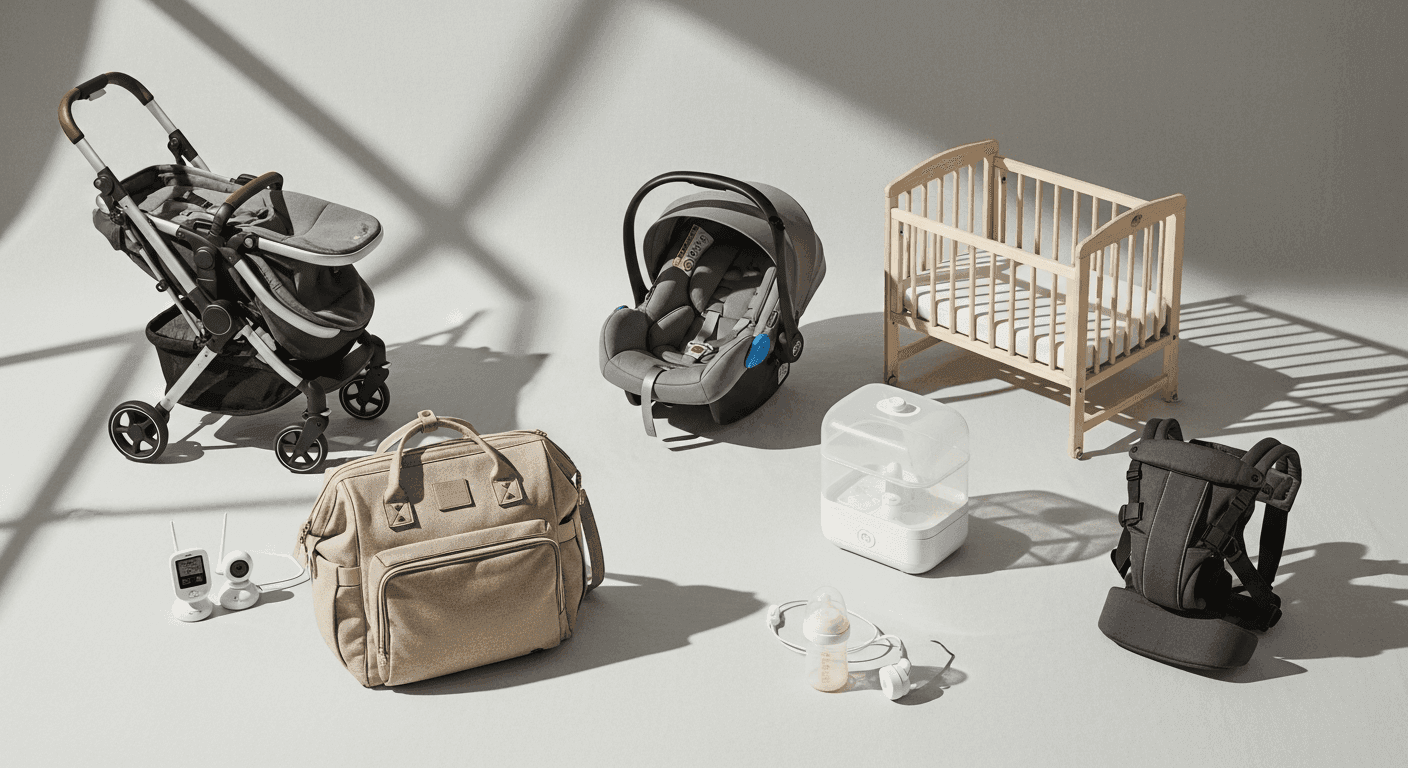
You're standing in a nursery supply store at 9 PM, sleep-deprived and overwhelmed, staring at dozens of monitors, bottles, and safety gates. Your phone is already full of browser tabs comparing specs you don't understand. Sound familiar? Most new parents feel this exact panic because the essential baby gear market is absolutely massive—and not all of it actually matters. The truth is, you need some things to function, but you don't need every shiny gadget that promises to revolutionize your life.
What separates genuinely useful baby gear from the stuff you'll regret buying comes down to three things: does it actually solve a real problem, will it last beyond the newborn phase, and can you figure out how to use it when you're running on three hours of sleep? The best products are either obsessively engineered for one job (like a safety gate that just works), or they're flexible enough to grow with your kid for years. Everything else is negotiable.
Here's what we're covering: two monitoring solutions at different price points, bottles designed to reduce colic, a chair that lasts a decade, a safety barrier that actually protects, a swaddle that lets babies self-soothe, and a car seat that handles newborns through toddlerhood.
1. Nanit Pro Smart Baby Monitor
This is the monitor for parents who want to see everything—and I mean everything. The 2K HD video is genuinely impressive, the overhead mounting angle gives you a full crib view without weird shadows, and the sleep analytics actually track your baby's patterns in ways that can help you understand what's happening at 3 AM. The breathing wear compatibility is the real flex here; if you're the type to lie awake worrying about your baby's respiration, the contact-free monitoring offers legitimate peace of mind.
But here's the catch: you're paying for the tech ecosystem. The monitor needs Wi-Fi, relies on your smartphone app, and charges monthly for the advanced features that make it worth the premium price. If your internet goes down, you've got a camera with limited functionality. You're also trusting a company's cloud servers with video of your baby. For some parents, that's a dealbreaker on principle. The price tag is substantial—we're talking $279 minimum, and that's before adding accessories. It's not a casual purchase.
Best for: Tech-forward parents who want detailed sleep data and don't mind paying for a subscription, or anyone genuinely concerned about monitoring breathing patterns.
2. VTech VM819 Baby Monitor
This is the anti-Nanit: no Wi-Fi, no app, no subscriptions, just a straightforward video monitor that does exactly what it promises. The FHSS wireless technology means your signal is secure and private without relying on internet infrastructure. If you're skeptical about smart home devices or you just want something that works reliably without a monthly fee, this hits differently. The 1000-foot range is generous, the battery life is legitimately excellent, and setup is literally plug and play.
The tradeoff is obvious: you get a dedicated parent unit instead of checking on your phone. The screen is smaller, you won't get detailed sleep analytics, and you can't check on your baby from the grocery store. It's less fancy, absolutely, but it's also more reliable. Parents consistently report this thing working for years without hiccups. For the price—we're talking $60 to $80—it's the closest thing to a no-brainer in baby monitoring. It won't impress anyone with its features, but it won't let you down either.
Best for: Parents who prioritize simplicity and privacy, or anyone already overwhelmed by too many connected devices in their home.
3. Nanobebe Flexy Silicone Bottles
Okay, bottles seem boring until you're dealing with a baby who won't latch on a bottle, or worse, one who screams through every feeding. These bottles are specifically engineered to prevent that exact problem. The soft silicone mimics breast texture, the triple-vented anti-colic system actually reduces air intake (not just marketing speak), and the design prevents the nipple from collapsing mid-feed, which keeps the experience natural and consistent.
The real benefit shows up when you're combining breast and bottle feeding. Babies who might otherwise develop nipple confusion take to these more easily because they feel more like breastfeeding. Plus, if your baby has any colic tendencies, the engineering here can genuinely reduce gas and fussiness—which means fewer inconsolable crying sessions and more sleep for everyone. They're made from medical-grade silicone, so they're durable, safe, and won't degrade over time like cheaper bottles sometimes do. The downside is cost; you'll spend more per bottle than with standard plastic options. Also, silicone can attract lint from the dryer, which is a minor annoyance but worth knowing about.
Best for: Nursing parents planning to introduce bottles, or anyone dealing with a colicky baby who needs every advantage.
4. Stokke Tripp Trapp High Chair
This is furniture, not a high chair, and that distinction matters. The Tripp Trapp is designed to be used from birth (with accessories) all the way through childhood and beyond. It's the kind of thing you might actually hand down. Yes, it costs $250-$400 for the base chair, and you'll need to add accessories, but the longevity calculation changes the equation. Compared to buying three different feeding chairs as your kid grows, this actually makes financial sense.
What makes it special is the adjustable seat and footplate system. Kids sit properly supported, their feet have something to press against, and they're actually at table height with the family—not stuck in some high plastic contraption off to the side. This matters for development and for family dynamics. The minimalist wooden design means it doesn't look like a garish toy in your dining room. And honestly, the fact that it's easy to clean and doesn't trap food in seventeen different crevices is underrated. The downside is commitment: installation is permanent, moving it is annoying because it's solid wood, and the upfront investment stings. But if you're thinking in years rather than months, this is a genuinely smart buy.
Best for: Parents who value design, plan to have multiple kids (or want a multigenerational piece), and have the space for a permanent fixture.
5. Cardinal Gates SS-30 Stairway Special Safety Gate
You cannot use pressure-mounted gates at the top of stairs—full stop. This hardware-mounted gate is the only safe option, and it's the industry standard for good reason. Installation requires drilling and tools, but it creates a barrier that will not fail, even if a toddler hurls themselves against it repeatedly. The aluminum frame is built like a tank, and the one-hand adult operation means you're not fumbling with complicated latches while carrying a baby.
The adjustable width handles standard doorways, angled stairways, and weird architectural quirks without requiring custom orders. The no-bottom-bar design eliminates trip hazards that could actually cause injuries. If you're not installing this at your stairs, you're taking unnecessary risks—and stair falls are genuinely serious. Yes, it costs more than pressure-mounted alternatives and requires installation, but this is one of those products where cheap doesn't exist. You're not being paranoid by taking this seriously; you're being responsible.
Best for: Any home with stairs and a mobile infant or toddler. Non-negotiable safety equipment.
6. Love to Dream Swaddle UP
Traditional swaddling is a skill that takes practice and keeps parents up longer than it should. This swaddle removes all guesswork: zip it up, and your baby is contained while still able to access their hands for self-soothing. That might seem like a small difference, but it genuinely changes sleep outcomes. Babies who can touch their face and gently suck their fingers self-settle more easily. The startle reflex is contained without restricting natural movement.
The single zipper design means diaper changes at 2 AM don't require a full unwrap-and-rewrap. You're not fumbling with Velcro or complex buckles. Breathable fabrics prevent overheating, and the different TOG ratings mean you can use it year-round. The main limitation is that this phase is temporary; most babies transition out of needing swaddling around 3-4 months, sometimes earlier. Some babies also simply prefer their arms pinned down like traditional swaddles. But for the babies who love it, the sleep improvement is real enough that parents notice immediately. At $25-$40, it's not a massive investment for something that could genuinely change your sleep situation.
Best for: Parents of babies who self-soothe by touching their face, or anyone desperate to prevent the startle reflex from ruining 11 PM sleep attempts.
7. Chicco KeyFit Max Infant Car Seat
Car seats are non-negotiable safety equipment, and this one earns its reputation through obsessive engineering. The 5-position headrest with no-rethread harness means you're adjusting as your baby grows without the annoying harness-thread shuffle. The SuperCinch LATCH system and bubble level indicators ensure correct installation—and correct installation is what actually prevents injury. This thing has excellent crash-test ratings and side-impact protection, which is where real-world accidents actually happen.
The weight limit extends to 30 pounds, giving you more extended rear-facing use, which is safer for young children. For preemies or small newborns, the infant inserts and positioning cushions matter; they're designed for proper support, not just comfort. Machine-washable fabrics are huge because car seats get destroyed. The 6-year lifespan is longer than many competitors. The downside is weight—it's heavier than some ultralight alternatives—and the base isn't included, so multiple vehicles means multiple bases or relying on baseless installation. But if you're only buying one car seat, this covers nearly a decade of use across different vehicles without requiring a new purchase.
Best for: Parents who want proven safety without constantly rethinking installation, or anyone with multiple cars who values consistency across vehicles.
How to Choose the Right Essential Baby Gear
Assess Your Lifestyle First
Don't buy based on what other people use—buy based on your actual life. A parent working from home might want a smart monitor with app notifications. A parent with daycare pickup schedules needs gear that works quickly without tech dependencies. Are you someone who enjoys gadgets and wants the data? Or do you prefer simplicity and reliability? Honest answers to these questions eliminate half the decision-making immediately. Also consider whether you plan more children; some gear amortizes beautifully across multiple kids (like the high chair), while others are genuinely one-child only.
Prioritize Safety Equipment as Non-Negotiable
Safety gates, car seats, and sleep surfaces aren't areas where you compromise on price or features for convenience. These are the products where "good enough" absolutely isn't good enough. Hardware-mounted gates cost more than pressure-mounted, but they actually work at the top of stairs. Car seats need proper installation, which means bubble levels and LATCH systems matter. This is where you spend what's required without second-guessing yourself. Everything else is flexible; safety equipment isn't.
Weight Long-Term Value Over Initial Cost
The Stokke Tripp Trapp looks expensive until you calculate that you're replacing a high chair approximately zero times. The Chicco car seat seems pricey until you realize it covers birth through toddlerhood. Conversely, a $40 swaddle that your baby only uses for three months isn't a great value even if it's cheaper. Look at the cost per month of use, not just the sticker price. Gear that grows with your kid or lasts through multiple children shifts the financial equation dramatically.
Match Features to Your Actual Needs, Not Marketing
You don't need a smart monitor with breathing tracking unless you have specific anxiety about respiration (which is legitimate, but not universal). You don't need premium bottles unless you're combining breast and bottle feeding and your baby is struggling. Some features solve real problems; others just add cost and complexity. Write down what you actually need—monitoring capability, feeding ease, sleep support, safety—then find products that address those specific needs instead of buying based on features lists.
Why These Essentials Matter for Your Family
The Nanit Pro and VTech VM819 represent opposite ends of the monitoring spectrum, and which one matters depends entirely on whether you want data and app access or reliability and privacy. For most families, if you're buying just one monitor, the VTech's simplicity, price, and zero-subscription model make it the practical choice. If you're genuinely interested in sleep tracking and have the budget, Nanit offers legitimate insights that can help solve persistent sleep problems.
The Chicco KeyFit Max is the car seat that handles your entire infant phase without forcing an upgrade, and the Stokke Tripp Trapp is the high chair you might actually use until your kid is ten. Both represent the kind of purchases that feel expensive initially but become invisible in the budget once you factor in longevity. The Safety gate isn't optional if you have stairs—it's the difference between a safe home and an unsafe one.
Start here: buy the safety equipment first (the gate, a quality car seat), then handle the daily essentials (monitoring, bottles, swaddling) with products that match your lifestyle rather than the most popular options. Everything else is refinement.