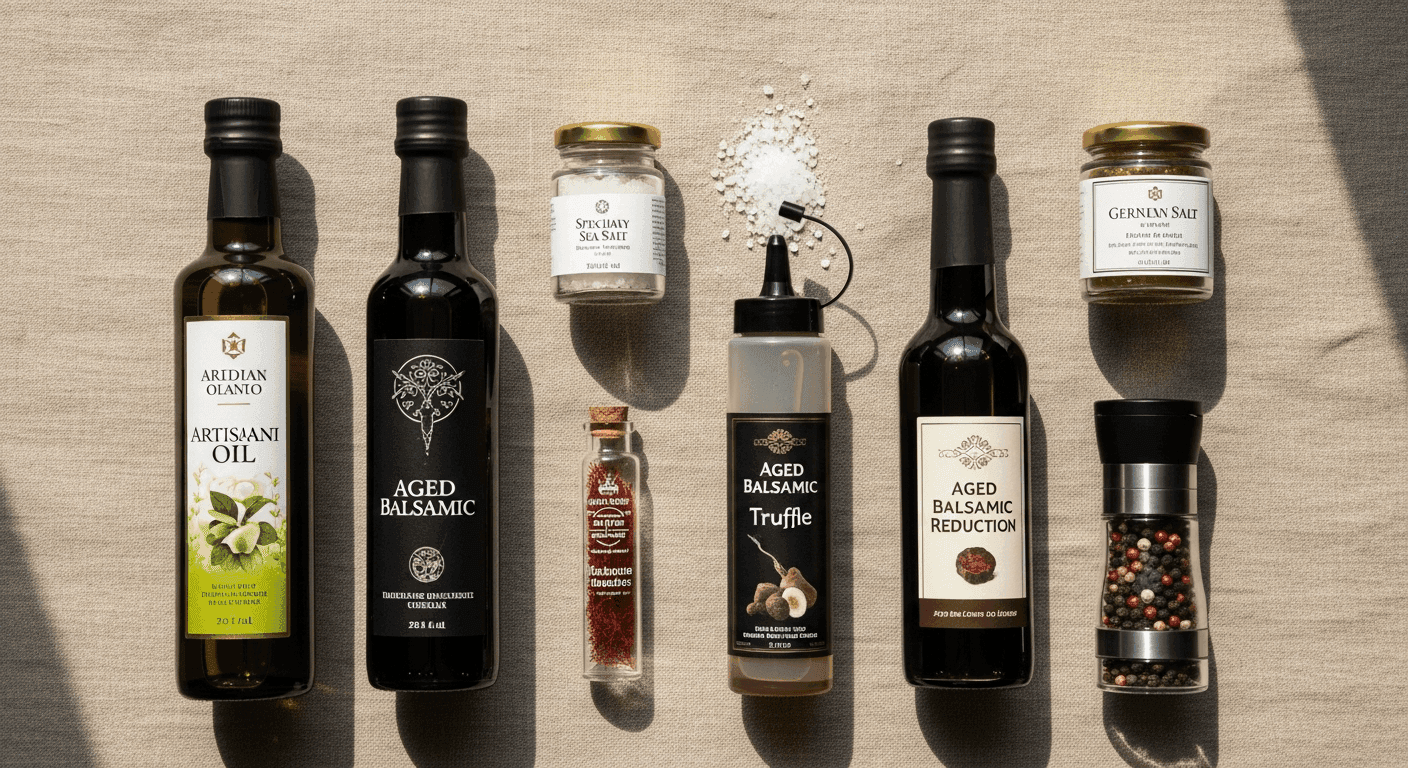
You've probably stood in your pantry at 6 PM, staring at half-empty shelves, wondering why the food you make at home never tastes as good as what you get at a decent restaurant. The secret isn't some complicated technique—it's that restaurants stock their kitchens with intentional ingredients that actually taste like something. Most people fill their pantries reactively, grabbing whatever's on sale, which is why their everyday meals feel so... forgettable.
What separates a mediocre pantry from one that transforms your cooking is thoughtfulness. It's about choosing staples that earn their shelf space by delivering genuine flavor, reliability, and versatility. A great pantry staple does multiple jobs—it makes weeknight dinners better, works in unexpected dishes, and rewards you for paying a little extra. The cheap version gets the job done; the good version makes you actually want to cook.
Here are seven gourmet pantry staples that actually deserve your money, each picked for doing something specific really well.
1. Nespresso Capsules Vertuo, Variety Pack, Medium and Dark Roast Coffee
If you're tired of waking up to mediocre coffee, Nespresso's Vertuo system removes the variables that make home espresso such a frustrating project. The Centrifusion technology reads each capsule and adjusts temperature, water flow, and speed automatically—you literally can't mess it up. The variety pack is smart because it lets you figure out whether you prefer the brighter, fruitier medium roasts or the darker, smokier blends without committing to a full bag of something you might not love.
The real win here is consistency. Every cup tastes like it came from someone who knows what they're doing, which is psychologically satisfying when you're half-asleep. The trade-off is obvious: you need the machine, and yes, capsules are more expensive per cup than grinding your own. The aluminum casings are recyclable if you care about that, and you probably should. If you're someone who's genuinely interested in exploring different coffee profiles but doesn't want to buy a grinder, scale, and spend fifteen minutes calibrating extraction times, this is the shortcut that actually works.
Best for: People who want excellent coffee without the coffee-nerd commitment, or anyone who currently settles for drip coffee because espresso machines terrify them.
2. Cholula Original Hot Sauce
This isn't the hottest sauce you can buy, and that's exactly why it's brilliant. At 500-1,000 Scoville units, Cholula hits that sweet spot where it actually enhances food instead of obliterating your palate. The formula using two different chilis—the earthy árbol pepper and the fruity pequin—creates a flavor that's deeper and more interesting than single-pepper sauces tend to be.
What makes Cholula genuinely useful in a pantry is its stubborn refusal to be one-dimensional. Drizzle it on eggs, tacos, pizza, rice, roasted vegetables, or literally anything savory, and it brightens without dominating. The wooden cap gives it a nostalgic, authentic feel that somehow makes food taste better. It's been around long enough to prove it's not a trend, and McCormick's backing means it won't suddenly disappear from shelves. If you want heat that feels dangerous but isn't, or if you've been buying generic Frank's RedHot because you don't know what else exists, Cholula is the gentle upgrade that'll make you wonder why you waited so long.
Best for: Anyone seeking balanced heat with actual flavor, or people who want a hot sauce that works on literally everything without apology.
3. Nutella Hazelnut Spread
Let's be honest: Nutella is junk food that tastes like heaven. It's chocolate and hazelnuts in a jar, created during post-war cocoa shortages, and somehow it's been irresistible since the 1960s. The texture is impossibly creamy, and the flavor is rich enough that a small amount goes a long way.
The pantry argument for Nutella is pure versatility. Spread it on toast, swirl it into brownies, use it as a dip for fruit, stir it into oatmeal, or make crepes at midnight when you're bored. It's not health food—the sugar content is substantial, and yes, it uses palm oil—but it's also not pretending to be. If you eat it mindfully, it's genuinely delicious. The real question is whether you can afford to keep an opened jar in your house without it disappearing in a week. If you can't, that's not a product flaw; that's evidence that it works exactly as intended.
Best for: People with a sweet tooth who want one jar that covers breakfast, dessert, and snack emergencies, or anyone who needs a pantry shortcut for impressing people without baking from scratch.
4. King Arthur Baking All-Purpose Flour
The average home baker never thinks about flour, which is exactly why their biscuits come out dense and their bread doesn't rise properly. King Arthur isn't just milled differently—it has a higher protein content than most all-purpose flours, which means better gluten development and more reliable results across the board.
If you bake even occasionally, this matters. Higher protein means your doughs build structure better, so artisan breads actually develop a proper crust, pizza dough gets those gorgeous air pockets, and even cookies get the right texture. Yes, it costs more than the generic bag from the discount store. Yes, recipes might need slightly more water because of the protein difference. But the consistency is worth it—bakers consistently report that switching to King Arthur eliminates the frustration of recipes that work sometimes and fail mysteriously other times. It's non-GMO, unbleached, and carries certifications that matter if you care about sourcing. Once you bake with it, you notice immediately when you don't have it.
Best for: Anyone who bakes with any regularity, from enthusiastic home bakers to people who make bread once a month and want it to actually work.
5. LaCroix Sparkling Water, Pamplemousse (Grapefruit) Flavor
Pamplemousse is the platonic ideal of flavored sparkling water—crisp, subtly bitter, genuinely tasty without being aggressively sweet. It's zero calories, zero sugar, zero sodium, and manages not to taste like artificial chemicals, which is harder than it sounds in the sparkling water market.
The honest take: this is just really good at what it does. It's not trying to replace soda (though if you drink soda, this is the elegant alternative). It's also not trying to pretend it's juice. It's sparkling water that tastes like grapefruit, and that clarity of purpose is refreshing. The retro cans are genuinely nice-looking, which sounds trivial until you realize you'll actually drink more water if the bottle doesn't look depressing. It works alone as a hydration vehicle, mixers into cocktails and mocktails without adding sweetness, and pairs beautifully with simple meals. The downside is price and availability—it's not the cheapest sparkling water option, and it's really available everywhere now so that's solved. Some people find the flavor too subtle, which is a preference thing, not a flaw.
Best for: People trying to quit soda, anyone building a home bar, or those who want hydration that tastes like something.
6. Trader Joe's Everything But The Bagel Sesame Seasoning Blend
This blend achieved cult status for a reason: it's one of those products that makes you genuinely better at cooking, which is its own category. The combination of white and black sesame seeds, poppy seeds, dried garlic, dried onion, and sea salt creates umami depth and textural interest in ways a single seasoning can't match.
The magic is in the versatility. Sprinkle it on avocado toast, scrambled eggs, roasted broccoli, popcorn, salads, grilled chicken, or use it to rim a Bloody Mary. It adds both flavor and crunch, which elevates simple food without effort. At $2-4 per bottle, it's affordable enough that you don't feel bad using it generously. The sodium content is high, which matters if you're watching salt intake, but for most people, it's a non-issue. The real limitation is that it's primarily available at Trader Joe's stores, which either isn't a problem (if you shop there) or is a dealbreaker (if you don't). Online availability exists but at higher prices. If you have access, buy two bottles because once you start using this on everything, you'll wonder how you cooked before it existed.
Best for: People who cook frequently at home and want an easy flavor upgrade, or anyone who buys a lot of basic ingredients and wants to make them taste intentional.
7. Stacy's Simply Naked Pita Chips
These are baked pita chips that actually taste like something—mostly like bread and sea salt, with a subtle buttery, almost garlicky undertone that makes you eat more than you planned. The texture is sturdy without being rock-hard, and they don't crumble into dust when you scoop up hummus or spinach artichoke dip.
What makes them pantry-worthy is honesty. They're not trying to be health food (though baked instead of fried is genuinely lighter), and they're not pretending to be fancy. They're just consistently excellent pita chips that taste like pita bread should taste. The 14-hour baking process creates a crunch that feels earned. They work plain as a snack, as a delivery system for dips, or as a crunchy component in salads and soups. They're widely available, which means you can actually buy them when you need them. The downside is they can break if thrown around in a bag with groceries, and some people might want more seasoning options. But if you want a reliable, good-tasting chip that works with almost any dip, these deliver.
Best for: People who want snacks that taste good enough to eat alone but are versatile enough for entertaining, or anyone who's tired of sad, flavorless chips.
How to Choose the Right Gourmet Pantry Staples
Identify Your Actual Cooking Patterns
Before buying premium versions of anything, understand what you actually cook. If you never bake, paying extra for King Arthur flour is waste. If you don't make coffee at home, Nespresso isn't for you. The best pantry staples are ones you'll actually use multiple times a week. Look at what you've bought repeatedly in the last three months—those are your real pantry categories. Focus your splurges there. A mediocre salt is fine; a mediocre hot sauce you use three times a week is money wasted.
Prioritize Versatility Over Specialization
The best pantry additions work across multiple dishes. Everything But The Bagel seasoning wins because it goes on eggs, toast, popcorn, roasted vegetables, and cocktail rims. Cholula hot sauce works on breakfast, lunch, and dinner. Single-use ingredients—the fancy fleur de sel you only use for finishing salads, the specialty vinegar for one specific dressing—they look good in photos but don't justify their shelf space. Choose items that show up in your cooking multiple times a week, not once a month.
Taste Before You Stock
If possible, try something before committing to a full-size pantry quantity. Buy the smallest size available first, or borrow from a friend. Some people find LaCroix's pamplemousse too subtle; others think Cholula's heat is perfect. These are genuinely preference-based differences, not quality differences. Spending $40 on a Nespresso pack assumes you'll love it—taste a Vertuo capsule at a friend's house first if you can, because the machine itself is the real investment.
Balance Premium Staples with Affordable Essentials
Your entire pantry doesn't need to be premium. It's smarter to buy expensive, excellent hot sauce that you use daily, and cheap salt that does its job fine. Buy the nice flour because you bake regularly, but don't spend extra on canola oil. Premium makes sense for items you use frequently, taste directly, and genuinely notice the difference with. Save money on the utilitarian stuff that mostly disappears into recipes.
Elevate Your Everyday Cooking with Intentional Pantry Curation
If you're starting from scratch, King Arthur flour and Cholula hot sauce are the non-negotiable upgrades—one transforms baking, one transforms everything else. Then add whichever of these categories reflects your actual cooking: coffee drinker? Get the Nespresso. Snacker? Stacy's pita chips. The point isn't to buy everything on this list; it's to replace mediocre with intentional in the categories you actually care about.
Pick one pantry staple you use weekly but currently buy the cheap version of, and upgrade it this week—actually taste the difference, and you'll stop second-guessing the extra cost.