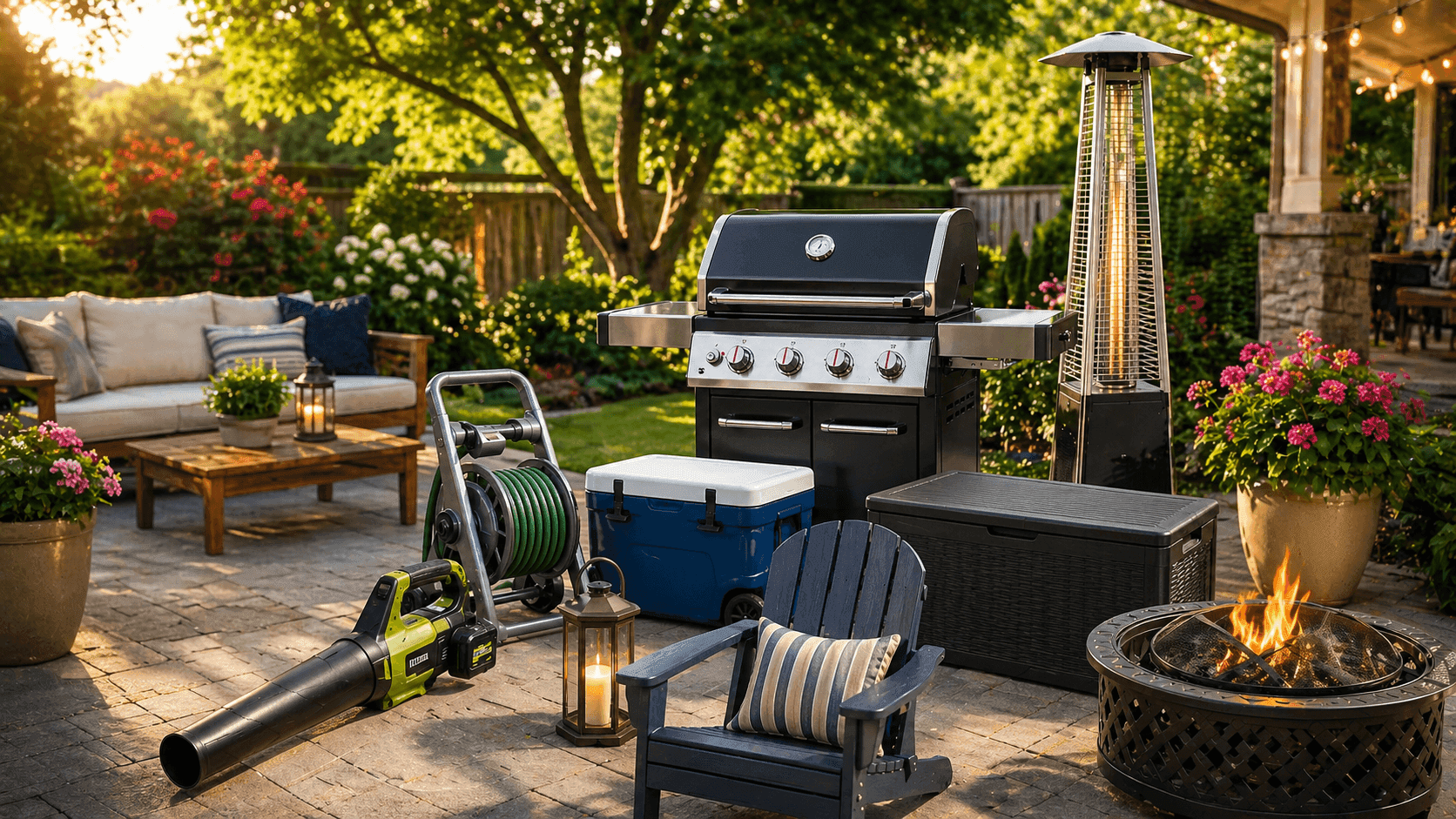
You've Got Outdoor Space—Now What?
Picture this: it's a Saturday morning, you've got a decent backyard, and suddenly you're staring at it thinking, "I could actually enjoy this place if I had the right stuff." That feeling hits a lot of people. The difference between an outdoor space that gets ignored and one that becomes your favorite hangout spot usually isn't square footage—it's having the right essentials that make it functional, comfortable, and actually inviting.
What separates a genuinely enjoyable outdoor living setup from a half-hearted attempt usually comes down to three things: durability (because weather happens), thoughtful design (because cheap stuff gets old fast), and solving real problems (not just looking pretty for Instagram). A quality cooler doesn't just keep ice longer—it becomes the reason friends linger. A proper grill turns cooking into an experience. Even small tools that fit your hand right can make yard work feel less like a chore. These aren't luxuries; they're the difference between using your outdoor space and actually living in it.
Here's what we're covering: eight essentials that genuinely improve outdoor living, from cooking gear to lighting to the tools that make maintenance bearable.
1. Weber Genesis E-325 Gas Grill
This grill isn't just another appliance—it's built to deliver restaurant-quality results without requiring you to become a pitmaster first. The PureBlu burners do something smart: they distribute heat so evenly that you're not constantly fighting hot spots and cold spots. That large dedicated sear zone is where the magic happens, giving you those perfect, caramelized grill marks that actually mean something (flavorwise, not just aesthetically).
The real MVP here is the Flavorizer bar system. It catches meat drippings, vaporizes them, and sends that smoke back through your food while keeping flames from flaring up and charring everything. You get flavor without the frustration. Cast-iron grates hold heat like they're meant for this. Quick heat-up time means you're not standing around waiting—you're grilling within minutes. The compatibility with Weber's Crafted collection opens doors beyond burgers: pizzas, stir-fries, even baking. It's built tough enough that you'll still be using it in ten years, which matters when you're dropping this kind of money.
The catch? It's not entry-level pricing, and you'll need either propane or a natural gas line. If you've got a smaller yard or limited budget, this might be overkill. But if you actually plan to cook on your grill—not just own one—this is where the money goes.
Best for: Someone who cooks multiple times per week and wants consistent, reliable results without fiddling with temperature constantly.
2. Fiskars Ergo Cultivator Garden Tool with Aluminum Head and Ergonomic Handle
Don't let the low price fool you—this tool does serious work. The ergonomic handle is specifically shaped to fit how a human hand actually works, which sounds simple but makes a massive difference during a two-hour gardening session when your wrist would normally be screaming. The cast-aluminum head won't rust, and the tapered tines are strong enough to break through compacted soil without bending.
This cultivator handles a bunch of jobs: breaking up soil before planting, pulling weeds, raking, leveling beds. It's lightweight enough that you won't hate using it, but substantial enough to feel like it's actually doing work. The hanging hole for storage is a nice touch—it keeps it accessible instead of buried under other junk. Users consistently praise it for performing better than similarly priced tools, probably because Fiskars actually thought about how the thing gets used.
The limitation is real though: if your soil is bone-dry and hasn't been touched in years, these tines might struggle. It's built for maintenance and regular use, not heavy demolition. Some gardeners prefer sharper, more pointed claws for specific tasks.
Best for: Gardeners who work regularly with their beds and want an ergonomic tool that won't destroy their hands after an hour of work.
3. 3-Piece Outdoor Bistro Set
You don't need much space to have an outdoor seating area. This bistro set proves it. Two chairs, one round table—that's it. It fits on a small patio, a balcony, even a modest porch. The tempered glass tabletop is easy to clean and looks nicer than you'd expect. Those thick cushions on the chairs actually provide real comfort (not the thin, useless foam on budget furniture). Many versions include an umbrella hole, which turns out to be genuinely useful on sunny days.
The materials matter here: weather-resistant wicker or cast aluminum construction actually withstands sun, rain, and temperature swings without falling apart after one season. Assembly is straightforward enough that you won't want to throw the instructions in the trash halfway through. It adds style without pretension—the space starts feeling intentional, like somewhere you'd actually want to sit with your coffee or a book.
The reality check: some chairs aren't deep enough for larger frame sizes, and cushions can fade or degrade if they're in direct sun constantly. The assembly process can be tedious despite being easy—expect to spend an hour wrestling with bolts. Cheaper models sometimes skip out on cushion quality, so don't assume they're all equally comfortable.
Best for: Anyone with limited outdoor space who wants to create an actual seating area that looks intentional and feels comfortable.
4. YETI Tundra 45 Hard Cooler
This cooler is legendarily tough. The rotomolded construction means there's no weak seams, no compromises—it's basically one solid plastic shell. Add two inches of PermaFrost insulation, and you're looking at ice retention that actually lives up to the hype. We're talking several days of cold, even in heat. The T-Rex latches pull the lid down hard onto the ColdLock gasket, creating an airtight seal that actually keeps the cold in.
The design details matter: non-slip feet so it doesn't slide around, integrated tie-down slots if you're transport-heavy, a dual-drain plug that's actually convenient. It's not fancy, but it works. Weekend trips, fishing, tailgates, family barbecues—this size covers real use cases. The Tundra 45 is a genuine investment (justified because it'll last 15+ years), not something you'll replace or regret.
But here's the tradeoff: it's heavy when full, it costs real money upfront, and the bulky design with rope handles means you're not easily carrying it solo. The actual usable capacity is closer to 38 quarts than the "45" suggests. If you just need to keep drinks cold for an afternoon, this is expensive overkill.
Best for: Someone who does multiple outdoor trips per year and wants a cooler that won't fail them in the field.
5. Greenworks 40V 20-Inch Cordless Push Lawn Mower with Battery & Charger
The main appeal here is simple: no gas, no oil changes, no spark plugs. Just charge it and mow. The cordless freedom is genuinely liberating compared to wrestling with a gas mower. It's quiet enough that you can mow early morning without pissing off the neighborhood. The 20-inch deck with twin blades cuts smoothly and mulches effectively—the fine clippings get absorbed back into the lawn as nutrients instead of bagging waste.
The lightweight design matters more than it sounds. You're moving this thing around obstacles, tight corners, flower beds. Gas mowers are heavy beasts. This one is easy to maneuver, and the vertical storage capability is massive if you're space-limited in a garage or shed. Single-lever height adjustment takes seconds. The Smart Cut Technology auto-switches between battery ports if you have multiple batteries, extending runtime. Maintenance is basically nonexistent compared to gas.
The real limitation: battery runtime might not cut it for large yards (over half an acre) or if your grass is particularly thick. Some users report battery issues after a couple seasons, which is frustrating at this price point. Replacement batteries aren't cheap, and it's an ongoing expense if your original battery dies. If mulching performance is critical for your grass type, some models underperform here.
Best for: Someone with a small-to-medium yard who values simplicity, quiet operation, and not dealing with gas and maintenance.
6. XMcosy Outdoor Solar Pathway Lights (Set of 8)
Solar lights have a reputation for being cheap and flimsy. These are the exception. All-metal construction with an IP65 waterproof rating means they actually survive rain, dust, cold—the stuff that destroys plastic lights. They charge during the day and kick on automatically at dusk. No wiring, no electricity bill, zero complexity. Just stake them in the ground and they work.
The smart version comes with motion-sensing options that brighten when movement is detected, adding both security and practicality beyond just ambiance. You can choose warm white for a cozy vibe or cool white for actual visibility. The high-transparency glass lenses and upgraded LED filament bulbs are noticeably brighter than the cheap plastic versions. Eight lights for the price makes it a practical way to actually illuminate a pathway or garden bed.
The downsides are real though: brightness varies wildly between models and brands—some light up your yard, others barely glow. Cloudy days tank performance because these aren't charging properly. Cheaper plastic versions won't last, so you're not saving money by going budget. And these aren't replacing security lighting; if you need serious illumination for safety, you need something hardwired.
Best for: Someone who wants to enhance garden aesthetics and safety without running electrical lines or dealing with wiring complexity.
7. Sunnydaze Decor 3-Tier Pineapple Outdoor Water Fountain
A good fountain isn't just decoration—it's a vibe shift. The three-tier design with water cascading down creates this calming, meditative sound that's genuinely soothing. The pineapple finial is a classic hospitality symbol, and it signals that you've put thought into your space. Built from durable resin or fiberglass, this thing actually survives weather without degrading or yellowing to oblivion.
Installation is straightforward—it comes with a submersible pump, no special electrical work needed beyond plugging in. The self-contained recirculation system means you're not constantly adding water (though evaporation happens). The biggest benefit beyond aesthetics: it masks background noise. Noisy neighbors? Traffic? A fountain turns your patio into something more peaceful. It works as a focal point that makes the whole space feel more intentional and finished.
The catches: it needs to be near an outlet, water levels drop through evaporation and need occasional topping off, and if you don't clean it regularly, algae grows. It's not lightweight—once filled, moving it is a two-person job. Heavy sun exposure can encourage algae growth faster.
Best for: Someone who wants to create a peaceful outdoor retreat and doesn't mind occasional maintenance to keep water clear.
8. Traeger Ironwood 885 Pellet Grill and Smoker
This is the grill if you're serious about smoking and want technology that actually helps instead of getting in the way. It burns compressed hardwood pellets, which deliver authentic smoke flavor in a way gas or charcoal can't replicate. The 885 square inches of cooking area is massive—you're feeding families or entertaining without crowding.
The WiFIRE app is where this gets genuinely useful. You set temperature and walk away. Your phone alerts you when it hits target temp, lets you adjust settings remotely, monitor multiple meat probes. For long smoking sessions, this is everything. The grill also tracks pellet levels, so you're never surprised mid-cook. The versatility is real: smoke, grill, bake, roast, braise—one appliance does it all with precision.
The price is high, and there are real ongoing costs: you're buying proprietary wood pellets consistently, and these aren't cheap long-term. It needs electricity, so you can't just put it anywhere. It's heavy, making relocation impractical. The ash cleanup and pellet hopper maintenance are more involved than a simple gas grill. But if you smoke regularly and want foolproof, repeatable results, the tech and flavor make the investment justified.
Best for: Serious barbecue enthusiasts who smoke regularly and value convenience features like app control and consistent temperature precision.
9. Hori Hori Knife
This is the exception to "you don't need specialty tools." A good Hori Hori (the Nisaku Original is worth the money) replaces at least three other tools, which alone justifies keeping it in your gardening bag. The serrated edge cuts through roots and tough soil. The straight edge handles precision work. The concave shape scoops soil. Depth gauges help you plant at the right depth. It's a full-tang construction, so the blade runs through the handle—it's built to last.
You'll use this for digging, weeding, transplanting, dividing perennials, cutting roots, everything. It's borderline essential if you actually garden instead of just having a yard. The Japanese design reflects centuries of real gardening work, not marketing. Most gardeners who own one consider it their most-used tool.
The real caveat: it's sharp. Handling requires attention. And for delicate work like picking tiny weeds around seedlings, a smaller hand trowel might be better. It's a bit much if your gardening is mostly light maintenance, but if you actually spend time in beds, this is the move.
Best for: Gardeners who do actual planting, weeding, and bed work and want one reliable tool that handles most jobs.
How to Choose the Right Outdoor Living Essentials
What's Your Actual Use Case?
This sounds obvious, but most people skip it. Are you grilling multiple times per week or once a month? Is your yard mostly decorative or do you actually work it? Do you take trips frequently? The Weber Genesis makes sense if you cook regularly; the Traeger is overkill if you grill four times a year. The bistro set works if you have a small space; a cooler investment depends on whether you travel. Start by being honest about what you'll actually use.
Durability Versus Budget
Cheap outdoor stuff fails. Fast. You spend $30 on solar lights that yellow in a year, or $150 on lights that still work in five years. The YETI cooler seems expensive until you realize the alternative is replacing a $100 cooler every two seasons. The Fiskars cultivator is $15 and lasts a decade. The bistro set furniture will degrade if the cushions and frame aren't quality. Your actual cost per year usually favors buying once, buying right.
Space and Storage Reality
Don't buy stuff you can't actually fit. The Traeger needs room. The fountain needs a spot and electricity access. The Greenworks mower can be stored vertically, which matters in tight garages. The Weber Genesis requires actual patio space. Measure, think about where things live off-season, and don't compromise on this. A beautiful grill in storage all year because it doesn't fit is just expensive yard decoration.
Maintenance Tolerance
Are you okay with occasional upkeep? The fountain needs algae checking. The pellet grill needs ash cleanup. The bistro set cushions need care. The solar lights need nothing. The mower needs charging and basic cleaning. Be realistic about whether you'll actually do this. Some people love maintenance as part of the hobby; others resent it. Know yourself.
Why These Essentials Matter for Your Outdoor Space
A proper outdoor setup doesn't happen by accident—it's built from individual choices about what actually matters. The Weber Genesis and Traeger represent different philosophies (gas convenience versus smoke flavor), but both transform how often you actually use your yard. Same with the bistro set and fountain: they're not necessities, but they shift outdoor space from unused to genuinely inviting.
The tools matter just as much. Good gardening implements (the Fiskars, the Hori Hori) make yard work feel less like punishment. A quality cooler like the YETI means trips actually work instead of your food getting warm halfway through. The Greenworks mower removes the friction from lawn maintenance.
Start with what you'll actually use most frequently. If you cook outdoors regularly, invest in a grill that won't frustrate you. If you garden, get tools that fit your hand properly. If you have small space, the bistro set immediately makes it feel intentional. Add one element at a time—this isn't an all-or-nothing purchase. Your outdoor space improves piece by piece into somewhere you actually want to spend time. That's the whole point.