The Evolution of Vehicle Theft and Why Traditional Security Falls Short
Vehicle theft has transformed dramatically over the past decade. Gone are the days when thieves relied on crowbars and hotwiring techniques. Modern criminals now employ sophisticated technology that renders conventional security measures almost obsolete. Relay attacks, key cloning, and signal interception have become the preferred methods for stealing vehicles, particularly those equipped with keyless entry systems. Traditional steering wheel locks, visible alarms, and even GPS trackers fail to address the fundamental vulnerability: determined thieves can bypass these defenses before owners even realize their vehicle is compromised.
The problem runs deeper than most vehicle owners understand. Car manufacturers install basic immobilisers as standard, but these systems were designed years ago and criminals have long since cracked their codes. Insurance companies increasingly recognize this gap, which is why they reward owners who invest in advanced, certified security solutions. The statistics tell a compelling story—vehicle theft continues rising in many regions, with the majority of successful thefts now involving electronics rather than physical force.
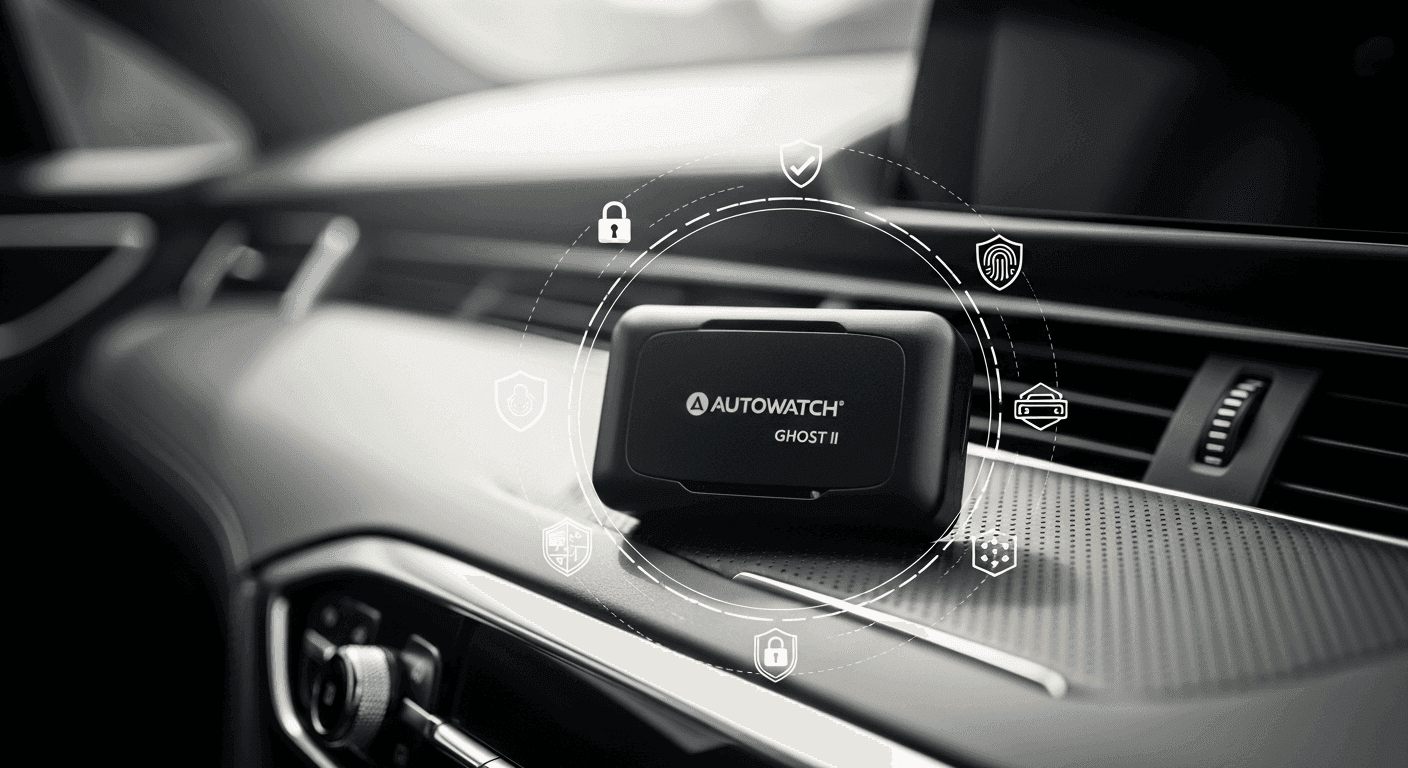
The Autowatch Ghost II Immobiliser changes the equation entirely. Discover how Ghost II protection works by visiting INeedATracker.com today.
Modern Key Cloning Techniques That Bypass Traditional Immobilisers
Key cloning has evolved into a refined art form. Thieves use relatively inexpensive equipment to intercept and duplicate the signals from modern key fobs, creating functioning copies that work just as well as the originals. Traditional immobilisers were programmed to accept signals within certain parameters, and these parameters are now well-understood by criminal networks. Once a key is cloned, the vehicle's standard security system has no way to distinguish between the legitimate owner's key and the criminal's copy.
How Relay Attacks Exploit Wireless Key Fob Signals
Relay attacks represent an even more insidious threat. Two criminals work in tandem—one stands near the owner's home or office with a relay device, while the other positions themselves beside the parked vehicle with a receiver. The first device intercepts the signal from the key fob inside the building, amplifies it, and transmits it to the second device, effectively tricking the vehicle into thinking the legitimate key is present. The car unlocks and starts without the owner ever removing their keys from their pocket. This attack bypasses the entire concept of possession-based security.
Why Visible Alarms and Steering Wheel Locks Don't Deter Determined Thieves
Visible security measures send a message to casual opportunists, but they mean nothing to professional theft rings. A steering wheel lock adds perhaps five minutes to a professional's timeline. Modern alarms can be bypassed or simply ignored—the thief's goal is to move the vehicle quickly to a chop shop or export it within hours. These visible deterrents have become theater rather than actual protection.
The Limitations of GPS Tracking Systems When Vehicles Are Stolen
GPS tracking systems excel at one thing: locating your vehicle after it's stolen. But this comes with significant drawbacks. Monthly or annual subscription fees accumulate over time. More critically, by the time police respond to a theft alert, the vehicle may already be dismantled, transported across borders, or stripped for parts. Tracking prevents loss recovery; it doesn't prevent theft. Additionally, many GPS trackers are now targets for thieves who understand that removing or disabling them is straightforward.
Statistics on Vehicle Theft Rates and Current Criminal Methods
The data reveals an unsettling trend. Vehicle thefts in many countries have increased 10-15% annually over the past five years, with relay attacks and key cloning accounting for the majority of modern thefts. Insurance industry reports show that vehicles without advanced immobilisers are stolen at rates 5-7 times higher than protected vehicles. Owners who ignore these statistics often discover too late that their vehicle's manufacturer-installed security simply isn't sufficient.
Why Car Manufacturers' Standard Security Features Leave Gaps
Vehicle manufacturers design security systems to balance functionality with cost. A factory immobiliser works adequately against basic threats, but manufacturers cannot predict or immediately respond to emerging attack methods. By the time they design new protections into new models, criminals have already adapted. This lag between threat evolution and manufacturer response creates a window of vulnerability that can span years. Aftermarket solutions fill this gap by being purpose-built to defeat the latest techniques.
How the Ghost II's Hidden PIN System Works Against Thieves
The Autowatch Ghost II operates on a fundamentally different principle than traditional immobilisers. Rather than relying on wireless signals or codes that can be intercepted, it uses a personalized disarm sequence entered through existing vehicle controls. Your own steering wheel buttons, door panel switches, or center console controls become the security interface. You program a unique PIN sequence—perhaps five to twenty button presses—that only you know. Until this exact sequence is executed in the correct order, the engine simply will not start.
This approach eliminates the entire attack surface that criminals have learned to exploit. There's no wireless signal to intercept. There's no key fob to clone. There's no external device a thief can identify, remove, or disable. The Ghost II integrates so completely with your vehicle that it's virtually indistinguishable from the car's original electronics.
The Personalized Disarm Sequence Using Existing Vehicle Buttons
Setting up your PIN is intuitive. During professional installation, your technician programs the sequence using buttons already present in your vehicle. Perhaps it's steering wheel audio controls, door lock buttons, or steering wheel menu navigation buttons. The beauty of this approach lies in its simplicity and security. You can change your PIN anytime, and no two Ghost II systems need use the same sequence or the same buttons.
Why the Absence of LED Indicators or Key Fobs Makes It Undetectable
Visible security features advertise their presence, and savvy thieves know which brands to bypass. The Ghost II leaves no trace. No red LED flashing to signal an alarm. No additional key fob in your pocket broadcasting signals. To any observer—including a thief casing your vehicle—it appears completely standard. This invisibility is intentional and powerful. A criminal cannot disarm what they cannot identify.
The Logic Behind Using Your Car's Own Electronics as the Security Interface
Manufacturers spend millions developing vehicle interfaces and button systems that work flawlessly. The Ghost II doesn't fight against this engineering; it leverages it. By hijacking existing controls, the system gains reliability and seamlessness. Your finger pressing a button you've pressed thousands of times feels natural and requires no learning curve. Yet that same button press feeds into a security protocol completely hidden from your awareness.
How the PIN Sequence Prevents Engine Immobilization Without Correct Entry
The Ghost II sits between your vehicle's CAN data bus and the engine control systems. Even if a thief manages to start the vehicle through any conventional means—bypassing the steering column, hot-wiring, using a cloned key—the engine will crank but refuse to complete its starting sequence. The fuel pump won't engage. The ignition system won't fire. The vehicle remains a useless hunk of metal unless someone enters the correct PIN sequence using the correct buttons in the correct order.
Real-World Scenarios Where Thieves Encounter the Ghost II and Fail to Bypass It
Consider a relay attack scenario: two criminals attempt their standard procedure on a Ghost II-protected vehicle. They intercept the signal and transmit it to the car. The doors unlock as expected. But when the vehicle sits in the driver's seat and attempts to start the engine, nothing happens. The car won't turn over. The thief has no idea why. Is there a device they missed? They might spend twenty minutes searching, only to eventually abandon the attempt as neighbors approach or their window closes. In another scenario, a skilled technician with diagnostic equipment attempts to bypass the system by directly accessing the engine control module. The Ghost II's integration means the vehicle simply won't function without the proper disarm sequence, regardless of what signals are fed to individual components.
Comparison to Traditional Immobilisers That Criminals Know How to Defeat
Standard factory immobilisers operate on known principles that criminal networks have documented extensively. There are entire online forums dedicated to bypassing specific immobiliser models. The Ghost II, by contrast, offers no standardized bypass procedure because the security is fundamentally different. It's not a code to crack or a signal to intercept. It's a behavior sequence unique to the owner, enforced at the most basic level of vehicle operation.
CAN Bus Integration: The Technical Foundation of Covert Protection
The Controller Area Network (CAN) bus represents the nervous system of modern vehicles. Every component—from the engine control unit to the door locks to the climate control—communicates through this network. The Ghost II integrates directly into this system, gaining unprecedented access to your vehicle's core functions while remaining completely invisible.
Understanding CAN bus security explains why the Ghost II is so effective. Traditional security devices sit outside the vehicle's native systems, connected through aftermarket wiring that can be identified and removed. The Ghost II becomes part of the vehicle's original architecture, accessed through connections intended for the vehicle's own use. This integration creates a level of security that can't be matched by bolt-on solutions.
What the Controller Area Network (CAN) Data Bus Is and Why It Matters
Every modern vehicle uses a CAN bus to allow different electronic systems to communicate efficiently. Instead of running hundreds of individual wires throughout the vehicle, manufacturers use a shared communication protocol. The engine control unit tells the dashboard how much fuel is in the tank. The anti-lock braking system communicates wheel speed information. The climate control adjusts based on interior and exterior temperature sensors. This system works because all components trust each other—they're all part of the original vehicle architecture.
How Deep Integration Into Vehicle Electronics Creates Robust Security
The Ghost II integrates so thoroughly that it's impossible to isolate and remove without understanding the entire vehicle's electrical system. A technician would need access to manufacturer schematics, specialized diagnostic equipment, and expert-level knowledge. Even then, removing the Ghost II would likely disable other vehicle functions. This deep integration transforms security from a feature into a fundamental part of how the vehicle operates.
Why CAN Bus Systems Are Harder to Hack Than Aftermarket Add-Ons
Aftermarket security devices use standardized connections and protocols that are, by necessity, documented and available. The Ghost II's CAN bus integration means it operates using the vehicle's proprietary language and protocols. Criminals who might be able to defeat a generic alarm system or tracking device encounter something entirely different with the Ghost II—a system designed specifically for that vehicle model, integrated by technicians with manufacturer-level access.
The Difference Between Surface-Level Security and Embedded System Protection
Imagine a house with an alarm you can see on the wall. A burglar studies how these alarms work, learns their vulnerabilities, and disables it. Now imagine a house where security is woven into the foundation, walls, and every support beam. Removing the security means the house collapses. This distinction explains why embedded system protection beats surface-level security every time. The Ghost II doesn't protect your vehicle; it becomes your vehicle's security architecture.
How the Ghost II Communicates With Your Vehicle's Core Systems
The Ghost II attaches to the CAN bus using factory connection points designed for this exact purpose. Once connected, it becomes part of the vehicle's communication network. When you enter your PIN sequence, the Ghost II validates it against its stored parameters. Once validated, it sends permission signals through the CAN bus to the engine control unit, fuel pump controller, and ignition system. This conversation happens silently and invisibly, completely integrated with the vehicle's normal operation.
Why This Architecture Makes the System Virtually Impossible to Detect With Diagnostic Tools
Professional mechanics and thieves alike use diagnostic scanners to identify aftermarket security devices. These scanners read the CAN bus to see what components are communicating. A poorly integrated security system appears as an unknown device. The Ghost II, by contrast, operates as part of the vehicle's native systems. Diagnostic tools see communication patterns that appear completely normal. Identifying the Ghost II through scanning would be like finding a single brick in a building and knowing exactly which one the architect added—the task is essentially impossible without access to the manufacturer's original blueprints.
TASSA Approval and Insurance Premium Reductions
Insurance companies recognize that the best security isn't what recovers your vehicle after theft—it's what prevents theft entirely. This understanding has led to a structured certification system called TASSA (Tracking and Recovery Association). TASSA approval signifies that a device meets rigorous security standards and has been proven effective against current theft methods.
The Autowatch Ghost II carries full TASSA approval, which translates into concrete financial benefits. Insurance underwriters trust TASSA-certified devices because they've been tested and validated by independent experts. This trust manifests in premium reductions that often recover the installation cost within two to three years.
What TASSA (Tracking and Recovery Association) Certification Means
TASSA certification requires devices to undergo independent testing and validation against current theft methods. The association maintains close relationships with law enforcement, insurance companies, and security experts. A TASSA-approved device isn't just theoretically secure—it's been tested in real-world scenarios and proven effective. Certification is ongoing; devices must continue meeting standards and adapt to new threats to maintain approval.
Why Insurance Companies Recognize TASSA-Approved Devices
Insurance is fundamentally about risk management. Vehicles with TASSA-approved security represent measurably lower risk. Underwriters have historical data showing that TASSA-approved devices reduce theft rates significantly. This reduced risk translates into lower premiums because the insurance company's expected payouts are smaller. It's a straightforward equation: proven security reduces risk, reduced risk means lower premiums.
Typical Insurance Discount Percentages for Ghost II Installation
Most insurance companies offer discounts ranging from 5% to 15% on comprehensive coverage for vehicles with TASSA-approved immobilisers like the Ghost II. For a vehicle with annual comprehensive insurance costing £800-£1,500, a 10% discount saves £80-£150 annually. Over three years, that's £240-£450 in savings, approaching or exceeding the Ghost II's installation cost. Owners of high-value vehicles often see even larger discounts due to the higher absolute premium amounts.
How the Approval Satisfies Underwriter Security Requirements
Many underwriters now include security requirements in their policies. They specify that certain high-value vehicles or vehicles in high-theft areas must have approved immobilisers to maintain coverage. The Ghost II satisfies these requirements explicitly. Having TASSA approval in your vehicle's security system removes negotiation from the equation—you meet the underwriter's standards automatically, eliminating the risk of coverage denial due to inadequate security.
The Difference Between TASSA Approval and Other Security Certifications
Various security certifications exist, but TASSA is specifically respected by insurance companies because the association was founded to support the tracking and recovery industry. TASSA approval focuses on practical, real-world security rather than theoretical standards. Other certifications might be broader or represent different industries; TASSA approval specifically addresses what insurance companies value: proven theft prevention and recovery capability.
Long-Term Cost Savings When Premiums Drop Significantly
Consider a vehicle owner paying £1,200 annually for comprehensive insurance. A 10% Ghost II discount saves £120 per year. Over ten years, that's £1,200 in savings—enough to pay for the system multiple times over. Higher-value vehicles or vehicles in high-theft areas may see discounts exceeding 15%, pushing potential savings to £1,800-£2,000 over the same period. These aren't theoretical benefits; they're documented savings that apply immediately after insurance companies acknowledge the Ghost II's installation.
Key Cloning and Relay Attack Defense Mechanisms
The two most dangerous modern theft methods are key cloning and relay attacks. Both exploit the wireless nature of contemporary vehicle security. The Autowatch Ghost II defeats both through its fundamental architecture—a system that has nothing to do with wireless signals or key fobs.
Understanding how these attacks work illuminates why the Ghost II's approach is so effective. When a thief successfully clones your key or executes a relay attack, they've essentially stolen the authorization to unlock and start your vehicle. The Ghost II adds a second layer of authorization that exists completely outside this ecosystem. Even with a cloned key or successful relay attack, a thief cannot start the engine without knowledge of your PIN sequence.
How Relay Attacks Work and Why They're So Effective Against Keyless Cars
A relay attack exploits the wireless communication between your key fob and your vehicle. The attacker uses two devices: a receiver positioned near your home or office and a transmitter positioned near your parked vehicle. The receiver captures the signal from your key fob, amplifies it, and broadcasts it to the transmitter, which relays it to the vehicle. The car receives what appears to be a valid signal from your key and unlocks accordingly. Modern vehicles often start with just a button press once unlocked, so the thief can often drive away within seconds. The entire attack can succeed without ever obtaining your actual key.
The Ghost II's Immunity to Signal Interception and Cloning
The Ghost II exists entirely outside the wireless spectrum. There is no signal to intercept. There is no frequency to jam or amplify. Your PIN sequence is entered through physical buttons on the vehicle itself, creating a completely different security paradigm. Even if a thief successfully captures a relay attack signal and starts your Ghost II-protected vehicle, pressing the start button accomplishes nothing. The engine won't turn over because the proper PIN hasn't been entered.
Why the PIN Sequence Cannot Be Replicated Remotely
Remote replication requires a signal to intercept and replicate. The Ghost II doesn't use signals in this sense. The PIN sequence is a series of physical inputs interpreted by the vehicle's CAN bus in a specific order. Replicating this remotely would require the attacker to somehow capture button presses made inside the vehicle—a feat that's physically impossible without physically being inside the car. Even then, the thief would need to know which buttons are being pressed and in what order, information that's not available through any external method.
Technical Barriers That Prevent Criminals From Using Stolen Key Data
Modern criminals have access to sophisticated equipment that can read some vehicle security data. But the data they can access controls wireless unlocking and starting functions. This data is worthless against the Ghost II because the Ghost II doesn't rely on wireless protocols. The PIN sequence validation happens through CAN bus communication that's protected by the vehicle's native security architecture. Stolen key data grants access to nothing because the Ghost II operates on completely different principles.
Real-World Case Studies of Relay Attack Attempts on Ghost II-Protected Vehicles
Law enforcement and security researchers have documented numerous instances where relay attacks succeeded against standard vehicles but failed against Ghost II-protected vehicles. In one documented case, thieves executed a successful relay attack on an unprotected vehicle parked adjacent to a Ghost II-protected vehicle. They then attempted the identical technique on the Ghost II-protected vehicle, with the same equipment and methodology. The relay attack worked—the doors unlocked. But when the thieves attempted to start the engine, nothing happened. They spent fifteen minutes attempting various procedures before abandoning the vehicle, unable to understand why standard techniques weren't working.
The Evolution of Theft Methods and How Ghost II Stays Ahead
Relay attacks and key cloning are recent innovations in vehicle theft. The Ghost II predates both techniques and was designed with forward-thinking architecture capable of resisting evolving threats. Because the Ghost II's security foundation doesn't rely on wireless technology or manufacturer-specific protocols vulnerable to discovery, it remains effective against new attack methods. When thieves develop new techniques against standard vehicle security, the Ghost II operates according to completely different rules.
Making the Investment: Cost, Value, and Long-Term Protection
The Autowatch Ghost II Immobiliser costs between £499 and £549, depending on whether you choose the standard version or the version with Automatic Driver Recognition Tag functionality. This initial investment might seem significant until compared against the actual costs of vehicle theft, the value of insurance savings, and the peace of mind that comes with knowing your vehicle is protected.
Most vehicle owners never calculate the true cost of theft. They consider the insurance deductible but overlook disruption, time spent with police and insurance adjusters, increased premiums in subsequent years, and the emotional stress of victimization. When weighed against these actual costs, the Ghost II represents one of the best security investments available.
Initial Investment of £499–£549 Versus Replacement Vehicle Costs
A vehicle stolen and not recovered represents a loss potentially exceeding £15,000-£50,000 depending on the vehicle's value. Even a recovered vehicle involves repair costs, deductibles, and insurance complications. The Ghost II's cost represents perhaps 1-2% of the vehicle's value for most owners. Few other investments offer such compelling return ratios.
Insurance Savings That Often Offset the Installation Cost Within 2–3 Years
Many owners recover the Ghost II's cost through insurance discounts alone within 24-36 months of installation. For owners with high-value vehicles or vehicles in high-theft areas, the payback period is often shorter. Calculate your specific situation: determine your current comprehensive insurance premium, estimate the discount percentage your insurer offers for TASSA-approved immobilisers, and multiply by the expected years of ownership. In most cases, the math becomes compelling very quickly.
Resale Value Improvement When Buyers See Ghost II Protection
Buyers recognize that Ghost II protection adds genuine security value to a vehicle. Used vehicle buyers often pay premiums for protected vehicles, particularly for desirable models in high-theft categories. This resale value improvement can offset a portion or even the entirety of the Ghost II's installation cost when you eventually sell the vehicle.
Financing Options and Payment Plans Available Through INeedATracker.com
Check INeedATracker.com for flexible payment options and financing plans for Ghost II installation. Many owners find monthly payments manageable, particularly when offset against insurance savings that often begin immediately.
Return on Investment Calculation for Different Vehicle Values
For a £20,000 vehicle with £1,000 annual comprehensive insurance and an expected 10% Ghost II discount:
- Annual insurance savings: £100
- Three-year savings: £300
- Ghost II cost: £499
- Net cost after three years: £199
- Effective cost per year: £66
For higher-value vehicles or larger insurance discounts, the numbers become even more favorable. A £50,000 vehicle with £1,500 annual insurance and a 15% discount saves £225 annually—fully covering the Ghost II cost in just 2.2 years.
Why This Is Considered Essential Security for Modern Vehicles
Modern vehicles face threats that didn't exist a decade ago. Traditional security features, no matter how well-designed, simply cannot address relay attacks and key cloning effectively. The Ghost II isn't optional for owners serious about vehicle protection—it's the baseline that modern threat environments demand.
Your Vehicle's Best Defense Against Tomorrow's Thieves
The Autowatch Ghost II Immobiliser represents a fundamental shift in how vehicle protection functions. Rather than adding bells and whistles to supplement manufacturer security, the Ghost II creates a completely independent security layer that operates through principles criminals haven't yet managed to defeat. Hidden PIN sequences, CAN bus integration, and complete invisibility transform your vehicle from a potential target into something far less attractive to thieves.
Unlike tracking systems that require ongoing subscriptions and only recover vehicles after theft occurs, the Ghost II prevents theft before it happens. Unlike visible alarms and steering wheel locks that offer false security against modern criminals, the Ghost II provides genuine protection that works against the techniques currently employed by professional theft rings. Unlike factory security systems that criminals have documented ways to bypass, the Ghost II's architecture remains fundamentally resistant to known and emerging attack methods.
The TASSA approval guarantees that insurance companies recognize and value the protection you've installed. For most owners, insurance discounts alone offset the installation cost within a few years, making the Ghost II not just a security expense but a financial decision that pays dividends over your vehicle's ownership period.
Whether you drive a high-value luxury vehicle or an ordinary daily driver, the Ghost II delivers the same level of protection. Professional nationwide installation ensures proper, discreet fitting by technicians who understand both your vehicle and the system's integration requirements. The result is security so seamlessly integrated that you'll forget it's there—until the moment you're grateful it prevented a thief from stealing your vehicle.