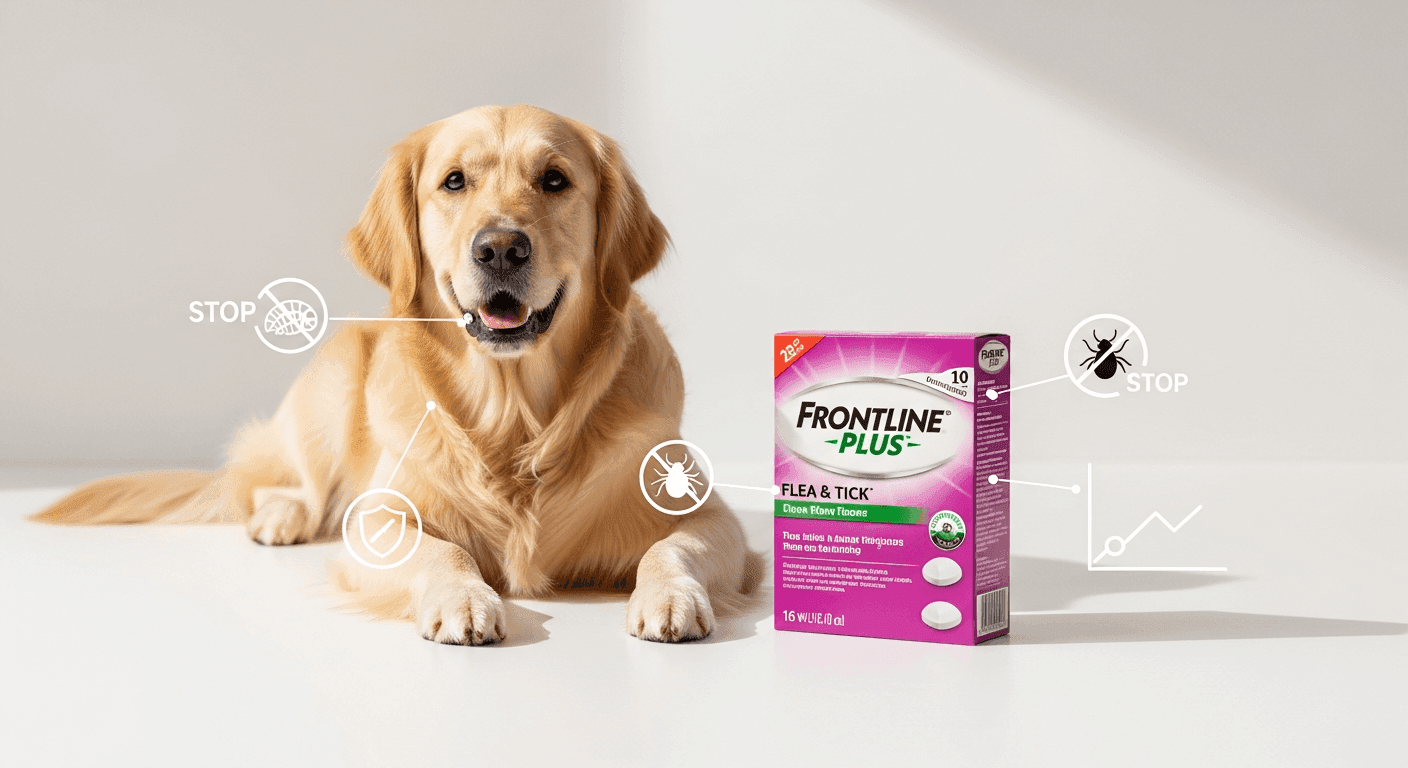
Over 80% of pet owners report dealing with fleas or ticks at least once annually—yet many don't realize they're fighting only half the battle. When you treat your dog or cat with a standard flea killer, you're eliminating the adult parasites crawling on their skin, but the eggs and larvae lurking in your home continue multiplying. This incomplete approach is why infestations return month after month, frustrating pet owners who follow treatment schedules religiously.
Frontline Plus has dominated the parasite control market for years because it tackles this problem differently. Unlike basic flea treatments, this veterinary-recommended topical solution uses a two-pronged approach: one ingredient destroys adult fleas and ticks immediately, while a second ingredient stops eggs and larvae from ever developing. The result is a comprehensive solution that breaks the entire parasite lifecycle, not just the visible symptoms.
Discover how Frontline Plus can protect your pet with proven dual-action parasite control.
The Dual-Action Science Behind Frontline Plus
Understanding how Frontline Plus works reveals why it's remained a trusted choice among veterinarians and pet owners alike. The formula relies on two distinct active ingredients that attack parasites at different life stages.
Fipronil's Role: Disrupting the Nervous System
Fipronil is the first active ingredient, responsible for eliminating adult fleas and ticks. When applied to your pet's skin, fipronil targets the nervous system of parasites, causing hyperexcitation of their neurons. Within hours, adult fleas and ticks experience paralysis followed by death. This rapid action means your pet gets relief quickly—the itching and discomfort that drive so many pet owners to seek treatment begins diminishing almost immediately.
The brilliance of fipronil is its selective toxicity. It affects the nervous systems of insects with far greater potency than it affects mammals like dogs and cats. Your pet's nervous system operates on different neurological channels, making the chemical relatively safe for application directly to their skin.
Methoprene's Insect Growth Regulator Function
While fipronil handles the adult population, methoprene takes a different approach by targeting the reproductive cycle. This ingredient acts as an insect growth regulator (IGR), preventing flea eggs and larvae from developing into reproductive adults. Essentially, methoprene sterilizes the next generation before it has a chance to cause problems.
This is the key distinction between Frontline Plus and basic flea treatments. Standard products kill what's visible but leave behind thousands of eggs and pupae. Methoprene stops those dormant stages cold, preventing future infestations from even beginning.
Breaking the Flea Life Cycle
The complete flea lifecycle spans approximately three to four weeks under optimal conditions. Fleas begin as eggs laid on your pet's body, which fall into carpeting, bedding, and furniture. These eggs hatch into larvae, which burrow deeper into fabrics to avoid light. After developing through multiple larval stages, they pupate in protective cocoons. Finally, adult fleas emerge and seek a host.
Frontline Plus intervenes at multiple points. Fipronil kills any adult fleas present immediately. Methoprene prevents eggs from hatching and larvae from progressing toward adulthood. By breaking the chain at both the adult and pre-adult stages, the treatment stops the multiplication that makes infestations so difficult to control.
Nervous System Targeting Mechanism
The formula's specificity is crucial to safety. Fipronil and methoprene are designed to target insect nervous systems through pathways that mammals don't use. When applied properly to your pet's skin, these chemicals concentrate where parasites feed and travel, delivering effective doses where needed while remaining at levels that pose minimal risk to your pet's own nervous system.
Continuous Reapplication Through Oil Glands
After application, Frontline Plus doesn't simply sit on the surface of your pet's coat. Instead, the formula distributes itself through the natural oils in your pet's skin and hair follicles. These oils continuously reapply the treatment across the body throughout the 30-day protection period. This mechanism explains why the treatment remains effective even after bathing or swimming—the reservoir in the oil glands continues releasing active ingredients.
Species and Weight-Based Dosing: Getting the Right Strength
Frontline Plus comes in multiple formulations because one size doesn't fit all pets. The correct dosage depends on both your pet's species and weight.
Dog-Specific Formulations
Dogs come in vastly different sizes, from tiny Chihuahuas to giant Great Danes. Frontline Plus offers dosages tailored for small dogs (under 20 lbs), medium dogs (20-40 lbs), large dogs (40-85 lbs), and extra-large dogs (over 85 lbs). Each formulation contains the appropriate concentration of fipronil and methoprene to provide effective coverage for that weight range.
Cat-Specific Formulations
Cats present different considerations than dogs. Feline formulations contain lower concentrations of certain ingredients because cats have different tolerances than canines. Cat-specific Frontline Plus is typically available for cats weighing under 5 lbs and cats weighing 5 pounds and up. Never use dog formulations on cats—the difference in concentration could cause harm.
Weight Categories and Their Corresponding Doses
Determining your pet's correct weight category is straightforward. Weigh your pet at home or at your veterinarian's office, then match that weight to the appropriate formulation. If your pet weighs exactly at a threshold (for example, 40 lbs), select the higher dosage category for maximum safety margin.
Application Volume Differences
Each formulation delivers a specific volume of liquid—typically measured in milliliters. Smaller pets receive less total volume because they need less active ingredient to achieve therapeutic coverage. The application volume difference isn't arbitrary; it reflects precise calculations based on body surface area and weight.
Selecting the Correct Product
Common mistakes include buying the wrong species formulation (dog product for a cat) or the wrong weight category. Always verify before purchasing. Check the packaging carefully, as it clearly indicates both the species and weight range. When in doubt, contact your veterinarian—they can confirm the exact product your pet needs.
Step-by-Step Application and Timing Guidelines
Proper application is essential for effectiveness. Frontline Plus won't work if applied incorrectly, and improper technique is one reason some pet owners experience apparent treatment failure.
Preparing Your Pet's Coat
Before application, inspect your pet's skin where you'll apply the treatment. The area should be dry and free of visible parasites if possible. If your pet has matted fur, gently brush the area to allow better contact between the formula and skin. This preparation step ensures the liquid reaches the skin itself rather than simply coating the outer hair.
Correct Placement Between Shoulder Blades
Always apply Frontline Plus to the skin at the base of your pet's skull, between the shoulder blades. This location is ideal because it's difficult for your pet to reach with their mouth when grooming. Part the fur to expose the skin, then apply the entire contents of the tube or pipette directly to the skin (not the hair). The treatment should create a small wet spot on the skin itself. This specific location prevents ingestion while ensuring the formula has direct contact with the skin where it can distribute through oil glands effectively.
Preventing Ingestion and Self-Grooming
After application, keep your pet separated from other pets for 30 minutes to an hour if possible. This prevents cats from grooming dogs or vice versa. During this window, avoid petting the application site yourself. Once the formula dries, the risk of ingestion decreases significantly, but that initial period warrants caution.
Timing Around Baths and Swimming
The 24-hour waterproof window is a genuine advantage. You can bathe your pet or allow them to swim 24 hours after application without compromising protection. However, the first 24 hours matter—avoid bathing or swimming immediately after application. After the 24-hour mark, normal water exposure poses no problem. The treatment remains effective through rain, humidity, and swimming for the full 30-day period.
Monthly Scheduling for Consistent Protection
Mark your calendar for monthly applications. The 30-day protection window is based on the active ingredient's lifespan in your pet's system. Applying too early or too late creates gaps in coverage. Many pet owners set a recurring phone reminder for the same date each month, treating it like a regular appointment.
What to Do If Application Goes Wrong
If you miss a dose, apply the next one as soon as you remember, then resume your regular monthly schedule. Accidental overdose (applying two doses at once) is unlikely to cause serious harm if it happens once, but contact your veterinarian for guidance. If your pet gets bathed within 24 hours of application, the treatment's effectiveness may be reduced—reapplication might be warranted, though your vet should advise based on your specific situation.
Parasite Coverage: What Frontline Plus Actually Eliminates
Frontline Plus provides broad-spectrum protection, but understanding exactly what it targets and what it doesn't is important for realistic expectations.
Adult Flea Elimination
Frontline Plus kills adult fleas with proven effectiveness. Clinical studies demonstrate kill rates exceeding 95% against adult flea populations. The treatment works against common flea species found on dogs and cats across most geographic regions.
Tick Species Targeted
The formula targets four specific tick species: the American dog tick, the brown dog tick, the lone star tick, and the deer tick (which carries Lyme disease). For pet owners in regions where tick-borne illness is a concern, this multi-species coverage provides meaningful protection against disease vectors.
Chewing Lice Control
Beyond fleas and ticks, Frontline Plus eliminates chewing lice. While less common than flea infestations, lice can cause significant discomfort and spreading between animals. This additional protection is an underrated benefit for multi-pet households.
Flea Egg and Larvae Prevention
As discussed earlier, methoprene prevents flea eggs from hatching and larvae from developing. This environmental control aspect is substantial—treating your pet reduces household flea populations even in areas your pet doesn't frequently visit, since flea eggs and pupae concentrate in bedding and carpeting.
Limitations Against Certain Parasites
Frontline Plus doesn't treat mites, mosquitoes, or certain internal parasites. If your pet has mange, requires mosquito protection, or needs internal deworming, you'll need additional products. Your veterinarian can recommend complementary treatments if needed.
Geographic Resistance Patterns
In some regions, flea populations have developed resistance to fipronil through repeated exposure over years. This resistance reduces effectiveness in certain areas, though widespread resistance remains limited. If you live in a region with known resistance or notice your pet still itching despite proper application, discuss alternative treatments with your veterinarian.
Waterproof Formula and Lifestyle Flexibility
One of Frontline Plus's genuine advantages is its waterproof design, which accommodates the messy reality of pet ownership.
How the Waterproof Design Works
The formula embeds itself in your pet's oil glands rather than sitting on the surface. This oil-based distribution system makes the treatment naturally resistant to water. The active ingredients don't wash away because they're stored in the skin itself, not suspended on the hair coat where water could rinse them away.
Swimming and Bathing After Application
After the initial 24-hour period, your pet's swimming habits pose no threat to protection. Dogs can splash in pools, play in rivers, or be bathed weekly without losing efficacy. This flexibility is particularly valuable for active pets or those requiring frequent baths due to allergies or skin conditions.
Weather Resistance
Rain won't compromise your pet's protection, and neither will humidity or outdoor water exposure. This all-weather reliability means your pet remains protected regardless of the season or weather patterns in your region.
Durability Through the 30-Day Cycle
The 30-day protection period accounts for the continuous release of active ingredients from the oil gland reservoir. Even if your pet spends significant time in water, the formula maintains adequate concentrations throughout this window.
Reapplication Frequency
Monthly reapplication aligns with the biologic lifespan of the active ingredients in your pet's system. Applying more frequently won't increase protection but will waste product. Applying less frequently creates gaps where parasites can establish infestations.
Real Advantages for Pet Owners and Their Homes
Beyond the science, practical advantages explain why Frontline Plus has maintained market dominance.
Veterinarian Endorsement
Decades of use and clinical data have earned Frontline Plus consistent recommendation from veterinarians. When your vet suggests a specific flea treatment, it's based on experience with thousands of patients. The fact that trusted veterinarians continue recommending it despite competitive alternatives speaks to its reliability.
Proven Track Record
Frontline Plus has been available for years, accumulating extensive real-world data on effectiveness. This isn't a new, unproven product. The treatment has demonstrated consistent results across diverse pet populations and geographic regions.
Environmental Flea Control
By treating your pet, you're simultaneously reducing household flea populations. The eggs and larvae that would develop in your carpeting and furniture are prevented from ever becoming adults. This environmental impact is particularly valuable for preventing severe infestations.
Ease of Monthly Application
Applying a topical treatment takes minutes once monthly. Compared to pills (which some pets resist), collars (which some pets find uncomfortable), or injectable treatments (which require veterinary visits), the simplicity of monthly application is genuine convenience.
Broad-Spectrum Protection
One product addressing fleas, ticks, and lice eliminates the need to purchase multiple treatments. Simplifying your pet's parasite prevention routine makes consistency easier and reduces cost compared to combining separate products.
Consistent Results Across Pet Populations
Frontline Plus works reliably for most dogs and cats when applied correctly. This consistency reduces the frustration of unpredictable results.
Honest Limitations and Potential Drawbacks
While Frontline Plus excels in many ways, realistic understanding of its limitations matters before purchasing.
Fipronil Resistance in Certain Regions
In areas where fipronil has been widely used for many years, some flea populations have developed resistance. This doesn't mean the product becomes completely ineffective, but rather that efficacy may drop below therapeutic levels. If you live in a region with known resistance or experience apparent treatment failure, consult your veterinarian about alternatives.
Temporary Skin Irritation at Application Site
Some pets develop minor irritation at the application site—redness, mild hair loss, or temporary scabbing. These reactions are usually transient and resolve within a few days. Conversely, severe reactions (spreading rashes, persistent sores, signs of systemic illness) warrant immediate veterinary attention, as they may indicate an allergy or other concern.
Cost Comparison
Frontline Plus typically costs $40-$80 for a multi-pack (3 or 6 doses), making it more expensive than generic alternatives or some competing brands. If cost is a primary concern, discuss budget-friendly options with your veterinarian. However, comparing price alone without considering effectiveness can be counterproductive—a cheaper treatment that doesn't work costs more in the long run.
Individual Pet Sensitivity
While most pets tolerate Frontline Plus well, some individuals have sensitivities to the active ingredients or carrier oils. If your pet has a history of skin reactions to topical products or has particularly sensitive skin, mention this to your veterinarian before starting treatment.
Not Suitable for All Situations
Pregnant or nursing pets should not receive Frontline Plus without veterinary approval. Very young puppies and kittens have specific age requirements before the treatment is appropriate. Pets with certain health conditions may also be contraindicated. Always disclose your pet's full health history before starting treatment.
Effectiveness Variations
Several factors reduce protection: improper application (not applying directly to skin, applying to the wrong location), developing fipronil resistance in your area, environmental conditions that interfere with oil gland distribution, or gaps in monthly application schedules. Recognizing these variables helps troubleshoot if you experience apparent treatment failure.
Pricing, Availability, and Where to Buy
Understanding pricing structures and where to source Frontline Plus helps ensure you're getting authentic product at fair value.
Multi-Dose Pack Options
Frontline Plus comes in 3-dose and 6-dose packages. A 6-dose pack covers six months of protection and typically offers better per-dose value than a 3-dose pack. However, the 3-dose option appeals to pet owners wanting to test the product or those with seasonal parasite concerns.
Typical Price Ranges
Multi-packs generally cost between $40-$80 depending on your pet's size category, the retailer, and current market conditions. Larger dog formulations typically cost more than cat or small dog formulations due to the higher active ingredient concentration.
Online Retailers and Veterinary Clinics
Authentic Frontline Plus is available through veterinary clinics and reputable online retailers including pet supply websites. Purchase only from established retailers to ensure you're receiving genuine product, not counterfeit formulations. Reputable online sources often match or undercut veterinary clinic pricing while providing the same authentic product.
Prescription Requirements
In some regions, Frontline Plus is available over-the-counter, while in others it requires veterinary prescription. Check your local regulations or call your veterinarian to determine what applies in your area.
Seasonal Pricing Fluctuations
Prices sometimes drop during off-season months (winter in cold climates, late fall in temperate regions) when fewer pet owners seek parasite treatments. Buying ahead during these periods can result in savings, though storage should keep the product in a cool, dark place to maintain efficacy.
Comparing Cost-Per-Dose
To calculate true value, divide the total pack price by the number of doses. A $60 6-pack ($10 per dose) offers better value than a $45 3-pack ($15 per dose), even though the upfront cost is higher. This per-dose comparison helps identify the best deal.
Making the Right Choice for Your Pet
Determining whether Frontline Plus is right for your specific situation requires evaluating several personal factors.
Assessing Your Pet's Parasite Risk
Indoor-only cats in flea-free regions face lower parasite risk than outdoor dogs in tick-endemic areas. Your pet's lifestyle, local parasite prevalence, and your environment's infestation history all factor into necessity. A pet who's never encountered fleas may have lower risk than one with a history of infestations.
Consulting Your Veterinarian
Before starting any parasite treatment, discuss it with your veterinarian. They understand your pet's health history, local parasite patterns, and any individual risk factors. Your vet can confirm whether Frontline Plus is appropriate or whether alternatives might be better suited to your situation.
Considering Alternatives
Other flea and tick treatments exist, including oral medications, collars, injectable treatments, and combination products. Your veterinarian can explain how these compare to topical Frontline Plus in terms of effectiveness, convenience, and cost for your specific pet.
Monitoring for Effectiveness
Once you've started Frontline Plus, monitor your pet for signs that the treatment is working. Decreasing itching, absence of visible fleas, and reduced flea dirt (dark specks in the coat) indicate effectiveness. Persistent itching despite proper application might suggest resistance or indicate a need for alternative treatment.
Combining With Environmental Controls
For severe infestations or high-risk situations, combine Frontline Plus with environmental measures. Wash bedding frequently in hot water, vacuum carpets thoroughly, and consider flea sprays for furniture. This multi-pronged approach accelerates infestation elimination.
Long-Term Parasite Management Strategy
Rather than viewing parasite treatment as a one-time fix, develop a year-round prevention strategy. For most pets, monthly treatment during high-risk seasons and less frequent dosing during low-risk periods represents a balanced approach. Your veterinarian can help develop a seasonal plan suited to your region's parasite patterns.
The Bottom Line for Parasite Protection
Frontline Plus remains a powerhouse in flea and tick control because it addresses the complete parasite problem—not just the adults you see, but the eggs and larvae multiplying behind the scenes. The dual-action formula using fipronil and methoprene genuinely breaks the cycle, and the waterproof design means your pet's bath time won't sabotage protection.
I won't sugarcoat it: resistance has emerged in some areas, and it costs more than generic alternatives, but the veterinary endorsement and consistent results speak volumes about its reliability. Your next step is honest: evaluate your pet's actual risk level, chat with your vet about whether Frontline Plus fits your situation, and consider your local parasite patterns. If you're dealing with recurring infestations or live in a tick-heavy region, this treatment deserves serious consideration. For pet owners ready to stop the itch-scratch cycle and reclaim their homes from parasites, Frontline Plus delivers the comprehensive protection that decades of use have proven effective.
Get Frontline Plus today and take control of your pet's parasite protection.