Modern Car Theft Has Gone High-Tech—Here's How to Fight Back
Keyless car theft has skyrocketed in recent years, with relay attacks and key cloning accounting for thousands of vehicle thefts annually across the UK. Modern thieves have weaponized technology to bypass traditional security measures, leaving many drivers vulnerable despite locked doors and armed alarms. The sophistication of these attacks has forced vehicle owners to rethink their security strategies entirely.
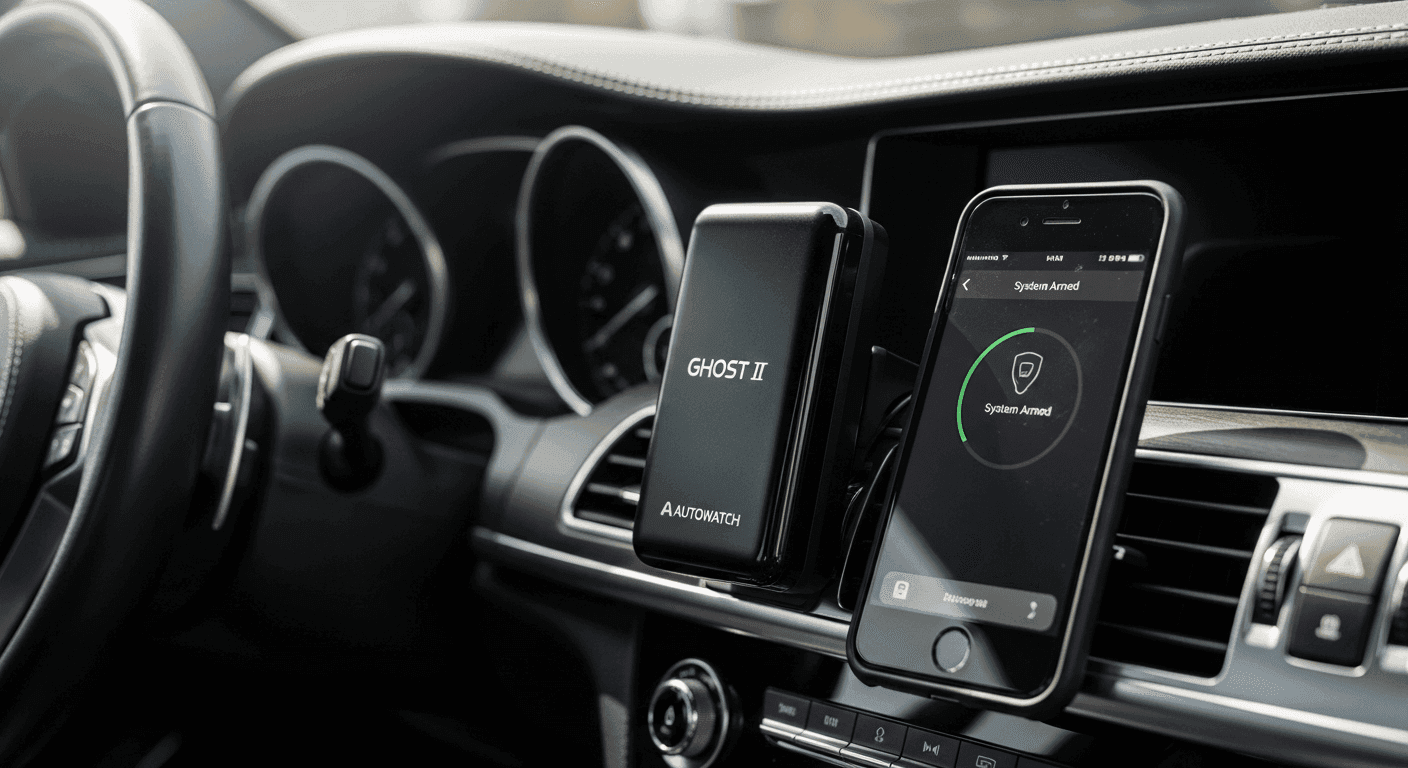
The Autowatch Ghost II CAN Bus Immobiliser emerged as a game-changing response to this evolving threat landscape. Unlike conventional alarm systems that announce their presence, this covert device operates invisibly within your vehicle's existing electronics, communicating directly with the Engine Control Unit through the CAN bus network. It has earned TASSA certification and widespread acclaim for addressing the specific vulnerabilities that modern thieves exploit.
Explore the Ghost II's advanced security features and see how it can protect your vehicle today.
The Rise of Relay Attacks: Why Traditional Alarms Fall Short
Relay attack technology represents a quantum leap in car theft methodology. Criminals use signal amplification devices to intercept the wireless communication between your key fob and vehicle. Rather than breaking windows or hotwiring engines, thieves simply boost your car's signal from inside your home, trick the vehicle into thinking the legitimate key is present, and drive away in seconds. This entire process happens silently and without triggering conventional alarm systems.
How Relay Attack Technology Intercepts Keyless Entry Signals
A relay attack works by capturing and retransmitting the low-frequency signal between your key fob and vehicle. One criminal stands near your home with a receiver, while another positions themselves near your car with a transmitter. The receiver picks up your key's signal, amplifies it, and sends it to the transmitter—effectively extending the range of your key fob to hundreds of meters. Your vehicle receives what appears to be a valid signal and unlocks. The thieves then press the brake and start button, and your car ignites as if you were present with a legitimate key.
Why Conventional Car Alarms and Immobilisers Miss This Threat Entirely
Traditional immobilisers authenticate keys through wireless communication vulnerable to relay attacks. Standard alarm systems focus on detecting forced entry or glass breakage—they cannot prevent a vehicle from starting when thieves possess a valid electronic key signal. Many alarms only sound after the theft has already occurred, offering recovery assistance rather than prevention. By the time your alarm activates, criminals have already driven your vehicle away.
The Difference Between Immobilisers and Tracking Systems in Combating Modern Theft
This distinction proves critical to understanding security strategy. Immobilisers prevent your car from being driven away by disabling the engine control system. Tracking systems locate your vehicle after it has been stolen. The Ghost II functions as an immobiliser—it stops thieves at the point of theft. Even if criminals breach your vehicle and have your keys, they cannot start the engine without entering your secret PIN sequence. Tracking systems recover vehicles but cannot prevent the theft itself.
Real-World Statistics on Keyless Car Theft Prevalence in 2026
The statistics paint a concerning picture. Relay attacks and key cloning account for thousands of vehicle thefts annually in the UK, with some regions experiencing year-on-year increases of 40% or more. Insurance companies now recognize keyless entry as a significant vulnerability, and many vehicles stolen through relay attacks fall outside traditional insurance coverage if owners lack adequate anti-theft measures.
Limitations of LED-Based Deterrents Against Tech-Savvy Thieves
Visible LED indicators do little to deter modern criminals. A flashing red light simply indicates an alarm system exists—it does not prevent relay attacks or signal interception. Thieves equipped with scanning equipment recognize these indicators instantly and know exactly what security measures they face. Sophisticated criminals specifically target vehicles with visible alarms, viewing them as proof that entry can be gained through technological bypass rather than physical force.
Invisible Security: Understanding CAN Bus Integration Technology
The Ghost II operates on a fundamentally different principle from traditional vehicle security. Rather than adding external components that criminals can detect and disable, it integrates directly with your vehicle's internal communication network. This integration creates a security system that remains completely invisible to both scanning equipment and casual inspection.
Direct ECU Communication Without Visible Wiring or Modification
The CAN (Controller Area Network) bus is your vehicle's internal communication backbone—the network through which the Engine Control Unit, transmission, brakes, and other systems communicate. The Ghost II taps directly into this network, requiring minimal visible wiring or modification. Professional installers integrate the device with existing under-dashboard systems, leaving no exposed cables or components for thieves to locate and disable. Your vehicle appears completely unmodified to any external inspection.
How the CAN Bus System Allows Seamless Integration with Existing Vehicle Electronics
Every modern vehicle manufactured in the last two decades uses a CAN bus system. The Ghost II communicates through this established network, speaking the same language as your vehicle's ECU. This seamless integration means the immobiliser functions as if it were part of the original security architecture. No additional electronic boxes need to be added to your engine bay. The system sits invisibly within your vehicle's electrical network, monitoring and controlling the critical systems required for engine operation.
The Advantage of Zero LED Lights, Sounds, or Radio Frequency Signals
Traditional alarms announce their presence through visual indicators and audible alerts. The Ghost II produces none of these signals. No LED flashes, no siren sounds, and no radio frequency emissions that scanning equipment can detect. From a thief's perspective, your vehicle appears to have no advanced security installed whatsoever. Criminals scanning for detectable systems find nothing, rendering their specialized equipment useless.
Why Invisibility to Scanning Equipment Matters for Theft Prevention
Modern criminals use sophisticated scanning tools designed to detect wireless security systems, GPS trackers, and electronic immobilisers. These devices emit radio frequencies or can be located visually during inspection. The Ghost II leaves nothing for scanners to detect. Thieves who encounter your vehicle have no way of knowing whether it has security installed, forcing them to move on to easier targets. The element of uncertainty itself becomes a deterrent—criminals prefer vehicles where they understand the complete security picture.
Protection Against Relay Attack Tools and Signal Interception Devices
The Ghost II requires a physical PIN sequence entered through your vehicle's existing controls. Even if relay attack equipment successfully fools your vehicle into unlocking and starting, the engine will shut down within seconds if the correct PIN has not been entered. Relay attack tools cannot intercept or manipulate the PIN sequence because it exists only in your vehicle's electrical system after the immobiliser has been activated. The system requires authentication through a method that relay attacks cannot bypass.
Customizable PIN Security: Your Unique Disarm Sequence
The Ghost II transforms your vehicle's standard controls into a security mechanism. Instead of traditional key fobs or transponders, you create a unique PIN sequence using buttons already present in your vehicle. This approach combines convenience with robust security.
Creating a Personalized PIN Up to 20 Button Presses Long
Your PIN can be as short as 4 presses or as long as 20 presses, using any combination of existing vehicle buttons. You might use steering wheel controls, dashboard buttons, or door panel switches. The flexibility allows you to create sequences that only you remember. A 20-button sequence offers security comparable to passwords with millions of possible combinations. Brute-force attacks become mathematically impractical when thieves have no way of knowing your sequence length or which buttons you selected.
Using Existing Vehicle Controls for Seamless Integration
The immobiliser recognizes button presses on controls you use daily. There are no additional fobs to carry or manage. Your steering wheel controls, window buttons, or any other existing switches become your security keys. This seamless integration means security becomes automatic—you do not need to remember separate devices or change your normal vehicle operation habits.
How Complex Sequences Deter Brute-Force Bypass Attempts
Criminals occasionally attempt to bypass immobilisers through systematic button-press combinations. With the Ghost II's customizable sequences up to 20 presses long, the number of possible combinations reaches astronomical numbers. Even if a thief had unlimited time and could attempt one combination per second without the vehicle detecting tampering attempts, they would exhaust billions of possibilities before finding your sequence. The mathematical impracticality makes this attack method entirely futile.
Emergency Override Codes for Forgotten PIN Scenarios
If you forget your PIN sequence, the Ghost II includes a secure emergency override code. This code exists only in your installer's records and cannot be discovered through vehicle inspection or hacking attempts. You simply contact your authorized installer, verify ownership, and they provide the override code. This backup system ensures you never find yourself locked out of your own vehicle.
Service and Valet Mode Functionality for Temporary Suspension
Service and valet modes temporarily suspend the immobiliser's PIN requirement without revealing your sequence to mechanics or parking attendants. In service mode, your vehicle operates normally for maintenance work. In valet mode, someone parking your car can start and drive it without knowing your PIN—the immobiliser reactivates once you restart the vehicle. This functionality preserves your security even when third parties need temporary access to your vehicle.
TASSA Approval and Insurance Premium Reductions
TASSA (Theft Avoidance Security Systems Association) certification carries significant weight in the insurance industry. Approval from this independent organization validates that the Ghost II meets rigorous security standards.
Understanding TASSA Certification and Its Significance
TASSA certifies vehicle security products that meet strict testing standards for effectiveness against modern theft methods. Gaining TASSA approval requires demonstrating that a security system genuinely prevents the specific types of theft it claims to address. The Ghost II's approval confirms that independent testing verified its effectiveness against relay attacks, key cloning, and keyless entry exploitation. This certification means insurers recognize the system as a legitimate, proven security measure rather than speculative technology.
How TASSA Approval Influences Insurance Company Assessments
Insurance underwriters use TASSA certification as an objective measure of security effectiveness. Vehicles equipped with TASSA-approved systems demonstrate lower theft risk profiles, reducing insurers' projected losses. Many insurance companies offer automatic premium reductions for vehicles with TASSA-certified immobilisers, viewing these systems as equivalent to reducing the likelihood of successful theft attempts.
Potential Premium Discounts for Ghost II Installation
Most major UK insurers offer discounts ranging from 5% to 15% of annual premiums for vehicles with TASSA-approved immobilisers like the Ghost II. These discounts accumulate over time, quickly offsetting the system's initial installation cost. A vehicle with comprehensive coverage costing £800 annually might see a £120 reduction—meaning the Ghost II pays for itself through insurance savings within 4-5 years before considering the theft prevention benefits.
Insurance Recognition as a Legitimate Security Measure
Unlike unproven gadgets or modifications that insurers view skeptically, TASSA-approved systems receive explicit recognition in policy documents. Some policies explicitly list TASSA certification as a qualifying security measure. This recognition ensures that your premiums reflect your actual security posture, and you receive appropriate coverage for a vehicle protected by verified anti-theft technology.
Long-Term Value Proposition Through Reduced Annual Premiums
Over a ten-year vehicle ownership period, insurance premium reductions can save thousands of pounds. A £10 monthly saving compounds to £1,200 over a decade—money that directly reduces the effective cost of your Ghost II installation. Combined with the peace of mind knowing your vehicle is protected against modern theft methods, the long-term value proposition becomes compelling, especially for owners of higher-value vehicles in areas where keyless car theft occurs frequently.
Why the Ghost II Remains the Smart Choice for Serious Vehicle Protection
The Autowatch Ghost II CAN Bus Immobiliser represents a genuine evolution in vehicle security—one that directly addresses the sophisticated theft methods criminals employ today. Its invisible operation, customizable PIN security, and seamless smartphone integration create multiple layers of protection that traditional alarms simply cannot match.
The TASSA certification and insurance recognition validate what owners already know: this system delivers tangible security benefits. The investment of £499 to £549.99 quickly becomes worthwhile when you factor in reduced insurance premiums, the peace of mind knowing your vehicle is protected against relay attacks and key cloning, and the knowledge that your car remains immobilized even if thieves gain access to your keys.
If you're serious about protecting a high-value vehicle or live in an area where keyless car theft is prevalent, the Ghost II deserves serious consideration. Authorized Autowatch installers can assess your specific vehicle and security requirements, ensuring you receive a customized installation that addresses your particular situation. The combination of proven effectiveness, industry recognition, and real-world theft prevention makes this investment one of the most practical security decisions vehicle owners can make in 2026.