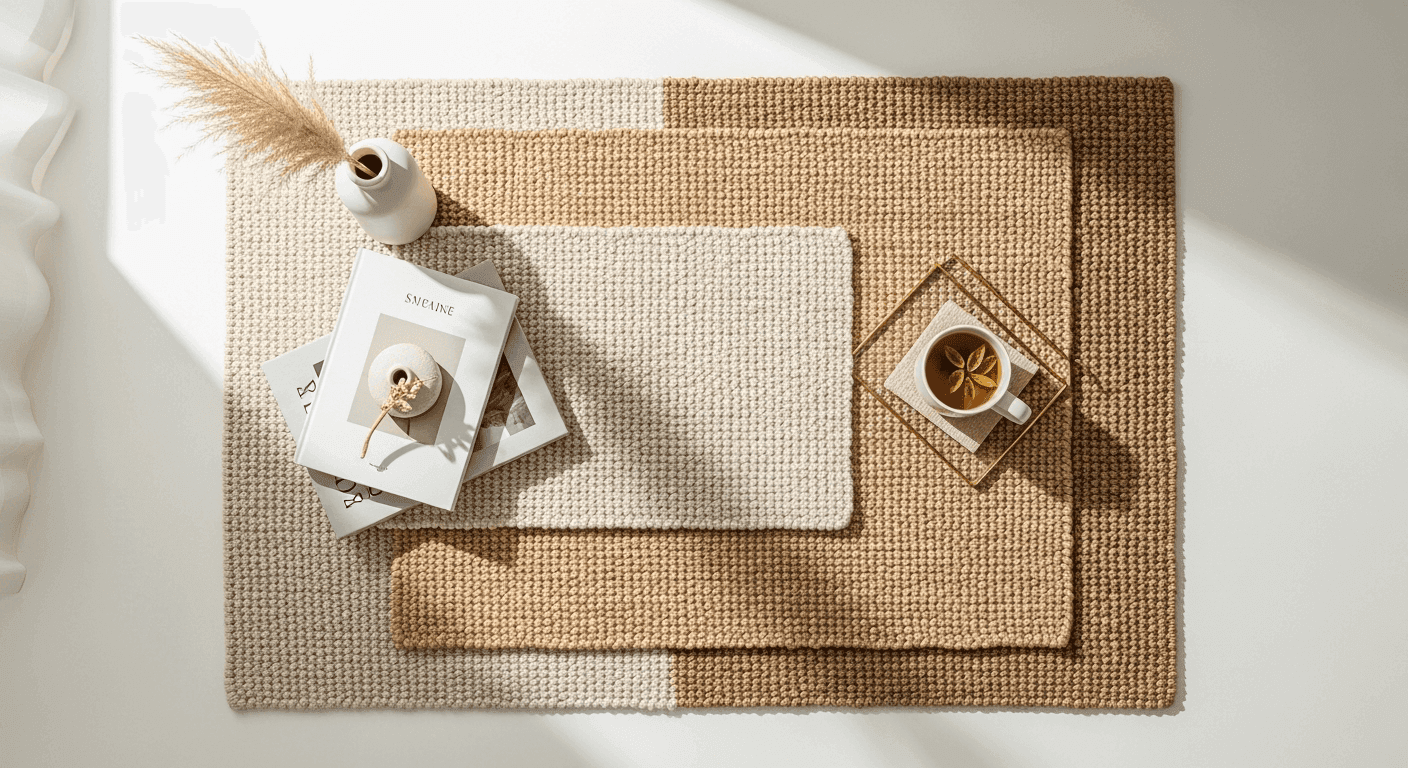
The Art of Layering Natural Fiber Rugs: Your Guide to Designer-Level Depth
Interior designers have discovered something powerful: layering natural fiber rugs transforms ordinary rooms into spaces with genuine character and visual sophistication. Over 60% of design professionals now recommend this strategy as a core element of their approach. When executed thoughtfully, rug layering creates dimension and personality that single rugs simply cannot achieve.
The secret lies in choosing the right foundation piece. A neutral base rug serves as your visual anchor, allowing complementary pieces to shine without competing for attention. The Perfect Handwoven Jute-Blend Rug in Natural from Rugs USA has become the industry standard for this foundational role, beloved by designers and homeowners for its versatility and authentic texture. With over 1,000 five-star reviews, this handwoven piece proves that timeless design doesn't require a premium price tag.
This guide walks you through the entire layering process. You'll discover why jute creates the perfect foundation, learn the sizing strategies that ensure visual balance, explore design combinations that work across different aesthetics, and master room-specific techniques that maximize impact.
Explore the Perfect Handwoven Jute-Blend Rug in Natural from Rugs USA today.
Why Jute Serves as the Perfect Layering Foundation
Jute's reputation as an ideal layering base stems from multiple practical and aesthetic advantages. The natural color palette acts as a visual anchor without overwhelming your space, allowing patterned and textured rugs to command attention without clashing. This restraint is intentional—your foundation should support your accent pieces, not compete with them.
The handwoven texture adds organic dimension that complements virtually any rug layered on top. Smooth jute allows patterned pieces to stand out, while its subtle surface variation prevents monotony. Meanwhile, the earthy undertones of natural jute work seamlessly across multiple design styles—modern, bohemian, farmhouse, and contemporary all benefit from this neutral foundation.
Practically speaking, jute's slightly textured surface prevents top rugs from sliding, creating a secure layering system without additional rug pads between layers. This stability matters more than most people realize; poorly secured layered rugs shift with foot traffic, creating tripping hazards and a perpetually disheveled appearance.
The creamy natural tone brightens rooms while maintaining warmth and coziness—a balance that cooler neutrals often struggle to achieve. Finally, jute's durability means your foundation rug withstands the weight of layered pieces over time, making this a genuine long-term investment rather than a trend-driven purchase.
Size Strategy: Calculating the Right Dimensions for Layered Rugs
Sizing represents the most critical element of successful rug layering. Incorrect proportions create visual chaos rather than intentional design. Start with a larger jute base rug—typically 8x10 or 9x12 dimensions—to establish a strong foundation. This size range anchors most living spaces effectively without overwhelming standard room dimensions.
Layer a smaller accent rug on top, aiming for 5x7 or 6x9 dimensions, and position it to leave 12-18 inches of jute visible on all sides. This frame effect creates intentional design; the peek of your base rug around the perimeter signals that layering was deliberate rather than accidental.
Consider room proportions carefully. A rug that's too small gets lost within the space, failing to anchor seating areas or create visual cohesion. Conversely, an accent rug too large overwhelms the foundation and negates the layering effect entirely. Measure your furniture placement first—the layered rug should anchor seating areas effectively, typically positioned so that at least the front legs of sofas and chairs rest on the layered surface.
Narrow hallways and entryways follow different proportions. Rectangular jute rugs (2.5x8 dimensions) work best here, topped with smaller accent pieces that maintain visual balance without blocking traffic flow. Bedrooms benefit from a full-size jute base (8x10) topped with a 5x7 patterned rug positioned at the foot of the bed, creating coziness while maintaining visual space.
Find your ideal dimensions in the Perfect Handwoven Jute-Blend Rug collection.
Design Combinations That Work With Natural Jute
The neutral nature of jute opens countless design possibilities. Geometric patterned rugs paired with jute create modern aesthetics with bohemian flair—sharp lines and clean shapes feel elevated rather than sterile. Persian or traditional patterned rugs layered on jute achieve classic, timeless elegance; the neutral base prevents traditional patterns from feeling dated or overwrought.
Solid-colored rugs in complementary tones—charcoal, cream, soft gray—layered on jute deliver subtle sophistication. This minimalist approach appeals to those seeking depth without visual noise. Tribal or Moroccan patterns create authentic boho-chic spaces, with jute grounding the bolder aesthetic and preventing the room from feeling chaotic.
Consider how vintage or distressed rugs gain character when layered on jute. The aged quality feels intentional and curated rather than worn. Botanical or nature-inspired prints transform into calming, grounding spaces when positioned over a jute base. The earthy foundation enhances the organic aesthetic without creating visual competition.
For unexpected luxury, pair neutral jute with jewel-tone accent rugs in emerald, sapphire, or terracotta. These rich colors feel sophisticated and intentional over a creamy base. For maximum texture and visual interest, employ multiple layers—jute base, patterned mid-layer, and small accent rug—creating dimension that photographs beautifully and invites touch.
Room-by-Room Layering Techniques
Different spaces benefit from tailored layering approaches based on traffic flow, furniture arrangement, and functional demands.
Living Rooms
Use a large jute base (9x12) with a 6x9 patterned rug centered under the seating area. This arrangement anchors conversation zones while allowing the neutral foundation to frame the space. Ensure that sofas and chairs have their front legs positioned on the layered surface for visual cohesion.
Bedrooms
Layer a 5x7 accent rug at the foot of the bed over a full jute foundation. This placement adds coziness while maintaining visual breathing room. The layered effect draws the eye to the bed as the focal point without consuming the entire room with pattern or color.
Entryways
Create visual interest with a narrow jute runner (2.5x8) topped with a small patterned accent piece. This arrangement welcomes guests while establishing your design aesthetic immediately. The layering adds personality to what might otherwise be a transitional space.
Home Offices
Anchor your desk area with jute, then layer a smaller rug under the seating zone. This dual-layering approach defines distinct functional areas within a single room, visually separating work surfaces from conversation or relaxation zones.
Dining Rooms
Use jute as the base (8x10) with a patterned rug layered underneath the table for cohesion. The base rug should extend beyond the table's footprint, ensuring that chair legs rest on the layered surface even when pulled out for seating.
Kitchens
Layer washable accent rugs over jute in high-traffic zones for both style and practicality. Kitchen environments demand durable, easy-to-clean surfaces; jute's natural fibers resist staining better than many alternatives, while machine-washable accents handle spills and splashes.
Nurseries
Combine soft jute with plush accent rugs to create safe, textured play areas. The layering encourages barefoot exploration while maintaining visual softness that soothes both infants and parents. Natural fibers provide tactile stimulation crucial for early childhood development.
Styling Tips for a Polished, Intentional Look
Successful layering extends beyond size and placement. Ensure the top rug's color palette complements rather than competes with the jute undertones. Clashing colors and patterns signal accident rather than intention. Use rug pads under both layers to prevent slipping and protect your flooring—this seemingly small detail prevents costly damage and safety hazards.
Rotate layered rugs seasonally by swapping accent pieces to refresh your space without major investment. A spring botanical pattern replaced by autumn jewel tones transforms the room's energy while maintaining your neutral foundation. Keep the layering balanced; avoid placing the top rug too close to walls or furniture edges, as this creates visual imbalance and makes the space feel cramped.
Mix textures deliberately by pairing smooth jute with plush, woven, or shag accent rugs. This tactile variety invites touch and creates visual richness. Use the rule of thirds by positioning the top rug slightly off-center for a more dynamic, curated feel. Coordinate rug fringe styles thoughtfully; modern spaces benefit from minimal fringe, while bohemian rooms embrace fuller, choppier fringes.
Layer rugs at different heights using rug pads of varying thicknesses to create subtle dimension. This three-dimensional approach transforms the space from flat to genuinely sculptural.
Maintenance and Care for Layered Rug Systems
Layered rugs demand consistent care to maintain their appearance and longevity. Vacuum jute rugs weekly to prevent dust accumulation between layers. Dust trapped between rugs can degrade fibers and create odor issues over time. Shake out both rugs separately every few weeks to maintain their shape and texture—this simple action prevents compression and extends lifespan significantly.
Rotate the entire layered system quarterly to ensure even wear and fading. Sunlight exposure varies across rooms throughout the year; rotating prevents one section from fading noticeably while others retain their original color. Address spills immediately on the top rug to prevent seeping through to the jute base, which absorbs liquid more readily than patterned accent rugs.
Use gentle, natural cleaning methods on jute; harsh chemicals damage fibers and can set stains permanently. Check rug pads regularly to ensure they're still gripping properly and preventing movement. Worn pads require replacement to maintain stability. Spot-clean the jute base annually to keep it fresh without full washing, which can oversaturate natural fibers.
Store off-season accent rugs in breathable bags to prevent moisture and odor buildup. Plastic storage traps humidity and encourages mildew; cotton or canvas bags allow proper air circulation.
Common Layering Mistakes to Avoid
Understanding pitfalls prevents costly design errors. Choosing a top rug too large leaves insufficient jute visible and creates a cluttered appearance that defeats the layering purpose. Neglecting rug pads causes both layers to shift, creating safety hazards and a perpetually disheveled look. Pairing clashing patterns without a unifying color or design element connecting them results in visual chaos.
Layering rugs in high-traffic areas without considering durability and maintenance challenges leads to premature wear. Heavy foot traffic compresses jute and causes accent rug fibers to pill or fray. Using accent rugs with colors that fade quickly makes the layered look appear dated within months, undermining your investment.
Placing layered rugs in moisture-prone areas like bathrooms allows jute to absorb water and deteriorate rapidly. Natural fibers and bathrooms are incompatible. Forgetting to consider the room's existing color palette results in a disjointed design where the layered rugs feel disconnected from surrounding elements. Finally, over-layering by adding too many rugs creates visual chaos rather than intentional design; typically two layers provide optimal impact.
Budget-Friendly Layering: Maximizing Value With Rugs USA
Strategic purchasing decisions maximize design impact without exhausting your budget. The jute base rug starts around $49 for smaller sizes, making it an affordable foundation investment. This entry price point allows you to layer budget-friendly patterned rugs on top without sacrificing quality or style.
Rugs USA's overall price point enables experimentation with multiple accent rugs seasonally—something impossible with premium rug retailers. Mix one investment-quality rug with several affordable accent pieces for maximum flexibility. Take advantage of Rugs USA's sales and promotions to build a layering collection over time rather than purchasing everything simultaneously.
The neutral jute base means you can swap accent rugs without replacing the foundation, extending your design flexibility indefinitely. The quality-for-price ratio makes this approach more cost-effective than purchasing single high-end rugs. Start with a basic layered system and gradually add pieces as your design vision evolves and your budget allows.
Making Your Layered Rug Vision a Reality
The Perfect Handwoven Jute-Blend Rug Natural isn't just a standalone piece—it's your secret weapon for creating sophisticated, layered spaces that feel intentional and curated. By starting with this versatile foundation and strategically layering complementary rugs on top, you're building visual depth, texture, and personality into every room. The beauty of this approach is that you're not locked into one design forever. Swap your accent rug seasonally, experiment with different patterns, and let your space evolve alongside your style preferences.
You're investing in a durable base that will anchor your designs for years, then layering affordable accent pieces on top. That means you get designer-level impact without the designer-level price tag. Ready to transform your space? Start by measuring your room, selecting your Perfect Handwoven Jute-Blend Rug Natural in the right size, and choosing one accent rug that speaks to your style. The magic happens when these two pieces come together.
Start your layered rug journey with the Perfect Handwoven Jute-Blend Rug in Natural today.