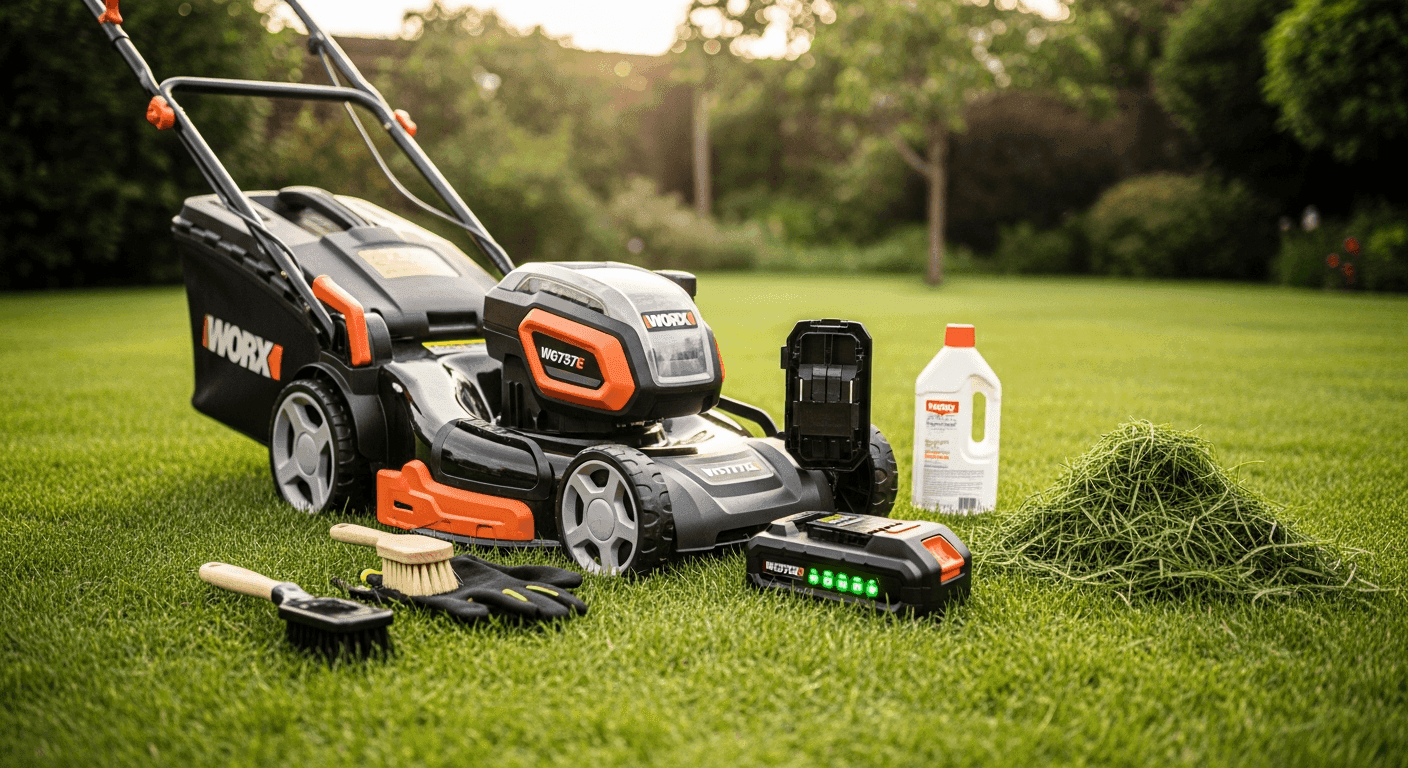
Battery anxiety is the silent killer of cordless mower enthusiasm. You've invested in the freedom of a cable-free lawn, yet you're constantly watching that charge indicator, wondering if you'll make it to the end of your garden before the power dies. The Worx WG737E 40V Cordless Lawnmower has earned its reputation as a brilliant mid-range performer, but like any battery-powered tool, its runtime depends heavily on how you use and maintain it.
Most users leave serious battery performance on the table simply because they don't understand the mechanics behind their dual 20V PowerShare system or how grass conditions affect power consumption. In this guide, you'll discover everything that impacts your mower's battery efficiency—from pre-mowing preparation and cutting technique adjustments to battery storage secrets and maintenance routines that actually work.
Discover how to maximize your Worx WG737E battery performance today.
Understanding Your Worx WG737E Battery System and Power Consumption
How the dual 20V PowerShare system delivers 40V and why this matters for runtime
The Worx WG737E operates on a clever dual 20V configuration that combines two batteries to create 40V of effective power output. This isn't simply two batteries running separately—they work in tandem to deliver the kind of cutting force you'd expect from a more expensive model. Understanding this architecture helps explain why runtime varies so dramatically between users. The 40V system allows the mower to match the cutting performance of petrol alternatives in most conditions, which means the motor's demand on your batteries depends entirely on what your lawn throws at it.
The brushless motor's adaptive power technology and how grass density triggers power surges
Your mower features a brushless motor with intelligent adaptive power technology that constantly monitors resistance and adjusts output accordingly. When you're cutting thin, healthy grass, the motor consumes minimal power and coasts along. The moment you hit a thicker patch or overgrown section, the motor kicks harder to maintain cutting speed, and this is where serious battery drain happens. This adaptive behavior is efficient by design, but only if you work with it rather than against it. Forcing the mower through dense grass or fighting its natural pace causes the motor to draw maximum current, eating through your battery reserves rapidly.
Why battery capacity (4.0Ah rating) affects total cutting time differently on different lawns
The 4.0Ah rating indicates amp-hours—essentially how much electrical charge each battery holds. Two 4.0Ah batteries give you a total capacity of 8.0Ah when used together. However, total cutting time isn't simply a matter of capacity divided by average power draw. A dense, overgrown lawn might consume 30 amps under heavy load, while a well-maintained lawn only needs 15 amps. This means your actual runtime on a neglected lawn could be half that of a healthy lawn, even with identical batteries. Real-world testing shows small gardens (under 250 square meters) typically enjoy 30-40 minutes of continuous cutting, medium gardens (250-500 square meters) get 40-50 minutes, and larger properties often need battery swaps to complete the job.
The relationship between cutting height and power draw—higher settings consume more energy
Cutting height settings range from 20mm to 70mm on the WG737E, and this choice profoundly affects battery consumption. Higher cutting positions create more resistance as the blades work through denser grass sections. Setting your mower to 70mm requires substantially more motor power than the 20mm position. This doesn't mean you should always cut at minimum height—that often damages grass health—but it does mean understanding your lawn's growth stage and choosing the appropriate height strategically. Seasonal adjustments make a real difference to battery longevity during a single mowing session.
How temperature fluctuations impact lithium-ion battery performance in UK climates
Lithium-ion batteries perform best in moderate temperature ranges, typically between 15°C and 25°C. UK weather often strays from this comfort zone. Cold temperatures reduce battery efficiency significantly—mowing on a chilly spring morning might yield 20-30% less runtime than the same session in summer. Heat accelerates battery degradation over time, though it does improve immediate performance during warm spells. Humidity and damp conditions also affect battery terminals and electrical connections. Understanding these seasonal variations helps you adjust expectations and plan your mowing schedule around temperature windows when battery performance peaks.
Real-world runtime expectations for small, medium, and large garden sizes
Battery anxiety often stems from unrealistic expectations about runtime. Small gardens under 250 square meters typically achieve 35-45 minutes of continuous cutting on a single battery charge, easily completing the job with one or two batteries. Medium gardens between 250-500 square meters usually need both batteries in sequence, with a charging break between sessions. Larger properties exceeding 500 square meters require either multiple batteries purchased separately or accepting that mowing happens in staged sessions. The included dual charger becomes invaluable here, allowing simultaneous charging of both batteries so your backup is ready while you're using the first charge.
Pre-Mowing Preparation to Preserve Battery Power
Clearing debris, stones, and obstacles before mowing to prevent motor strain
Starting your mowing session with a tidy lawn is one of the most underrated battery-saving techniques. Stones, fallen branches, and garden toys force your motor to work harder as it hits unexpected resistance. Spending five minutes clearing your lawn before mowing can genuinely improve battery runtime by 10-15% during that session. This isn't just about protecting your mower from damage—it's about reducing unnecessary power draw that drains your batteries without cutting a single blade of grass. A quick visual inspection and walk-through catches most hazards.
Checking grass moisture levels and timing your cuts for optimal battery efficiency
Wet grass is heavy grass, and heavy grass demands maximum motor power to cut cleanly. Mowing shortly after rain or early morning when dew covers the lawn increases battery consumption noticeably. Ideally, time your cuts for mid-morning on dry days when grass moisture has evaporated but growth is still vigorous. This simple timing adjustment can improve runtime by 15-20% compared to mowing damp grass. In the UK's unpredictable climate, this might mean watching weather forecasts and planning your mowing window strategically rather than cutting whenever you get around to it.
Inspecting your lawn for overgrown patches that demand more power
Before you start the mower, walk your lawn and note any noticeably overgrown sections. These patches will trigger maximum adaptive power output from your brushless motor and consume battery disproportionately. If possible, edge these areas slightly before the main mow or plan to tackle them when your battery is freshest. Alternatively, adjust your cutting height slightly higher on the first pass to reduce resistance, then make a second pass at proper height if needed. This approach distributes the workload across two battery cycles rather than exhausting one battery on a single aggressive pass.
Adjusting cutting height strategically based on current grass growth stage
Your lawn's growth stage directly influences optimal cutting height selection. Fast-growing spring grass benefits from taller settings (50-60mm) to reduce resistance and preserve battery life, even if you'll make a second pass later. Summer grass often needs closer attention but responds well to medium settings (35-45mm). Autumn and early spring growth stages benefit from height flexibility. Rather than applying one fixed height all season, adjust based on current conditions. This strategic approach reduces unnecessary power consumption and actually improves grass health by respecting seasonal growth patterns.
Preparing your second battery in advance to eliminate downtime between charges
The dual charger included with the WG737E is genuinely transformative for battery management. Rather than finishing one battery, charging it, then resuming mowing, prepare both batteries in advance so you always have a fresh battery ready. For evening mowing sessions, begin charging both batteries an hour before you plan to start. This eliminates downtime and ensures consistent performance across your entire lawn. The psychological benefit of knowing a fresh battery awaits after the first one depletes removes much of the battery anxiety that plagues cordless mower users.
Creating a mowing schedule that works with your battery capacity constraints
Work with your battery capacity rather than fighting against it. If your combined batteries provide 45 minutes of cutting time on your lawn, plan weekly sessions rather than attempting to complete everything in one marathon effort. This approach keeps your grass at consistent heights, reduces power demand per session, and spreads battery usage across multiple charges—all beneficial for both battery lifespan and grass health. A regular Wednesday evening session often produces better results than weekend scrambles to catch up on overgrown lawns.
Cutting Techniques That Extend Battery Runtime
Mowing in consistent, overlapping passes rather than random patterns
Your cutting pattern directly influences how hard your motor works. Moving in organized, overlapping lines (similar to mowing stripes) provides consistent resistance and allows your brushless motor to maintain steady power output. Random, back-and-forth patterns force the motor to constantly adjust and work harder as it encounters grass at different angles and densities. Organized passes feel more methodical but actually save battery by reducing unnecessary power fluctuations. Your lawn benefits visually from the striped appearance too.
Maintaining steady forward momentum to prevent motor from working harder
One of the most common mistakes is allowing the mower to slow or hesitate as it hits denser grass. Your natural instinct might be to push harder, but this actually forces the brushless motor to draw maximum current. Instead, maintain steady, consistent forward speed and let the adaptive motor regulate itself. The motor is designed to handle varying grass conditions—your job is simply to keep moving forward at a sustainable pace. This requires patience and trust in your mower's design, but the battery savings are substantial.
Avoiding aggressive pushing or forcing the mower through thick grass
Aggressive pushing is exhausting for your batteries. The moment you feel resistance building, slow your pace rather than fighting through it. If a section genuinely demands extra force, consider making a higher-cut pass first to reduce biomass, then a second pass at proper height. This distributes the work across two battery cycles and often produces cleaner cutting results than trying to force maximum material removal in one pass. The mower performs best when you work with its design rather than against it.
Working with the brushless motor's power adjustment—letting it regulate itself
Your brushless motor continuously monitors load and adjusts power output to maintain cutting speed. Fighting this system or trying to force faster cutting speeds drains battery rapidly. Trust the motor's adaptive technology and maintain steady forward momentum at whatever pace feels natural. You'll notice the motor sound changes as it adjusts—higher pitch indicates increased load. When you hear this transition, maintain speed rather than pushing harder. The motor handles the adjustment automatically.
Strategic direction choices: mowing with the slope rather than against it
If your garden has any slope, mowing downhill or across the slope is easier than pushing uphill. Working with gravity rather than against it reduces motor strain noticeably. Plan your mowing pattern to tackle any uphill sections when your battery is freshest, then drift downhill or across flat areas as the battery depletes and power decreases. This strategic planning prevents the frustration of a weakening battery struggling on difficult terrain.
Start optimizing your Worx WG737E cutting techniques with expert battery management strategies.
Breaking large lawns into manageable sections with battery swap points
For larger properties, identify logical stopping points where you can swap batteries without disrupting your workflow. Perhaps complete the front garden on one battery, swap to the second battery for the back section. This approach prevents the frustration of your battery dying mid-section and ensures you always have fresh power for clean finishing cuts. Planned sections also make the job feel more manageable psychologically—you're completing distinct areas rather than one exhausting marathon session.
Battery Charging Habits That Maximize Lifespan and Performance
Why the included dual charger is a game-changer for continuous mowing sessions
The dual charger bundled with the WG737E allows simultaneous charging of both batteries, effectively doubling your charging capacity. This means you can use one battery while charging the other, eliminating downtime entirely. For longer mowing sessions or larger properties, this feature transforms your entire mowing experience. Without dual charging capability, cordless mowers become frustrating during longer sessions. With it, you maintain uninterrupted momentum across your entire lawn.
Optimal charging practices: full discharge versus partial discharge cycles
Modern lithium-ion batteries don't require complete discharge before recharging—in fact, partial discharge cycles often extend overall battery lifespan. Rather than draining batteries completely, recharge them when they reach 20-30% capacity. This practice reduces stress on battery chemistry and maintains capacity over hundreds of charge cycles. The Worx battery management system protects against overcharging, so leaving batteries on the charger overnight is safe, though topping them off shortly before mowing is ideal for maximum performance.
Temperature considerations when charging—avoiding extreme heat or cold environments
Charge your batteries in moderate temperature environments, ideally between 10°C and 35°C. Charging in extreme cold slows the charging process and can temporarily reduce battery effectiveness. Charging in excessive heat accelerates chemical degradation. UK garages and sheds often fall into acceptable temperature ranges, but avoid charging in unheated outbuildings during winter or in full sun during summer. If you store batteries outdoors, bring them inside to moderate temperature before charging.
Charging frequency and how it affects long-term battery health
Frequent shallow charging cycles (topping off from 50% to 100%) is gentler on lithium-ion batteries than deep discharge-recharge cycles. If you mow twice weekly, charging both batteries fully after each session is perfectly acceptable and maintains consistent performance. However, if you mow once weekly, allowing batteries to partially discharge between sessions might extend overall lifespan slightly. The difference is marginal—consistency matters more than perfect optimization. Establish a routine that fits your schedule and stick with it.
Understanding the battery management system's role in preventing overcharging
Your Worx batteries and charger include intelligent management systems that prevent overcharging and dangerous power surges. The charger automatically switches to trickle charging once batteries reach full capacity, making overnight charging safe. Temperature sensors in the battery prevent charging in extreme conditions. This built-in protection means you can charge without constant monitoring, a significant convenience factor that makes cordless mowing genuinely practical.
Storage charging protocols for seasonal mowers or off-season maintenance
If you store your mower seasonally (entirely normal in UK climates), prepare batteries for storage by charging them to approximately 60% capacity. Storing fully charged batteries long-term accelerates chemical degradation, while fully discharged batteries risk not holding charge when you retrieve them months later. 60% represents an optimal middle ground. Before resuming mowing after winter storage, charge batteries fully and inspect terminals for corrosion or moisture. A brief conditioning charge—allowing batteries to discharge and recharge naturally—refreshes long-stored batteries.
Storage and Maintenance Strategies for Year-Round Battery Health
Proper off-season storage techniques to preserve battery capacity
Off-season battery storage deserves careful attention. Remove batteries from the mower and store them separately in a cool, dry location—typically an indoor shelf or storage cabinet. Avoid garages prone to temperature extremes or damp sheds where humidity corrodes electrical terminals. Ideally, maintain storage temperature between 10°C and 25°C. Even stored batteries naturally discharge gradually, losing roughly 2-3% of capacity monthly. During winter storage, recharge batteries to 60% capacity once monthly to maintain this optimal level.
Humidity and temperature control for your battery charging station
Dedicate a specific location for battery charging—ideally a dry indoor space like a hallway closet, garage shelf, or utility room. Avoid areas prone to moisture (near bathroom exhaust fans or exterior walls) and extreme temperatures (unheated sheds or full-sun windowsills). A stable, moderate environment keeps batteries healthy and charging efficient. If your home is naturally damp, consider a small dehumidifier near your charging station or store batteries in airtight containers with silica packets.
Regular battery terminal cleaning to maintain optimal electrical contact
Battery terminals accumulate dust and corrosion over time, particularly in damp environments. Once monthly during active mowing season, inspect battery terminals (the metal contacts) and wipe them gently with a dry cloth. For stubborn corrosion, use a pencil eraser or fine sandpaper to restore shine. Don't use water or liquid cleaners—dry methods only. Clean charger contacts similarly. Optimal electrical contact ensures efficient charging and consistent performance. This five-minute task prevents mysterious runtime decreases caused by poor connections rather than battery degradation.
Seasonal battery conditioning routines to prevent degradation
At the start of each mowing season (spring), perform a simple battery conditioning routine. Charge both batteries fully, then allow them to discharge completely during normal mowing—don't charge in between. Once fully depleted, charge again to full capacity. This complete discharge-recharge cycle refreshes battery chemistry and recalibrates the management system. Repeat this conditioning once monthly during heavy use seasons for optimal performance. It's particularly valuable after winter storage.
Identifying early warning signs of battery decline or reduced performance
Monitor your actual runtime against historical performance. If a battery that previously provided 25 minutes of cutting now only manages 15 minutes, degradation is occurring. Other warning signs include batteries that charge very quickly (suggesting reduced capacity) or fail to hold charge overnight. Temperature sensitivity increasing—batteries performing much worse in cold weather than previously—indicates aging chemistry. Swollen or physically deformed batteries require immediate replacement. Most Worx batteries remain reliable for 3-5 years with proper maintenance.
When to consider battery replacement and exploring PowerShare ecosystem alternatives
After 300-500 charge cycles (roughly 3-5 years of typical use), battery performance naturally declines. When a battery provides noticeably reduced runtime despite proper maintenance, replacement becomes practical. The PowerShare system offers tremendous flexibility—you can upgrade to higher-capacity 5.0Ah or 6.0Ah batteries while using your existing mower, charger, and other PowerShare tools. These higher-capacity options extend runtime substantially and are often available at competitive prices. Building a diverse battery collection (mix of 4.0Ah and higher-capacity options) provides flexibility for different tasks and lawn sizes.
Troubleshooting Common Battery Performance Issues
Sudden runtime drops and what they indicate about battery health
A battery that worked perfectly yesterday but now depletes in half the time likely exhibits one of three issues: the battery reached natural end-of-life, the charger is failing to deliver full charge, or environmental factors (extreme cold) are temporarily reducing performance. Charge the battery fully, attempt mowing in moderate temperature conditions, and compare results. If performance remains poor despite these conditions, the battery requires replacement. Gradual runtime decline over months usually indicates normal aging; sudden drops suggest charger or battery fault.
Motor power fluctuations during mowing and diagnostic steps
If your mower's cutting power seems inconsistent—occasionally weak despite adequate battery charge—check battery terminals for corrosion or loose connections. Clean terminals and ensure batteries seat firmly in the mower. Listen for unusual motor sounds; a struggling or fluctuating motor noise indicates the adaptive system working harder due to grass conditions or battery connection issues. If fluctuations persist despite clean terminals and moderate grass conditions, battery replacement is likely necessary.
Charging problems: recognizing when chargers or batteries need attention
A charger that stops responding or provides no indication that batteries are charging may have internal failure. Try charging known-good batteries with the suspect charger; if they don't charge, the charger needs replacement. Conversely, a battery that won't charge in a known-good charger is internally faulty. If a battery charges in one charger but not another, the charger with failure is the issue. The dual charger's indicator lights provide clear charging status—green indicating complete charge, amber indicating active charging. No indicator light suggests equipment failure.
Environmental factors affecting performance in wet or cold UK weather
Cold dramatically reduces battery efficiency and cutting time. A battery that provides 30 minutes in summer might only deliver 20 minutes on a chilly spring morning. This is temporary—warm the battery indoors before use if possible, or accept reduced performance during cold snaps. Wet grass increases power demand and battery drain beyond cold-weather effects alone. Damp conditions around battery terminals can cause connection issues that feel like reduced battery capacity. Allow batteries and mower to dry completely before storage in damp weather.
Comparing actual runtime against manufacturer specifications
The Worx WG737E specifications suggest runtime varies by conditions—typically 30-40 minutes for general lawns, less for overgrown or dense grass. If your actual runtime matches these ranges, your batteries perform normally. If runtime falls significantly short despite proper maintenance and favorable conditions, battery degradation or charger issues are likely. Document actual runtime across several sessions in similar conditions to establish your baseline, making it easier to detect genuine problems versus normal performance variation.
When to contact Worx support versus attempting DIY troubleshooting
If batteries won't charge despite using different chargers and outlets, contact Worx support—internal battery failure requires replacement. If the charger won't function despite proper connection and power supply, support contact is appropriate. For performance issues, attempt the diagnostic steps listed above first. Most runtime complaints resolve through improved charging practices, proper terminal cleaning, or accepting that cold UK weather temporarily reduces performance. Worx support becomes necessary only when equipment genuinely malfunctions rather than performs within normal parameters under challenging conditions.
Expanding Your Battery Arsenal for Uninterrupted Lawn Care
Cost-benefit analysis of purchasing additional 4.0Ah batteries
The included 4.0Ah batteries represent good value, but larger properties often benefit from additional batteries. A single 4.0Ah battery costs £30-45 depending on sales and stockist. For properties requiring 60-90 minutes of total cutting time, purchasing one additional battery (£30-45) costs less than many afternoon outings yet eliminates all downtime between battery swaps. The cost-benefit heavily favors additional batteries for medium to large lawns.
Exploring higher-capacity battery options within the PowerShare system
Worx offers 5.0Ah and 6.0Ah batteries within the PowerShare ecosystem, providing 25-50% more runtime than standard 4.0Ah batteries. These cost £50-75 each but deliver genuine runtime benefits for larger properties. A 6.0Ah battery alone often provides 45-60 minutes of cutting time, effectively eliminating battery concerns for small to medium lawns entirely. For £65-75, this delivers tremendous value compared to purchasing two 4.0Ah batteries separately.
Building a rotation strategy with multiple batteries for larger properties
Larger properties benefit from rotating three to four batteries. While using one battery, charge two others—ensuring you always have two fresh batteries available. This rotation strategy allows essentially unlimited cutting time (limited only by physical mowing stamina) while maintaining reasonable charging cycles that extend battery lifespan. The initial investment in additional batteries pays dividends through years of reliable, uninterrupted mowing sessions.
Integrating other Worx 20V tools to justify battery investment
The PowerShare system's true genius emerges when you build a collection of Worx 20V tools. Batteries work across cordless drills, hedge trimmers, string trimmers, leaf blowers, and numerous other garden tools. Purchasing batteries for lawn mowing simultaneously enables all these other tools. This ecosystem approach transforms battery investment from a lawn-specific concern into general garden infrastructure—you're not buying batteries just for the mower, but for an entire range of cordless tools. This perspective often justifies battery investment that purely lawn-focused thinking might not.
Comparing total cost of ownership: extra batteries versus mower upgrades
Before spending £300+ on a premium mower upgrade, consider whether £60-80 on additional batteries solves your actual problem. Most cordless mower complaints stem from battery anxiety rather than mower inadequacy. Adding one or two batteries to your WG737E setup typically costs £80-150 and completely eliminates runtime concerns for even medium-large properties. A mower upgrade often costs £200+ and may not significantly improve performance for your lawn size. Batteries represent the more cost-effective solution for nearly every homeowner.
Future-proofing your setup with backward-compatible PowerShare technology
Worx has committed to PowerShare backward compatibility—batteries released today will work with mowers released years from now. This means your battery investment protects you through multiple mower generations. If your WG737E eventually needs replacement, your battery collection remains useful with newer models. This backward compatibility adds genuine long-term value to battery purchases and makes expanding your battery collection a sensible investment rather than a temporary fix.
Transform Your Mowing Experience Through Smart Battery Management
The Worx WG737E 40V Cordless Lawnmower doesn't have a battery problem—it has an optimization opportunity. Once you understand how your brushless motor responds to grass conditions, master the timing of your cuts, and implement proper charging and storage routines, that limited runtime concern simply evaporates. Most gardeners experience dramatic improvement in battery performance within their first season by applying these practical strategies.
Your PowerShare batteries work across the entire Worx ecosystem, meaning every battery you invest in extends value across multiple tools. Start with pre-mowing preparation and cutting technique adjustments this week—they cost nothing and deliver immediate results. Then gradually implement the battery management practices that fit your garden size and mowing frequency. With these battery optimization techniques in your toolkit, the Worx WG737E becomes the powerhouse it was designed to be.
Begin with grass preparation strategies, monitor your actual runtime against expectations, and watch your battery anxiety transform into genuine confidence. The freedom and convenience of cordless mowing becomes real only when you truly understand and optimize your battery system. That transformation awaits you.
Get started with your Worx WG737E battery optimization journey now.