Disposable batteries remain a major source of household waste, with billions ending up in landfills every year. Choosing a rechargeable alternative can help reduce unnecessary waste while lowering long-term battery expenses.
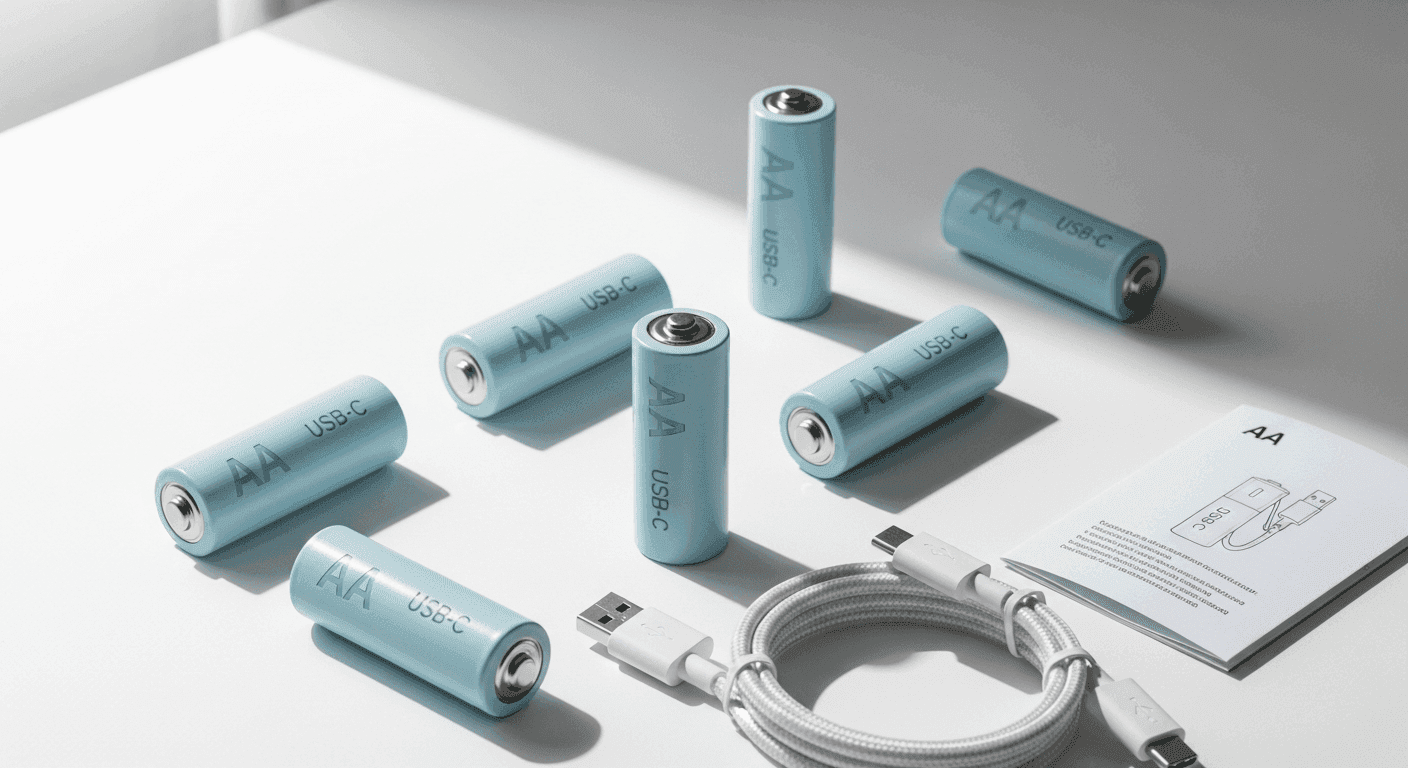
Pale Blue AA USB-C Rechargeable Batteries provide a modern approach by combining built-in USB-C charging with lithium-ion technology that delivers a steady 1.5V output throughout use. Instead of purchasing disposable batteries repeatedly or relying on a dedicated charger, you can recharge each battery individually using a standard USB-C cable already found in many homes.
This guide explains how these batteries work, where they perform best, what limitations to expect, and how they compare with traditional alkaline batteries.
Pale Blue AA USB-C Rechargeable Batteries: What Makes Them Different?
Several features separate these batteries from conventional rechargeable options.
Built-In USB-C Charging
Each AA battery includes its own USB-C charging port. Instead of using a separate charging dock, you simply connect a USB-C cable directly to each battery.
This design offers several practical benefits:
- No proprietary charger required
- Compatible with common USB-C phone and laptop chargers
- Individual batteries can be charged independently
- Less equipment to store or travel with
Consistent 1.5V Lithium-Ion Output
Traditional NiMH rechargeable batteries gradually lose voltage during use. Many electronics notice this drop, leading to reduced brightness or inconsistent performance.
Pale Blue batteries use regulated lithium-ion technology to maintain a stable 1.5V output until the battery is nearly depleted. This makes them especially suitable for electronics that perform best with steady voltage.
Fast Charging
According to Pale Blue's published specifications, a full recharge generally takes under four hours using a standard USB-C power source.
A built-in LED indicator makes charging status easy to understand:
- Flashing light: Charging
- Solid green: Fully charged
Key Specifications
|
Feature |
Specification |
|
Battery Type |
AA Lithium-Ion Rechargeable |
|
Charging Port |
USB-C |
|
Nominal Voltage |
1.5V |
|
Capacity |
Approximately 1700–1828mAh |
|
Recharge Cycles |
1,000+ |
|
Charging Time |
Under 4 hours |
|
Charger Required |
No |
Where These Batteries Perform Best
Flashlights and Headlamps
Portable lighting benefits from consistent voltage. Instead of gradually becoming dimmer, lights typically maintain brightness until the battery reaches a low charge.
This makes these batteries useful for:
- Emergency flashlights
- Camping lights
- Headlamps
- Portable lanterns
Wireless Game Controllers
Gaming controllers require dependable power for uninterrupted gameplay.
A steady voltage output helps maintain responsive performance without the gradual decline associated with disposable alkaline batteries.
Wireless Mice and Keyboards
Office peripherals frequently use AA batteries.
Rechargeable USB-C batteries reduce interruptions while eliminating the need to purchase replacement batteries throughout the year.
TV Remotes
Remote controls consume relatively little power, making them an excellent application for rechargeable batteries.
Consistent voltage helps maintain reliable infrared signal strength until recharging becomes necessary.
Household Electronics
These batteries also work well in many everyday devices, including:
- Digital thermometers
- Electronic toys
- Portable speakers
- LED candles
- Wall clocks
- Security keypads
Environmental Benefits
Rechargeable batteries can significantly reduce household battery waste.
Each Pale Blue battery is rated for more than 1,000 recharge cycles. Over its usable lifespan, one battery may replace approximately 1,000 disposable batteries.
That reduction helps decrease:
- Landfill waste
- Packaging waste
- Manufacturing demand
- Transportation emissions
- Raw material consumption
Lithium-ion rechargeable batteries also avoid the repeated production and disposal cycle associated with single-use alkaline batteries.
Cost Analysis
Current Pricing
Official retail pricing typically ranges between $20.99 and $29.99 per pack, depending on the retailer and package size.
Long-Term Savings
Although the initial purchase price is higher than disposable batteries, frequent battery users often recover that investment over time.
For example:
- Disposable batteries purchased throughout the year can easily exceed $100 for many households.
- Rechargeable batteries greatly reduce recurring battery purchases.
- USB-C charging removes the need to buy a separate battery charger.
The exact savings depend on how frequently your household replaces disposable batteries.
Advantages
- Built-in USB-C charging
- No dedicated charger required
- Stable 1.5V output
- More than 1,000 recharge cycles
- Individual battery charging
- Suitable for many high-drain electronics
- Helps reduce disposable battery waste
Limitations
Every rechargeable battery has situations where another option may be more appropriate.
Pale Blue AA USB-C Rechargeable Batteries are generally not recommended for:
- Smoke detectors
- Carbon monoxide detectors
- Medical devices
- Avalanche safety equipment
- Other critical life-safety applications
Always follow the device manufacturer's battery recommendations.
Are Pale Blue AA USB-C Rechargeable Batteries Worth Buying?
For households using batteries regularly, these rechargeable batteries offer several practical advantages.
The convenience of USB-C charging removes the need for a dedicated charger, while stable voltage helps many electronics perform consistently throughout each charge.
If your home frequently uses batteries in controllers, flashlights, wireless accessories, toys, or remotes, the long service life can offset the higher initial purchase price over time.
Frequently Asked Questions
How long do Pale Blue AA USB-C Rechargeable Batteries last?
Each battery is rated for more than 1,000 recharge cycles, depending on usage and charging habits.
Can any USB-C charger recharge these batteries?
Yes. Standard USB-C chargers, including many phone, tablet, and laptop chargers, can recharge the batteries.
How long does charging take?
A full recharge generally takes less than four hours, according to the manufacturer.
Are these batteries suitable for high-drain devices?
Yes. They perform well in devices such as flashlights, game controllers, wireless mice, keyboards, and portable electronics.
Do these batteries require a charging dock?
No. Each battery includes its own USB-C charging port.
Can they replace alkaline AA batteries?
For many everyday electronics, yes. However, always check the manufacturer's recommendations for devices that require specific battery types.
Conclusion
Pale Blue AA USB-C Rechargeable Batteries combine USB-C convenience, consistent lithium-ion performance, and a long rechargeable lifespan in a familiar AA format. They work well in many everyday household electronics while helping reduce disposable battery waste and ongoing replacement costs.
If you use AA batteries regularly, these rechargeable batteries offer a practical alternative worth considering for long-term value and convenience.