Why Travelers Keep Missing Better Deals Despite All Their Research
Picture this: you've spent two hours jumping between Booking.com, Expedia, Hotels.com, and three hotel websites directly. Your browser has twelve tabs open. You've found three different prices for the same room on the same night. And you still don't know if you're getting a good deal. This is the reality for 73% of travelers who compare prices across multiple platforms before booking—yet still manage to miss better deals hiding in plain sight. Without the right tool, you're potentially overpaying hundreds of dollars on your next getaway.
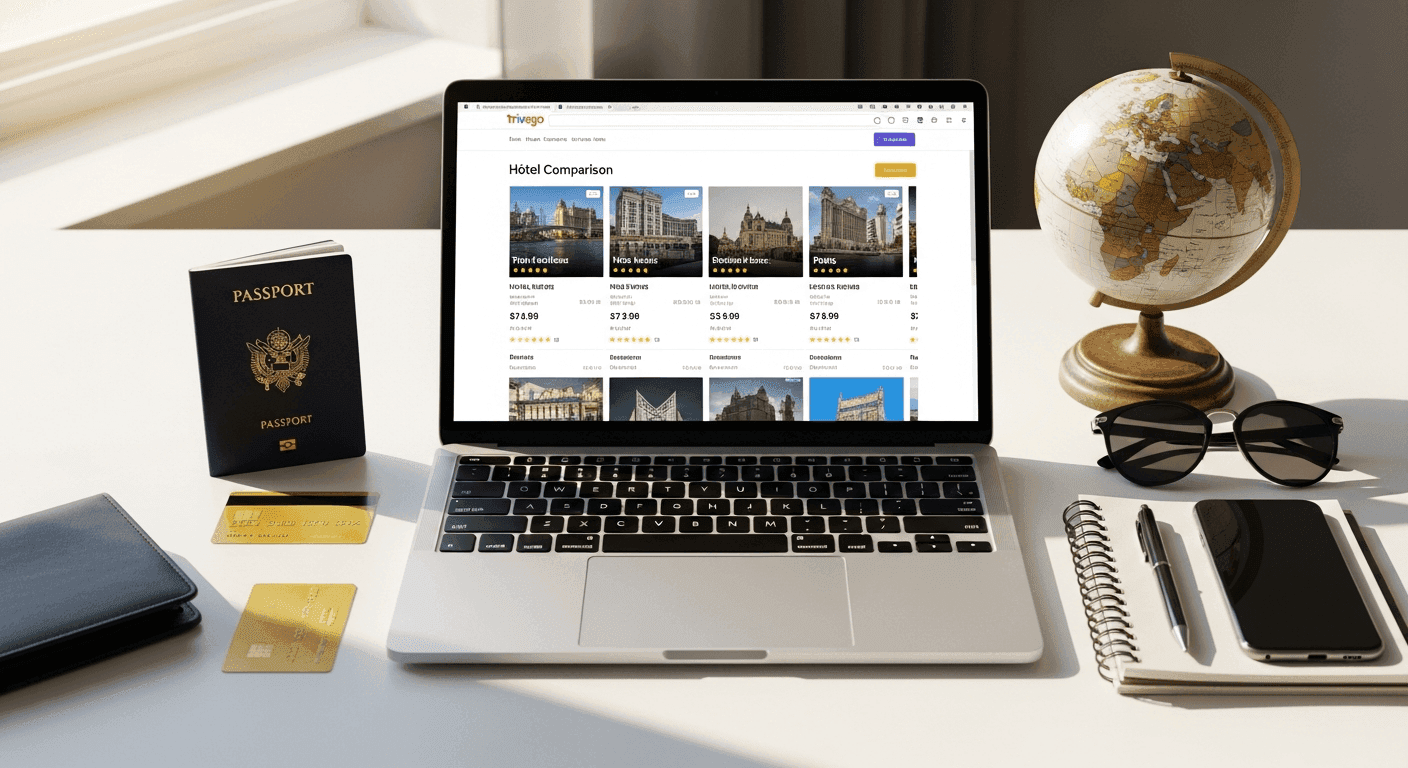
Trivago's Hotel Price Comparison Service fundamentally changed the hotel hunting game by aggregating real-time prices from over 5 million hotels across 190+ countries in a single searchable platform. Instead of manually visiting dozens of sites, you now have access to a metasearch engine that pulls data from 100+ online travel agencies and direct hotel booking sites simultaneously. The service displays unified guest ratings, interactive maps with price overlays, and powerful filtering options that let you narrow results by everything from amenities to cancellation policies.
Discover how Trivago can revolutionize your hotel booking strategy today.
Why Trivago's Price Aggregation Engine Outpaces Manual Searching
Centralized Comparison Without Platform Hopping
The fundamental advantage of Trivago is the elimination of repetitive tab-switching and manual note-taking. Instead of opening ten different websites to compare the same hotel across different OTAs, you see all available rates from every major platform in seconds. Booking.com, Expedia, Hotels.com, and dozens of smaller agencies all feed their current pricing into Trivago's database simultaneously.
Real-Time Price Updates Across All Sources
Prices shift constantly based on demand, inventory levels, and booking patterns. Trivago refreshes this data in real-time, meaning you're always viewing current rates rather than stale information from hours earlier. This matters because the room you were considering at $129 this morning might drop to $99 by evening—or spike to $159 if someone books the last remaining unit.
Unified Guest Ratings That Cut Through Conflicting Reviews
Different booking platforms sometimes display different guest ratings for the same hotel. A property might show 4.2 stars on one site and 4.5 on another, creating confusion about actual guest satisfaction. Trivago's aggregation system combines reviews from multiple sources into a single unified score, giving you a more complete and honest picture of what previous guests experienced.
Comprehensive Coverage of 5+ Million Properties
Trivago's database spans boutique guesthouses in rural villages, major chain hotels in city centers, and everything in between. This breadth means you're not accidentally missing the perfect hidden gem that wouldn't appear in a standard search because it doesn't maintain its own robust online presence.
Completely Free Access Without Hidden Subscription Fees
You never pay Trivago directly for using the service. There are no subscription tiers, no premium memberships required to access advanced features, and no hidden charges. Trivago's business model relies on earning a small commission when you click through to partner sites, making the comparison service completely free for users.
Mobile App Advantages That Desktop Users Never See
The Trivago mobile app frequently displays exclusive rates unavailable on the website. Hotels sometimes negotiate special pricing for mobile bookings, and users report finding deals 10-20% cheaper on the app than identical searches on desktop. The app also lets you set up price drop alerts for specific properties, sending notifications when rates fall.
Advanced Filtering Techniques to Narrow Down Your Perfect Stay
Star Rating Filters for Every Budget Level
Rather than scrolling through thousands of results, use star rating filters to instantly isolate the accommodation type you want. Searching for budget accommodations? Filter to 1-2 star hostels and budget chains. Looking for luxury? Jump straight to 5-star properties. Mid-range travelers can filter for 3-4 star hotels that balance comfort with value.
Amenity-Based Searches for Specific Property Features
The amenity filter system lets you search by specific features that matter to your trip. Need free Wi-Fi for remote work? Filter by that exact amenity. Traveling with your dog? Select pet-friendly properties. Want a morning swim before meetings? Filter for properties with swimming pools. You can layer multiple amenities together to find properties that check all your boxes without wading through irrelevant results.
Location-Based Discovery with Interactive Maps
Trivago's map interface displays hotel locations geographically with prices overlaid directly on the map. This visualization helps you understand neighborhood patterns—perhaps you notice budget hotels cluster in one district while luxury properties dominate another. You can zoom to specific areas and see exactly which properties fall within your preferred location radius, along with their current rates.
Price Range Sliders That Eliminate Budget-Busting Results
Rather than sorting through properties at every price point, set minimum and maximum price parameters. Tell Trivago your budget is $80-$150 per night, and it instantly hides every property outside that range. This prevents you from falling in love with a luxury property that's completely outside your spending limits.
Review Score Thresholds to Avoid Poorly-Reviewed Properties
Filter by guest satisfaction ratings to automatically exclude properties below your quality standards. Set a minimum threshold of 4.0 stars and Trivago hides anything rated lower. This approach prevents booking mistakes based on overlooking poor reviews buried in a long list of results.
Booking Flexibility Options for Uncertain Plans
If your travel dates might shift, filter by cancellation policies and refund terms that match your risk tolerance. Some travelers prioritize free cancellation up to 48 hours before arrival. Others need flexible refunds up to the check-in date. Filtering by these policy types lets you immediately identify properties that match your flexibility needs.
The Hidden Trap: Why Displayed Prices Don't Tell the Whole Story
Tax and Fee Discrepancies Between Trivago and Checkout
Trivago displays base room rates, but the final price you pay at checkout includes local taxes, resort fees, and service charges that often don't appear in the initial Trivago quote. A room advertised at $100 might actually cost $135 after taxes and fees—a 35% increase that catches travelers off guard. Always check the fine print for what's included versus what gets added later.
Sponsored Listing Bias Favors Advertisers Over Actual Value
The top results you see on Trivago aren't necessarily the cheapest options. Some are sponsored placements where hotels or OTAs have paid Trivago for prominent positioning. These might be decent deals, but they're prioritized because of advertising relationships rather than being the genuine best values available.
Currency Conversion Complications Based on Your Location
Your geographic location and payment method affect which currency Trivago displays and how exchange rates are calculated. Displayed prices fluctuate based on these variables, meaning the rate you see might differ significantly from what someone booking from another country sees for the identical room.
Booking Site Surcharges Add Unexpected OTA Markups
When you click through to a partner booking site from Trivago, that site adds its own margins on top of the base hotel rate. These third-party OTA markups don't appear in Trivago's initial quote—you discover them only after you've been redirected and are reviewing final pricing.
Optional Extras That Inflate Costs Invisibly
Parking fees, pet charges, facility surcharges, and other optional services accumulate quickly and rarely appear in the headline price. A hotel might advertise as pet-friendly but charge $30 per night for your dog. Another might include parking in the base rate or charge $20 nightly for it. These hidden costs rarely surface in Trivago's initial quote.
Dynamic Pricing Algorithms That Change Rates Constantly
Hotel pricing algorithms adjust rates based on real-time demand, the number of rooms remaining, how urgently you appear to be booking, and even browser cookies that track your past behavior. The same room might show three different prices within hours as demand shifts.
Best Price Guarantee Limitations With Strict Conditions
Some properties advertise best price guarantees on Trivago, but these come with significant restrictions. You might need to book directly on the hotel's website, exclude certain dates, or meet other conditions that limit when the guarantee actually applies. Learn proven strategies to find the genuine best deals beyond what Trivago displays.
Leveraging Price Drop Alerts and Mobile-Exclusive Deals
Setting Up Automated Notifications for Price Tracking
Configure price drop alerts for specific properties you're considering. Trivago sends notifications when rates fall for your selected hotels, allowing you to catch sudden discounts without constantly checking manually. This passive monitoring approach works while you're busy with other travel planning tasks.
Mobile App-Only Pricing That Beats Desktop Rates
The Trivago mobile app frequently features rates unavailable on the website. Hotels sometimes create special mobile-exclusive pricing, and users consistently report finding deals 10-20% cheaper on the app. If you're booking via smartphone, you're often accessing better rates than desktop users see.
Timing Your Booking Strategically Based on Price Patterns
Prices typically drop on Tuesday and Wednesday when hotels adjust rates after the weekend booking rush. Booking 6+ weeks in advance often yields better rates than last-minute searches. Understanding these patterns helps you choose optimal booking windows rather than booking whenever you think of your trip.
Seasonal Pricing Patterns That Reveal Bargain Windows
Peak season prices surge across all hotels in popular destinations. Off-season dates offer substantially lower rates. Rather than booking during summer months when everyone travels, consider shoulder seasons—spring and fall—when weather is pleasant but prices remain reasonable.
Last-Minute Deal Notifications for Same-Week Bookings
Hotels frequently discount unsold inventory aggressively in the final week before check-in. Set up alerts for same-week bookings if you have flexibility, and you'll catch these last-minute discounts that desperate hotels offer to fill empty rooms.
Loyalty Program Integration That Adds Hidden Value
Trivago integrates with partner site loyalty programs, allowing you to earn points toward future bookings. These bonus points accumulate even when you book through Trivago, though you'll need to ensure your loyalty account is linked during booking to receive credit.
Price History Tracking to Identify Real Savings
Some booking sites show price history for specific hotels over recent weeks, displaying whether current rates represent genuine savings or inflated prices during high-demand periods. Reviewing this history prevents booking what appears to be a great deal but is actually above-average pricing.
Understanding Trivago's Business Model and Its Impact on Your Search Results
Cost-Per-Click Revenue Structure and What It Means
Trivago earns money through a cost-per-click (CPC) model, receiving payment when you click a hotel listing and are redirected to a partner booking site. Trivago makes nothing if you look at results but don't click through. This business model means Trivago is incentivized to drive clicks, not necessarily to show you the absolute cheapest options.
How CPC Affects Result Rankings and Visibility
Higher-paying partner sites sometimes receive prominent placement on Trivago's results, influencing which deals appear first. Hotels or OTAs willing to pay more per click get better real estate on the screen, potentially pushing genuinely cheaper options lower where fewer users see them.
Transparency About Sponsored Results Versus Organic Rankings
Trivago does label sponsored results, but not always prominently enough for users to notice. Understanding which listings are paid placements versus organic rankings based purely on relevance helps you mentally reorder results to prioritize genuine values over advertised convenience.
Partner Site Relationships and Financial Incentives
Trivago has financial relationships with certain booking platforms that differ from others. These partnerships occasionally influence which sites receive preferential positioning, potentially affecting the results you see and the partners you're directed toward.
Why Direct Hotel Bookings Sometimes Beat Trivago Rates
Contacting hotels directly occasionally yields lower prices than aggregated rates. Hotels sometimes prefer direct bookings to avoid paying commissions to OTAs. Calling the hotel's reservations line or visiting their website directly might reveal rates lower than anything appearing on Trivago.
Commission Impact on Displayed Pricing
Partner sites factor Trivago's referral commission into their quoted rates. They can afford to offer lower prices to users who book directly on their own website rather than through Trivago. This is why the same room sometimes costs less when you book directly with an OTA than when you click through from Trivago.
Alternative Revenue Models in the Comparison Space
Other hotel comparison services operate on subscription models, commission-free approaches, or different partnerships. Understanding that Trivago's model differs from these alternatives helps explain why result rankings occasionally prioritize clicks over actual value.
Booking Responsibility and What Trivago Won't Handle for You
Trivago's Role as Intermediary, Not Transaction Processor
Trivago redirects you to booking sites but doesn't process your actual transaction. You're booking with the partner site, not with Trivago. This distinction matters significantly when problems arise, because Trivago can't fix them—only the actual booking provider can.
Cancellation and Refund Management Goes Through the OTA
If you need to cancel your booking, you must contact the original booking provider directly. Trivago can't process cancellations, request refunds, or negotiate refund terms. All cancellation requests, refund inquiries, and policy exceptions go directly to the OTA or hotel where you actually booked.
Payment Security Responsibility on Partner Sites
You're responsible for protecting your payment information on partner booking sites. Trivago doesn't process your credit card or handle payment security. If payment information is compromised, the liability typically rests with the booking site where you entered your details.
Dispute Resolution Process and Trivago's Limitations
Trivago can't intervene in pricing errors, overbilling disputes, or service complaints. If a hotel charges you incorrectly or a booking site quotes one price then charges another, you must contact that entity directly. Trivago provides no dispute resolution infrastructure.
Booking Confirmation Verification on the Partner Site
Always confirm your reservation details on the partner booking site before considering your booking complete. Don't rely solely on Trivago's confirmation or display. Verify that the OTA has processed your booking, confirm your reservation number, and review all charges one final time.
Customer Service Limitations Compared to Full-Service Platforms
Trivago provides comparison tools but lacks the customer support infrastructure of comprehensive booking platforms like Booking.com or Expedia. If you need help with your reservation, you're contacting the booking site, not Trivago's customer service team.
Protection Gaps in Travel Insurance and Booking Guarantees
Travel insurance and booking guarantees vary by partner site and aren't guaranteed through Trivago. Some booking sites offer price guarantees or travel insurance options; others don't. You must evaluate each partner site's protections independently.
Strategies for Beating Trivago's Displayed Prices and Finding Genuine Steals
Direct Hotel Website Comparison Sometimes Reveals Lower Rates
Visit a hotel's official website directly and compare rates before booking through Trivago. Hotels sometimes quote lower rates on their own sites to avoid paying OTA commissions. The rate you find directly might be cheaper than what Trivago displays, making direct booking the better choice.
Negotiating With Boutique Properties for Direct Booking Discounts
Small, independently-owned hotels often negotiate directly with guests. Call the hotel's main number and ask about direct booking rates. Boutique properties frequently match or beat aggregated prices for direct bookings, sometimes offering additional perks like free breakfast or room upgrades.
Membership and Loyalty Discounts Reveal Hidden Rate Tiers
AAA, military, corporate, government, and hotel loyalty programs frequently offer rates below Trivago listings. Check whether your membership unlocks special pricing before booking. A loyalty program discount might save 20-30% compared to the standard rates Trivago displays.
Group Booking Advantages for Organized Multi-Room Stays
When organizing group stays with multiple rooms, negotiate directly with hotels for group rates. Group pricing frequently undercuts standard aggregated rates, especially for 5+ rooms. Hotels prefer knowing multiple rooms will be booked and offer better per-room pricing as incentive.
Seasonal Promotional Codes Captured Through Hotel Newsletters
Subscribe to hotel brand newsletters and individual property email lists. Hotels announce exclusive promotional codes through these channels weeks before broader availability. You'll access discount codes through email before they appear on comparison sites.
Alternative Booking Windows That Reveal Pricing Patterns
Compare prices across different date ranges to identify patterns. Perhaps mid-week rates are 30% cheaper than weekends. Maybe a specific hotel drops prices dramatically during certain seasons. Recognizing these patterns helps you choose optimal booking windows rather than booking whenever convenient.
Combining Services Strategically by Using Trivago for Research Only
Use Trivago as your research tool to identify promising candidates and understand market pricing. Then book through loyalty programs, direct hotel websites, or OTAs offering better rates for your specific dates. Trivago excels at showing you what's available—but it's not always where you should actually book.
Making Trivago Work for Different Travel Scenarios in 2026
Business Travel Efficiency With Corporate Filters
Filter Trivago results by location, business amenities (meeting rooms, high-speed internet), and flexible cancellation policies that accommodate changing corporate schedules. Business travelers benefit from cancellation flexibility more than leisure travelers, making refund terms a critical filtering criterion.
Family Vacation Planning With Kid-Focused Amenities
Prioritize pet-friendly properties if traveling with animals, properties with kid-amenity focus if traveling with children, and spacious room options for group bookings. Families need different filtering criteria than solo travelers, making Trivago's granular amenity filters especially valuable for your use case.
Budget Backpacking Using Price Filters and Ratings
Identify hostels and budget chains through aggressive price filters, then evaluate using guest review scores to find affordable properties that maintain quality standards. Budget travelers benefit from Trivago's ability to filter by price range while still identifying quality options through ratings.
Luxury Getaway Research Using Star Rating and Review Aggregation
Use star rating filters to identify premium properties, then rely on Trivago's unified review system to verify quality across multiple guest opinion sources. Luxury travelers want comprehensive quality assurance, which Trivago's aggregated ratings provide.
Last-Minute Weekend Escapes Using Price Drop Alerts
Set up alerts for same-week bookings and monitor mobile-exclusive pricing closely. Last-minute travelers benefit from Trivago's alert system, which notifies you when rates suddenly drop for spontaneous trips.
Extended Stay Discounts Across Weekly and Monthly Rates
Compare weekly and monthly rate options for longer stays, as properties often offer better per-night pricing for extended bookings. Trivago's ability to show rates across different lengths of stay helps extended-stay travelers identify genuine value.
International Travel Confidence Using Multi-Country Databases
Access Trivago's database spanning 190+ countries when planning cross-border trips. Use currency conversion tools to understand real costs in your home currency, and leverage the multi-language interface if needed for international properties.
The Bottom Line on Trivago's Role in Your Hotel Hunting Strategy
Trivago genuinely delivers on its core promise: consolidating thousands of hotel prices into one searchable platform saves substantial time and frequently uncovers better deals than you'd find independently. The service is free, the interface is intuitive, and the filtering options are comprehensive. However, treating Trivago as your final destination rather than your starting point is where most travelers stumble.
The platform excels as a research and comparison tool—a way to quickly survey the landscape and identify promising candidates. Real wins happen when you understand that displayed prices are opening bids, sponsored results aren't always the best values, and final costs include surprises Trivago doesn't advertise upfront. The platform shows base rates but obscures taxes, fees, and surcharges added at checkout. It displays sponsored placements that don't necessarily represent the best value. And it sometimes shows higher rates than you'd find through direct hotel booking or loyalty program access.
Use Trivago as your compass, but don't let it be your only map. Combine it with direct hotel research, leverage your membership benefits, and stay alert to the hidden fees that separate advertised prices from what you'll actually pay. Set up price drop alerts to catch fluctuations, use the mobile app for exclusive rates, and apply the advanced filtering techniques to narrow results efficiently. But then verify rates directly with hotels, check whether loyalty discounts apply, and ensure you understand all charges before confirming anything.
When you approach hotel hunting this way, Trivago transforms from a convenient shortcut into a powerful savings multiplier. It becomes the tool that shows you what's possible, while your research identifies what's genuinely valuable. The best deals often hide in plain sight—not on Trivago's top results page, but in the details you uncover through strategic comparison and careful verification.
Start mastering Trivago's comparison tools to unlock significant travel savings on your next booking.