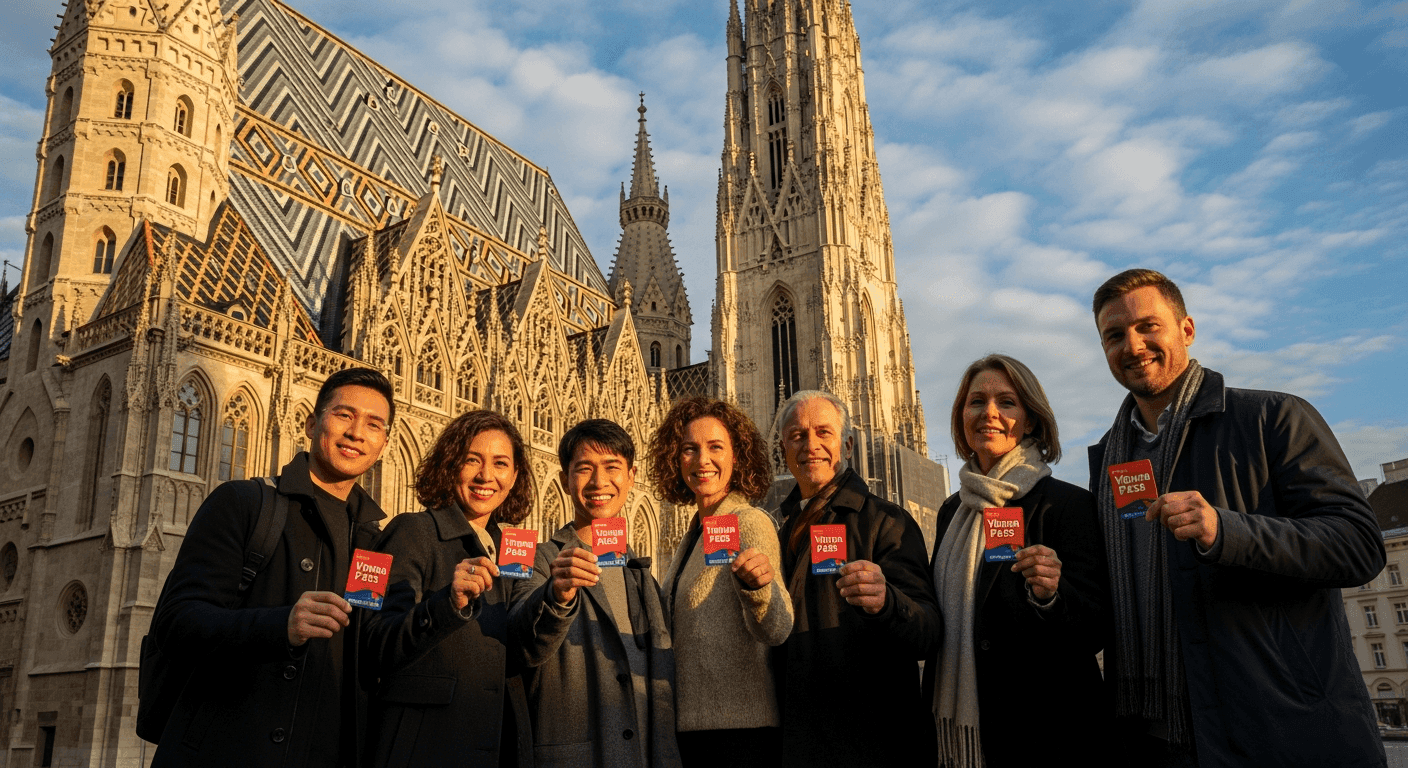
Picture this: you've arrived in Vienna, ready to experience the imperial palaces, world-class museums, and centuries of Austrian grandeur. Then reality hits—that Schönbrunn Palace ticket costs €15.50, St. Stephen's Cathedral is €6, the Hofburg Palace another €14, and suddenly your cultural aspirations are competing directly with your travel budget. Most Vienna visitors don't realize they're spending €20-30 per museum ticket, and if you're planning to explore just five major attractions, you're already looking at €100+ in admission costs alone. That's where strategic planning becomes a game-changer for your trip.
The Vienna Pass represents a fundamental shift in how you approach cultural exploration in Austria's capital. Rather than piecing together individual tickets and navigating transportation separately, this comprehensive card consolidates your entire sightseeing strategy into one purchase. You're no longer making compromises between must-see attractions and your remaining budget—you're unlocking access to over 90 venues with a single card that also includes unlimited hop-on hop-off bus rides and skip-the-line privileges at the city's most popular sites.
Throughout this guide, you'll uncover whether the Vienna Pass aligns with your travel style and budget. You'll break down the cost-benefit analysis for different visitor types, examine the skip-the-line advantage during peak seasons, and understand how the included hop-on hop-off bus transforms your mobility around the city. By the end, you'll have a clear framework for determining if this pass justifies its investment for your specific Vienna itinerary.
Discover your perfect Vienna Pass option today.
Beyond the Price Tag—Who Actually Saves Money with Vienna Pass?
The math behind the savings: How visiting 3-4 attractions daily can offset the €99-119 pass cost versus individual ticket pricing
The financial case for the Vienna Pass hinges on a straightforward calculation. A single 1-day pass costs approximately €99, while a 3-day pass runs about €119. When you compare this against Vienna's individual attraction pricing, the numbers shift dramatically. Schönbrunn Palace: €15.50. Hofburg Palace: €14. Belvedere Palace: €16. Kunsthistorisches Museum: €16. St. Stephen's Cathedral: €6. Within just five attractions, you've already spent €67.50 without the pass—and you've barely scratched Vienna's cultural surface.
Visit three major attractions per day across three consecutive days, and you're easily spending €180-210 in individual tickets. The Vienna Pass at €119 suddenly looks like an intelligent decision, not a luxury. For visitors tackling four attractions daily, the pass pays for itself by midday on day two.
Cost comparison scenarios: Real examples for 1-day, 3-day, and 6-day visitors with varying attraction preferences
Consider a typical first-time visitor spending three intensive days in Vienna. Your ideal itinerary might include Schönbrunn Palace (€15.50), Kunsthistorisches Museum (€16), Belvedere Palace (€16), St. Stephen's Cathedral (€6), Hofburg Palace (€14), Albertina (€14), and Mozart's House (€13). That's €94.50 in individual tickets for just seven attractions—and you haven't visited the Secession Building (€11) or the Technical Museum (€17) yet. With the 3-day Vienna Pass at €119, you access these venues plus 80+ additional attractions with zero additional ticket purchases.
For a one-day visitor with limited time, the math changes. If you're visiting only two major attractions, individual tickets become more economical. However, if you're visiting Schönbrunn, Hofburg, and Kunsthistorisches Museum—a realistic one-day agenda for an active explorer—you've already justified the €99 pass investment.
Six-day pass holders gain even more breathing room. At approximately €279, spreading this investment across six days means each day effectively costs €46.50 in admission value, even before considering the hop-on hop-off bus and skip-the-line benefits. This duration works exceptionally well for travelers combining intensive cultural days with leisurely exploration or day trips outside Vienna.
Hidden value factors: Skip-the-line benefits that translate to reclaimed hours during your vacation
Beyond raw admission costs, the Vienna Pass includes skip-the-line access at major venues—a benefit that's genuinely difficult to quantify but profoundly impactful. During summer peak season, Schönbrunn Palace regularly has 30-60 minute wait times. Skip-the-line access saves you an hour of standing around, an hour you can spend actually exploring the palace's 1,441 rooms or its extensive gardens.
Multiply this across your trip. If you visit six attractions with typical 30-minute waits, and skip-the-line access eliminates those delays, you've reclaimed three hours of vacation time. That's time for an additional museum, a leisurely coffee in a Viennese café, or simply breathing deeper rather than rushing between venues.
Family pricing advantage: Half-price options for children aged 6-18 and free entry for younger children
Families traveling with children discover compelling economics with the Vienna Pass. Children aged 6-18 receive 50% off pass pricing—a 1-day pass costs approximately €55 for a child instead of €99, while the 3-day pass drops to around €60. Children under 6 enter participating venues free when accompanying a pass-holding adult.
For a family of four (two adults, two children aged 8 and 12), a 3-day Vienna Pass totals approximately €299 (€119 + €119 + €60 + €60). Purchasing individual tickets for the same attractions would easily exceed €450-500. Children also benefit significantly from skip-the-line access—parents avoid the frustration of managing restless kids in lengthy queues.
When the pass breaks even: Specific attraction combinations that maximize ROI for different visitor profiles
The breakeven point depends entirely on your attraction preferences. If you're interested in the major imperial palaces and museums, breakeven happens remarkably quickly. Visiting Schönbrunn (€15.50), Hofburg (€14), and Kunsthistorisches Museum (€16) already consumes €45.50—less than half a 1-day pass cost.
For travelers with narrower interests—say, only art museums—individual tickets might actually be smarter. However, the Vienna Pass excels at encouraging exploration beyond your initial plans. The skip-the-line benefit and included bus rides lower the psychological barrier to "trying" an unfamiliar attraction, and suddenly you're visiting that Secession Building you weren't sure about, or exploring a neighborhood you wouldn't have otherwise prioritized.
Alternative pass options: How Vienna Flexi Pass compares for leisurely travelers who prefer flexibility over intensity
The Vienna Flexi Pass represents a fundamentally different approach. Rather than consecutive days, it allows choosing a fixed number of attractions (typically 3, 4, or 5) over a 365-day period. This flexibility appeals to travelers visiting Vienna over multiple days while maintaining a relaxed pace, or those combining Vienna with other Austrian destinations.
The tradeoff is clear: a Vienna Flexi Pass for five attractions typically costs €149, compared to €119 for a 3-day Vienna Pass. You're paying more for flexibility and a slower pace. If you're certain you'll visit 4-5 attractions daily, the Vienna Pass offers superior value. If you prefer visiting one or two attractions daily without time pressure, the Flexi Pass delivers better alignment with your travel style.
Compare Vienna Pass options and secure your cultural adventure.
Skip-the-Line Access—Reclaiming Hours Lost to Queue Culture
Peak season impact: How skip-the-line privileges reduce wait times at Schönbrunn Palace, St. Stephen's Cathedral, and other must-see sites
Vienna during July and August transforms into a queue-filled experience. Schönbrunn Palace—arguably Vienna's most iconic attraction—routinely experiences 45-90 minute waits for general admission during afternoon hours. St. Stephen's Cathedral, nestled in the city center, can develop surprising queues despite its accessibility. The Kunsthistorisches Museum, one of Europe's finest art collections, regularly surpasses 30-minute entry waits during peak summer weeks.
With Vienna Pass skip-the-line access, you bypass these queues entirely. You walk past the line of tourists holding individual tickets and proceed directly to entry verification. At major venues, this difference translates into 30-90 minutes reclaimed per attraction—time that becomes tangible vacation hours rather than wasted minutes.
Summer versus off-season advantages: When the fast-track benefit delivers the most tangible time savings
The skip-the-line advantage isn't evenly distributed across seasons. During April-May and September-October, Vienna attracts substantial crowds but not the overwhelming summer surge. Wait times average 15-30 minutes at popular attractions—noticeable but manageable. Skip-the-line access still saves time, but the impact feels less dramatic.
Winter months (November-February) present entirely different dynamics. Tourist volumes drop significantly, general admission lines shorten to 5-10 minutes, and skip-the-line access becomes more of a convenience than a time-saver. If minimizing queue time is your primary motivation, visiting during March, April, September, or October maximizes this Vienna Pass benefit.
The domino effect: How avoiding queues enables you to visit additional attractions within your pass validity period
Consider a practical scenario. You arrive at Schönbrunn Palace at 2 PM during July. With individual tickets, you might spend 45 minutes waiting in line, then three hours exploring the palace and gardens, consuming most of your afternoon. With skip-the-line access, you're inside within 10 minutes. You explore Schönbrunn thoroughly, finish by 5:30 PM, and suddenly you have evening hours available for the Belvedere Palace, another major attraction you'd initially considered cutting from your itinerary.
This cascading effect multiplies across a three or six-day pass. Each attraction you enter faster enables you to fit additional venues into your itinerary. The math becomes compelling: skip-the-line access doesn't just save time—it enables you to visit more attractions, further justifying your pass investment.
Included attractions with longest typical waits: Prioritizing which museums and palaces benefit most from express entry
Strategic planning matters here. Some Vienna attractions rarely develop long queues. The Technical Museum, despite its quality, typically has minimal waits. Conversely, Schönbrunn Palace, St. Stephen's Cathedral, and the Kunsthistorisches Museum are queue magnets, particularly during peak season afternoons.
Savvy visitors schedule visits to high-wait attractions during skip-the-line's peak value periods. Visit Schönbrunn right at opening time (9 AM), or prioritize it during mid-week mornings when fewer tourists arrive. This approach maximizes your skip-the-line advantage where it matters most.
Mobile app integration: How digital ticketing streamlines your entry process at participating venues
Modern Vienna Pass implementation includes mobile app integration. Rather than carrying physical cards, your pass activates on your smartphone. At participating venues, you simply show your phone at entry, reducing friction and enabling genuinely seamless entry. This digital integration further accelerates your admission process, particularly at busy venues where scanning efficiency matters.
Group dynamics: Whether skip-the-line access extends to your entire travel party or requires individual passes
Each Vienna Pass holder receives individual skip-the-line access. If you're traveling as a couple, both travelers need separate passes to both bypass lines. Families must purchase individual passes for each adult. This requirement affects family trip economics—a family of four requires four passes rather than one multi-person card. However, the family pricing discussed earlier (50% off for children) partially offsets this expense.
The domino effect of time: How hours saved across your trip compound into tangible experiences
Across a three-day trip, skip-the-line access at just four attractions saves approximately 2-3 hours. That's enough time for an entire additional museum visit, a leisurely lunch at a traditional Viennese restaurant, or simply experiencing the city without the constant sensation of rushing. These reclaimed hours often become travelers' favorite vacation moments—unplanned discoveries, unexpected conversations, genuine cultural immersion rather than logistics management.
The Hop-On Hop-Off Bus—More Than Just Transportation
Dual functionality: Using the included bus as both transit and a guided orientation tour of Vienna's districts
The Vienna Pass includes unlimited hop-on hop-off bus access—a benefit that initially appears straightforward but offers surprising depth. Yes, the bus provides transportation between attractions, solving the practical problem of getting from Schönbrunn Palace to the Belvedere. However, the bus simultaneously functions as a comprehensive orientation tour, particularly valuable for first-time visitors still developing a mental map of Vienna's geography.
When you're not familiar with which neighborhoods connect to which attractions, the bus narrative provides context. You're learning that the Ringstrasse district contains multiple attractions worth exploring, that the Danube's south bank offers alternative sightseeing opportunities, and that Vienna's districts have distinct character and appeal.
Route coverage: Which major attractions and neighborhoods the bus network connects
The Vienna hop-on hop-off bus typically operates two primary routes covering most major attractions. Route 1 connects Schönbrunn Palace, the Technical Museum, the Parliament building, St. Stephen's Cathedral, and the Belvedere Palace. Route 2 covers the Ringstrasse area, various museums, and the Danube waterfront. Between the two routes, nearly every major Vienna Pass attraction is accessible via bus.
The coverage essentially provides a transportation network solving your mobility logistics. You're not navigating Vienna's public transit system, deciphering street routes, or spending time figuring out connections between disparate neighborhoods. This convenience transforms from a nice-to-have into a tangible value component, particularly if you're unfamiliar with Vienna's layout or disinclined to navigate public transportation independently.
Frequency and timing: How often buses run and whether schedules align with typical sightseeing hours
Buses typically run every 15-30 minutes throughout the day, depending on season and route. The schedule spans morning through evening—generally 9 AM to 5 PM during off-season months, and extended hours (8 AM to 6 PM or later) during peak summer. This frequency aligns well with typical sightseeing hours. You're not waiting excessively between buses, and you have flexibility to move between attractions based on your evolving interests rather than being locked into rigid schedules.
Narrated commentary: What cultural insights and historical context the audio guide provides
Each bus loop includes multilingual narration—typically available in 10+ languages including English. The commentary isn't merely functional; it provides historical context and cultural insights that enhance your understanding of what you're seeing. As you pass the Parliament building, you're learning about Austrian political history. The narration explaining Vienna's Ringstrasse transformation provides perspective on the city's 19th-century development and imperial ambitions.
This audio layer transforms bus rides from pure transportation into educational experiences. First-time visitors often take at least one full loop simply to absorb Vienna's geography and historical narrative before deciding where to disembark for deeper exploration.
Flexibility advantages: Pausing at unexpected discoveries without worrying about separate transportation costs
The hop-on hop-off model's greatest advantage lies in its flexibility. You can disembark at an unexpected neighborhood, spend an hour exploring, then board the next bus. You've discovered a charming café or stumbled upon an interesting gallery—and you're not concerned about paying for separate transportation to your next planned attraction. This flexibility encourages spontaneous exploration that individual ticket purchases and rigid transportation planning discourage.
Weather considerations: How the open-top bus experience varies across seasons and impacts your comfort level
Vienna Pass buses feature open-top seating—wonderful during pleasant weather, less appealing during rain or cold. Spring and fall typically offer ideal conditions. Summer heat can make seated sun exposure uncomfortable despite the sightseeing benefits. Winter buses become decidedly less pleasant, with cold wind and potential precipitation diminishing the experience.
Your season of travel meaningfully affects the hop-on hop-off bus value. Summer and fall visitors experience this benefit fully; winter visitors might find themselves using the bus primarily for transportation rather than leisurely sightseeing.
Integration with walking tours: Combining bus rides with pedestrian exploration for comprehensive city coverage
The most sophisticated Vienna visitors combine hop-on hop-off bus segments with walking exploration. You might board the bus to quickly transit from one district to another, then disembark and spend 2-3 hours walking through neighborhoods, discovering cafés, galleries, and street-level experiences that buses can't convey. This hybrid approach captures both the efficiency of transit and the intimacy of pedestrian exploration.
Choosing Your Pass Duration—1, 2, 3, or 6 Days?
The 1-day pass reality: Best suited for time-limited visitors or those supplementing a longer trip
A 1-day Vienna Pass (€99) serves specific scenarios effectively. If you're arriving late afternoon and leaving the following evening, a 1-day pass maximizes your exploration window. You're focused, intense, strategic—visiting three or four attractions efficiently before departing. The 24-hour clock starts when you activate your pass, so you can optimize timing to match your specific arrival and departure schedules.
One-day passes also work for travelers spending longer in Vienna but wanting concentrated cultural immersion within a single day. You might visit Vienna as part of a multi-city Austria trip, dedicating one day to intensive palace and museum exploration while spending other days on regional activities.
The 3-day sweet spot: Why this duration aligns with typical intensive sightseeing schedules without burnout
The 3-day Vienna Pass (€119) represents the psychological and practical sweet spot for most active sightseers. Three consecutive days provide enough time to visit Vienna's major attractions without rushing, yet compressed enough to maintain momentum and avoid the museum fatigue that extended trips risk.
Day one typically includes Schönbrunn Palace, the Hofburg, and perhaps the Belvedere. Day two might feature multiple museums—Kunsthistorisches Museum, Albertina, or the Leopold Museum. Day three allows slightly slower pacing with Austrian Parliament, St. Stephen's Cathedral, and selective venues based on revised interests. This progression feels manageable and genuinely comprehensive.
The 6-day option: Ideal for extended stays and travelers who want breathing room between attractions
The 6-day pass appeals to visitors spending a full week in Vienna or those combining intensive sightseeing with relationship-building time. Extended stays reduce the psychological pressure to visit everything immediately. You can visit 2-3 attractions daily, enjoying them thoroughly, then spend evenings and some afternoons simply living in Vienna—experiencing café culture, wandering neighborhoods, taking advantage of evening concerts.
A 6-day pass also accommodates unexpected delays or changing preferences. If you visit an attraction and decide to linger unexpectedly, you're not abandoning planned venues due to time pressure. This relaxed approach sometimes generates more authentic travel experiences than the intensive 1-3 day approach, though it requires longer vacation time to justify the investment.
Consecutive day requirements: Understanding the 24-hour clock and planning around your actual arrival/departure times
Vienna Pass days operate on consecutive 24-hour periods beginning when you activate your pass, not calendar days. If you activate your pass at 6 PM on Monday, it expires 6 PM Tuesday, not midnight. This distinction matters significantly for planning. If your flight departs at 2 PM on your final day, your pass has only until 2 PM—limiting your morning exploration window.
Strategic travelers activate passes to align with their highest-energy, most ambitious sightseeing periods. Arriving afternoon and leaving evening a few days later? Activate your pass the morning you plan to begin intensive sightseeing, ensuring maximum value from your pass duration.
Pacing strategies: How to structure your daily itinerary to avoid museum fatigue while maximizing pass value
Museum fatigue—the psychological exhaustion from experiencing too many cultural attractions sequentially—is genuine. Experienced travelers vary their daily structure to sustain engagement. Rather than visiting four museums in succession, alternate museum time with palace exploration, outdoor neighborhoods, or café breaks.
Your day structure might include: morning palace visit (Schönbrunn), mid-morning hop-on hop-off bus ride providing narrative context, lunch break in a neighborhood café, afternoon museum (Kunsthistorisches Museum), late afternoon walking exploration of the Ringstrasse area. This rhythm prevents cultural saturation while visiting multiple attractions.
Weather and energy levels: Building flexibility into your duration choice for unexpected circumstances
Real travel involves unexpected factors. Your second day might involve unexpected rain, reducing your outdoor palace interest. You might experience jet lag or energy fluctuations affecting your capacity for museum time. Building an extra half-day into your pass (choosing 3 days when 2 days initially seemed sufficient) provides buffer space for these realities without sacrificing experience quality.
Upgrade paths: Whether you can extend your pass mid-trip if you're having exceptional experiences
Unfortunately, Vienna Pass extensions aren't typically available mid-trip—you can't activate a 3-day pass and extend it to 6 days partway through. You must commit to your duration upfront. This limitation reinforces the importance of honest self-assessment about your sightseeing intensity and vacation timeline before purchase.
Your Vienna Pass Decision Framework
The Vienna Pass transforms from a simple admission card into a strategic tool when you understand your own travel style, budget constraints, and cultural priorities. Looking at the financial realities, the skip-the-line advantages, and the intensive sightseeing demands, what emerges clearly is this: the pass genuinely delivers value for active explorers willing to embrace a packed itinerary, but it's absolutely not a one-size-fits-all solution.
Your decision hinges on three core questions. First, can you realistically visit 3-4 major attractions daily without experiencing burnout or diminishing your enjoyment? If the prospect of structured cultural exploration feels energizing rather than exhausting, you're Vienna Pass material. If you envision leisurely museum hours, unexpected neighborhood wandering, and unscheduled relaxation, the pass's intensity won't align with your travel philosophy.
Second, are you a first-time visitor eager to maximize Vienna's iconic landmarks, or a returning traveler targeting specific new venues? First-time visitors typically benefit most from the pass's comprehensive access—you want that authoritative cultural immersion that covers Schönbrunn, the Hofburg, the major museums, and enough additional attractions to shape your understanding of Vienna's cultural landscape. Returning visitors often have narrower interests, visiting three or four specific venues they missed previously—individual tickets frequently make more economic sense.
Third, does your travel pace align with the pass's intensive model, or would you prefer the flexibility of alternative strategies? If you're visiting Vienna as a multi-day segment within a broader Austria trip, your energy for intensive sightseeing might be limited. If Vienna is your destination focus, maximum cultural immersion often generates the richest experiences.
If you're nodding yes to intensive exploration, skip-the-line convenience matters to you, and you want to leverage unlimited hop-on hop-off bus rides for both transportation and guided discovery—the Vienna Pass deserves serious consideration. For leisurely travelers, budget backpackers satisfied with free attractions, or those visiting only a handful of specific sites, alternative strategies will serve you better.
The real power of the Vienna Pass lies in reclaiming your vacation time. Every hour you save in ticket queues becomes an hour spent genuinely experiencing Vienna's imperial grandeur, world-class museums, and vibrant cultural landscape. That's the genuine advantage worth evaluating against your personal travel blueprint.
Make your Vienna Pass decision with complete confidence—book your pass now.